What would become of business without a market of fools?
— Chuang Tzu, 4th century BCE.
John Adams (1735 – 1826) [2nd President of the United States]:
The envy and rancor of the multitude against the rich is universal and restrained only by fear or necessity.
A beggar can never comprehend the reason why another should ride in a coach while he has no bread.
(Zoltan Haraszti, John Adams and the Prophets of Progress, Harvard, 1952, p 205)
Alexander Hamilton (1756 – 1804):
Why has government been instituted at all?
Because the passions of men will not conform to the dictates of reason and justice without constraint.
(Federalist No 15 Papers, 17 September 1787)
Peter Singer (1974):
For all the claims that “big government” can never match the private sector, [the Defence Advanced Research Projects Agency] is the ultimate rebuttal.
The Internet … e-mail, cell phones, computer graphics, weather satellites, fuel cells, lasers, night vision, and the Saturn V rockets [that first took man to the moon] all originated at DARPA. …
DARPA works by investing money in research ideas years before any other agency, university, or venture capitalists on Wall Street think they are fruitful enough to fund.
DARPA doesn’t focus on running its own secret labs, but instead spends 90% of its (official) budget of $3.1 billion on university and industry researchers …
(Wired for War, Penguin, 2009, p 140)
Mayer Rothschild (1744 – 1812):
If you can't make yourself loved, make yourself feared.
(p 89)
Niall Ferguson (1964):
The first era of financial globalization took at least a generation to achieve.
But it was blown apart in a matter of days.
And it would take more than two generations to repair the damage done by the guns of August 1914.
(The Ascent of Money, Penguin, 2008, p 304)
Andrew Carnegie (1835 – 1919):
[are] the highest results of human experience [—] the best and most valuable of all that humanity has yet accomplished.
- Individualism,
- Private Property,
- the Law of Accumulation of Wealth, and
- the Law of Competition
Arthur Pigou (1877 – 1959):
[All] the best business men want to get money, but many of them do not care about it much for its own sake; they want it chiefly as the most convincing proof to themselves and others that they have succeeded.
(Memorials of Alfred Marshall, 1956, p 282)
Simone Campbell (1945) [Catholic Nun]:
[We were] doing business roundtables [with] some entrepreneur, CEO types. …
A report had just come out that that the average CEO … got $10 million in salary a year, and [that] they were going for $11 million.
I got to ask them:Is it that you're not getting by on $10 million that you need $11 million?And this one guy said: …
I don't get it.Oh, no Sister Simone. …(Krista Tippett, Becoming Wise, Corsair, 2016, p 129)
It's not about the money. …
It's that we want to win.
And money just happens to be the current measure of winning.
PBS Frontline:
There was a phrase — "ripping someone's face off" — that was used on the trading floor to describe when you sold something to a client who didn't understand it and you were able to extract a massive fee because they didn't understand it.
[This was seen as] a good thing because [you were] making more money for the bank.
[That] sort of spirit, of [acting against the best interests of] your client … took on significant life on Wall Street.
(Money, Power and Wall Street, 2012)
Kid Power Conference, Disney World:
Kids love advertising: it's a gift — it's something they want.
There's something to said … about getting there first, and about branding children and owning them in that way. …
In boy's advertising, it is an aggressive pattern [—] antisocial behavior in pursuit of a product is a good thing.
Tim Hammonds [President & CEO, Food Marketing Institute]:
The interchange fee a supermarket pays when a customer pays with plastic is more than the money that flows to the retailer’s bottom line; it’s often double. …
The service provider using a computerized payment network is getting more dollars from the transaction than the net profit for the merchant who provides(FMI Midwinter Executive Conference, 14 January 2006)
- the labor,
- the land,
- the fixtures,
- the light and the heat, and
- the store that stocks the products.
Eryk Bagshaw:
Former AMP chief executive Craig Meller has resigned as a financial services adviser to the Turnbull government. …
Mr Meller stepped down in the wake of revelations at the banking royal commission that AMP had spent a decade deliberately and repeatedly lying to the federal government's regulator over charging customers fees for no service. …
Ms O'Dwyer convened the [Financial Sector Advisory Council] in 2016 to provide advice to Mr Morrison "on potential areas for regulatory reform" …
(Ex-AMP CEO Craig Meller resigns as a Turnbull government adviser, Sydney Morning Herald, 30 April 2018)
Alexis de Tocqueville (1805 – 59):
The people may always be mentally divided into three distinct classes.
(Democracy in America, 1835, Bantam, 2011, p 246)
- The first of these classes consists of the wealthy;
- the second, of those who are in easy circumstances; and
- the third is composed of those who have little or no property, and who subsist more especially by the work which they perform for the two superior orders.

Showing posts with label Live Long and Prosper. Show all posts
Showing posts with label Live Long and Prosper. Show all posts
July 23, 2016
Ministry of Plenty
Live Long and Prosper

October 19, 2013
Ministry of Truth
Live Long and Prosper
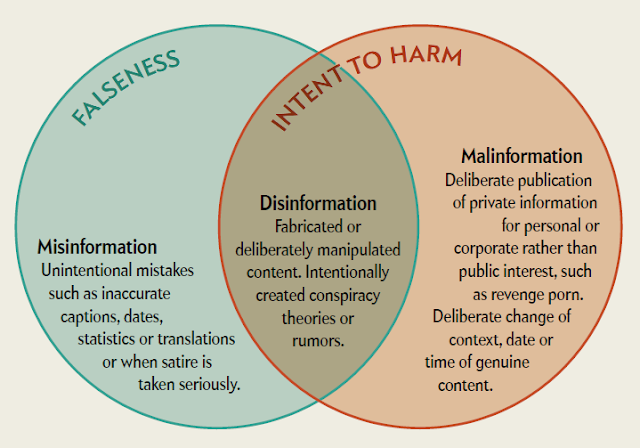
(Claire Wardle, A New World Disorder, Scientific American, September 2019, p 90)
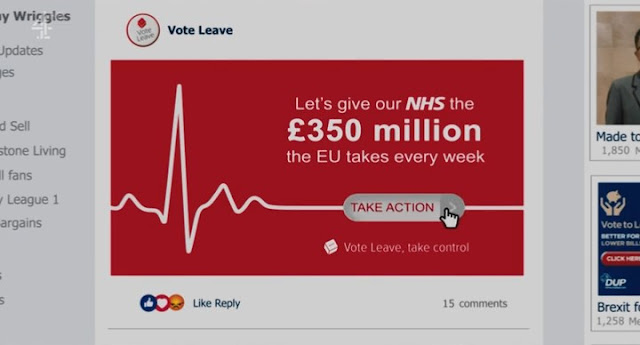
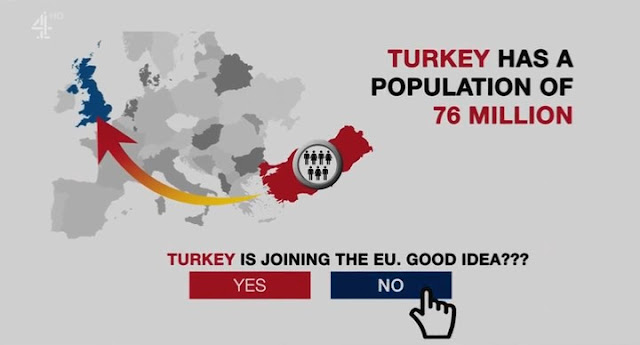
Who controls the Past controls the Future
Who controls the Present controls the Past
— George Orwell (1903 – 50), Nineteen Eight-Four, 1949.
The struggle of Man against Power
Is the struggle of Memory against Forgetting
— Milan Kundera (1929), The Book of Laughter and Forgetting, 1979.
Three Categories of Information Disorder
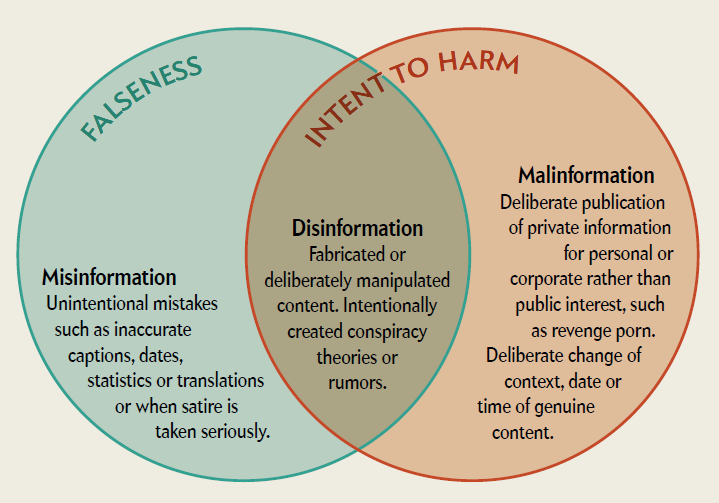
(Claire Wardle, A New World Disorder, Scientific American, September 2019, p 90)
Edward Bernays (1891 – 1995):
The conscious and intelligent manipulation of the organized habits and opinions of the masses is an important element in democratic society.
Those who manipulate this unseen mechanism of society constitute an invisible government that is the true ruling power of this country.
We are governed, our minds molded, our tastes formed, our ideas suggested, largely by men we have never heard of. …
In almost every act of our daily lives, whetherwe are dominated by the relatively small number of persons … who understand the mental processes and social patterns of the masses.
- in the sphere of politics or business, [or]
- in our social conduct or our ethical thinking,
It is they who:(Organizing Chaos, Propaganda, Chapter 1, 1928, emphasis added.
- pull the wires [that] control the public mind,
- harness old social forces, and
- contrive new ways to bind and guide the world.
Stuart Ewen (1945) [Historian of Public Relations]:
[In a consumer society, it's] not that the people are in charge, but that the people's desires are in charge.
Paul Mazur [Lehman Brothers]:
We must shift … from a needs to a desires culture.
People must be trained to desire — to want new things even before the old have been entirely consumed.
We must shape a new mentality …
Man's desires must overshadow his needs.
(Adam Curtis, Happiness Machines, The Century of the Self, Episode 1, 2002)
Propaganda:
A concerted set of messages aimed at influencing the opinions or behavior of large numbers of people.
(Wiktionary, 16 February 2013)
Danny Glover:
Every aspect of our lives — from what we buy, what is sold to us, who produces it — all those things are connected.
It's not only a monopoly of wealth, it's a monopoly of information …
Noam Chompsky (1928):
The United States is unusual among the industrial democracies in the rigidity of the system of ideological control … exercised through the mass media.
(Jean-Philippe Tremblay, Shadows of Liberty, 2012)
Thomas Paine (1737 – 1809):
When men yield up the exclusive privilege of thinking, the last shadow of liberty quits the horizon.
(1776)
Edward Murrow (1908 – 1965):
We must remember always, that accusation is not proof, and that conviction depends upon evidence and due process of law.
We will not walk in fear, one of another.
We will not be driven by fear into an age of unreason if we dig deep into our history and our doctrine, and remember that we are not descended from fearful men.
Not from men who feared to write, to associate, to speak, and to defend the causes that were for the moment unpopular.
This is no time for men who oppose Senator McCarthy's methods to keep silent …
We can deny our heritage and our history but we cannot escape responsibility for the result.
We proclaim ourselves as indeed we are, the defenders of freedom wherever it continues to exist in the world.
But we cannot defend freedom abroad by deserting it at home. …
[Our] history will be what we make it.
If we go on as we are, then history will take its revenge, and retribution will not limp in catching up with us.
Just once in a while let us exalt the importance of ideas and information. …
Good night, and good luck.
(George Clooney, Good Night, and Good Luck, 2005)
Ours For The Taking
We have fought [and won] without a single bullet being fired.
— Nigel Farage (1964), 24 June 2016.
There's a systems failure in this country and across the West.
We're languishing.
We're drifting without a vision or a purpose.
What do you do … when there's a systems failure?
You reset.
— Dominic Cummings (1971)

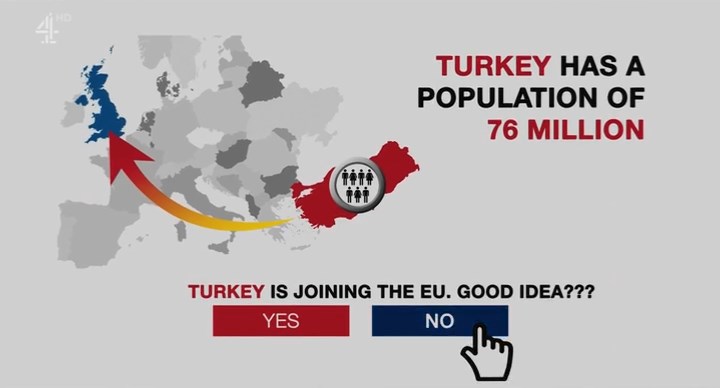
Craig Oliver (1969) [Director of Communications for David Cameron, 2011–16]:
There's the danger [with the Brexit referendum] of having unleashed something which we can't then control.
Michael Gove (1967) [Conservative Cabinet Minister]:
[David Cameron] said, if I get what I want, and we win this, it will destroy him.
Dominic Cummings (1971) [Political Strategist]:
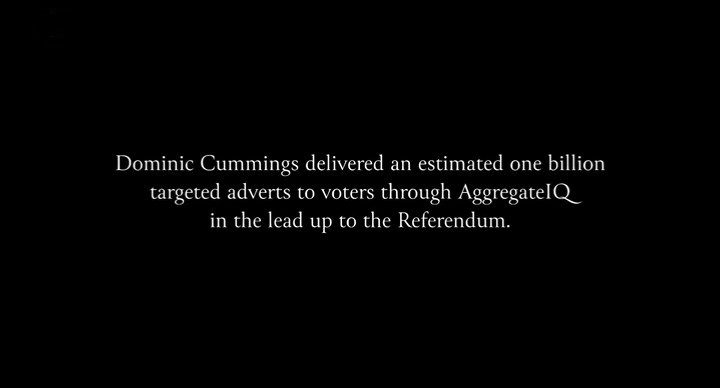
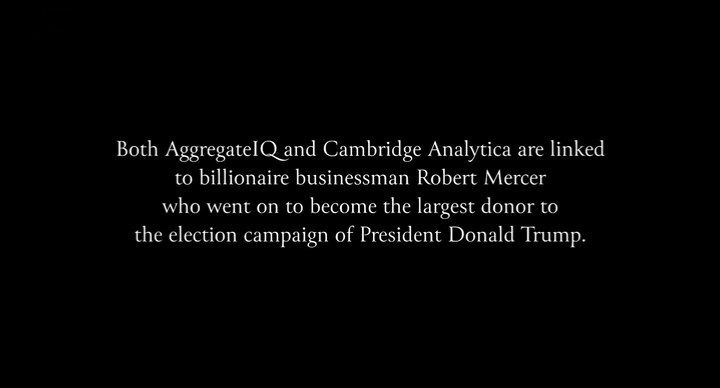
[The social network data miners at AggregateIQ have found] 3 million potential voters not on any voter database …
Remain have no idea they exist.
If we can reach 'em, they're ours for the taking.
July 13, 2013
Categories and Dimensions
Live Long and Prosper


(Adapted from Dan Kahan & Mary Douglas)


(Adapted from Shalom Schwartz in Tim Jackson, Prosperity Without Growth, 2nd Edition, 2017,
Figure 7.2, p 136)
The philosophy of the Greeks reveals throughout its stages the influence of a number of dualisms.
In one form or another these have continued to be topics about which philosophers write or argue.
At the basis of them all lies the distinction between truth and falsehood.
Closely connected with it … are the dualisms of good and evil, and of harmony and strife.
Then there [are the dualisms] of appearance and reality … mind and matter, and freedom and necessity.
Further, there are cosmological questions concerning whether things are one or many, simple or complex, and finally the dualisms of chaos and order, and of the boundless and the limit. …
Truth and falsehood are discussed in logic.
Good and evil, harmony and strife, are questions belonging … to ethics.
Appearance and reality, and the question of mind and matter, might be set down as the traditional problems of the theory of knowledge, or epistemology.
The remaining dualisms belong to ontology, or the theory of being.
(Wisdom of the West, 1959, p 14-5)
The Needs of the Many
[The] needs of the many outweigh the needs of the few …
— Nicholas Meyer (1945), Star Trek II: The Wrath of Khan, 1982.
[Our] administration favours the many instead of the few
This is why it is called a democracy
— Pericles (c495 – 29 BCE), Funeral Oration, Athens, 431 BCE.
Society is an educational product. …
It is no good asking people what they want …
That is the error of democracy.
You have first to think out what they ought to want — if society is to be saved.
Then you have to: tell them what they want, and see that they get it.
— Herbert Wells (1866 – 1946), The Shape of Things to Come, 1933.
Reformers seek to make things better
Reactionaries, to stop things from getting worse
— peaceandlonglife
Henry Brands (1953) [Historian]:
The essence of democracy is equality.
Everybody gets one vote.
The essence of capitalism is inequality.
Rich people are much more powerful than poor people.
(Sarah Colt, PBS The Gilded Age, 2018)
The Purposes of Society:
- Maximize the benefits of cooperation
- Distribute those benefits fairly
- Minimize free-riding
(Adapted from Dan Kahan & Mary Douglas)
Stratification(Vertical Distribution of Power) | |
Hierarchy(Freedom for the Few) | Equality(Justice for the Many) |
| Winners | Losers |
| Rule Maker | Rule Taker |
| Privilege | Disadvantage |
| Deserving | Undeserving |
| Rich | Poor |
| Virtue | Vice |
| Reward | Punish |
| Tax Cuts | Spending Cuts |
| Incentives | Deterrents |
| Carrots | Sticks |
| Lifters | Leaners |
| Producers | Parasites |
Cohesion(Horizontal Strength of Connection) | |
Individualism | Collectivism |
| Competition | Cooperation |
| Rationality | Morality |
| Self-interest | Common Interest |
| Better for Each | Better for All |
| Egoism | Altruism |
| Market Norms | Social Norms |
| Individuality | Community |
| Independence | Interdependence |
| Autonomy | Solidarity |
| Self-Reliance | Mutual Aid |
| Atomization | Cohesion |
| Fear | Trust |
| Private | Public |
| Privatization | Nationalization |
| Private Property | Common Wealth |
Government(Politics) |
Society(Culture) |
Economy(Economics) |
Conservative(Hierachical Individualism) | ||
| Plutocratic Oligarchy | Collectivism | Individualism |
Libertarian(Egalitarian Individualism) | ||
| Market Democracy | Individualism | Individualism |
Progressive(Egalitarian Collectivism) | ||
| Social Democracy | Individualism | Collectivism |
Authoritarian(Hierarchical Collectivism) | ||
| Totalitarian Oligarchy | Collectivism | Collectivism |
Socialism(Slavery & Serfdom) | Liberalism(Capitalism) | Conservatism(Feudalism) |
| Democracy | Plutocracy | Aristocracy |
| Labor | Capital | Land |
| Wages | Profits | Rents |
| Lower Class | Middle Class | Upper Class |
Games |
|
|---|---|
| Positive Sum | Win-Win |
| Zero Sum | Win-Lose |
| Negative Sum | Lose-Lose |
(Adapted from Shalom Schwartz in Tim Jackson, Prosperity Without Growth, 2nd Edition, 2017,
Figure 7.2, p 136)
Bertrand Russell (1872 – 1970)
The philosophy of the Greeks reveals throughout its stages the influence of a number of dualisms.
In one form or another these have continued to be topics about which philosophers write or argue.
At the basis of them all lies the distinction between truth and falsehood.
Closely connected with it … are the dualisms of good and evil, and of harmony and strife.
Then there [are the dualisms] of appearance and reality … mind and matter, and freedom and necessity.
Further, there are cosmological questions concerning whether things are one or many, simple or complex, and finally the dualisms of chaos and order, and of the boundless and the limit. …
Truth and falsehood are discussed in logic.
Good and evil, harmony and strife, are questions belonging … to ethics.
Appearance and reality, and the question of mind and matter, might be set down as the traditional problems of the theory of knowledge, or epistemology.
The remaining dualisms belong to ontology, or the theory of being.
(Wisdom of the West, 1959, p 14-5)
July 2, 2013
Values and Virtues
Live Long and Prosper

[Historically, belief] in God, or in many gods, prevented the free development of moral reasoning.
[Since open disbelief in God] is a recent event … Non-Religious Ethics is at a very early stage.
We cannot yet predict whether, as in Mathematics, we will all reach agreement.
Since we cannot know how Ethics will develop, it is not irrational to have high hopes. …
[Self Interest Theory (S) is the theory of rationality] that gives most importance to:S tells me to do whatever will be best for me.
- the difference between people, or
- the separateness of persons.
For S, the fundamental units are different lives.
My supreme concern should be that my whole life goes as well as possible.
Each person is rationally required to give to himself, and to his own life, absolute priority.
— Derek Parfit (1942 – 2017), Reasons and Persons, Oxford University Press, 1984, pp 444 & 454.
Four Horsemen of Relational Apocalypse(John Gottman & Robert Levenson) | |||
| Criticism | Defensiveness | Contempt | Stonewalling |
Agents | Actions | Outcomes |
| Praise | Right | Good |
| Blame | Wrong | Bad |
Virtue | Vice | |
| Intellectual | Knowledge | Ignorance |
| Reason | Faith | |
| Moral | Kindness | Cruelty |
| Wisdom | Folly |
Freedom(Philip Pettit) | |
| Neoliberal | Neorepublican | Non-interference | Non-domination |
| Negative Freedom | Positive Freedom |
| License | Liberty |
Slavery | |
|---|---|
| Freedom to Dominate | Obligation to Submit |
| Right to Command | Duty to Obey |
Enlightenment Values(Steven Pinker) | |||
| Reason | Science | Humanism | Progress |
Moral Foundations Theory(Jonathan Haidt) | |
| Care | Harm |
| Fairness | Cheating |
| Liberty | Oppression |
| Loyalty | Betrayal |
| Authority | Subversion |
| Sanctity | Degradation |
Peterson and Seligman | |
|---|---|
| Virtues | Character Strengths |
| Wisdom | Curiosity Love of learning Judgment Ingenuity Emotional intelligence Perspective |
| Courage | Valor Perseverance Integrity |
| Humanity | Kindness Loving |
| Justice | Citizenship Fairness Leadership |
| Temperance | Self-control Prudence Humility |
| Transcendence | Appreciation of beauty and excellence Gratitude Hope Spirituality Forgiveness Humor Zest |
Abraham Maslow (1908 – 1970)
Derek Parfit (1942 – 2017):
The truth may be disturbing.
Consider the claim that the Universe was not created by a benevolent God.
Many people find this claim disturbing; but this cannot show it to be false.
If some truth is disturbing, this is no reason not to believe it. …[Wishful] thinking is theoretically irrational, but it may be practically rational [if, for instance,] it was the only way to save ourselves from severe depression.
- It might be a reason for trying to conceal this truth from others.
- It might even be a reason for trying to deceive ourselves, so that we cease to believe this truth.
(p 324, emphasis added)
We ought not to do to our future selves what it would be wrong to do to other people.
(Reasons and Persons, Oxford University Press, 1984, p 320)
John Steinbeck (1902 – 68):
There ain't no sin and there ain't no virtue.
There's just stuff people do.
It's all part of the same thing.
And some of the things people do is nice, and some ain't nice, but that's as far as any man got a right to say.
(The Grapes of Wrath, 1939, p 28)
Martin Luther King Jnr (1929 – 68):
Ultimately, it isn't so important how long you live.
The important thing is how well you live.
Noam Chomsky (1928):
[We] have two choices:That's not much of a choice.
- we can decide to be pessimistic, decide nothing's possible and quit and help guarantee that the [worst] will happen, or
- we can put in whatever effort we can as individuals to try to improve things and maybe it will make the world better. …
(Noam Chomsky, American linguist, philosopher & activist, Sunday Profile, ABC Radio National, 6 November 2011)
John Stuart Mill (1806 – 73):
[The] utilitarian standard … enjoins and requires the cultivation of the love of virtue … as being above all things, important to the general happiness. …
(Chapter IV)
The entire history of social improvement has been a series of transitions by which one custom or institution after another, from being a supposed primary necessity of social existence, has passed into the rank of a universally stigmatized injustice and tyranny.
So it has been with the distinctions ofand so it will be … with the aristocracies of color, race, and sex.
- slaves and freeman,
- nobles and serfs,
- patricians and plebians;
(Utilitarianism, Fraser's Magazine, 1961, Chapter V)
Karl Popper (1902 – 94):
Instead of the greatest happiness for the greatest number …
[One] should demand … the least amount of avoidable suffering for all …
(The Open Society and Its Enemies, Volume 1: The Spell of Plato, 1945)
Russel Hardin:
The moral impulse of utilitarianism is constant …
[But] our decisions under it are contingent on our knowledge and scientific understanding.
(Morality within the Limits of Reason, 1990)
George Moore (1873 – 1958):
An ethical law has the nature not of a scientific law but of a scientific prediction …
[It] is always merely probable, although the probability may be very great.
(Principia Ethica, 1903)
Immanuel Kant (1724 – 1804):
To help others where one can is a duty, and besides this there are many spirits of so sympathetic a temper that, without any further motive of vanity or self-interest, they find an inner pleasure in spreading happiness around them and can take delight in the contentment of others as their own work.
Yet I maintain that … action of this kind [has] no genuinely moral worth [because] its maxim lacks moral content, namely the performance of such actions, not from inclination, but from duty.
(H J Paton, Translator, Kant, The Moral Law: Kant's Groundwork of the Metaphysic of Morals, Hutchinson, 1966, p 10, emphasis added)
Neal Stephenson (1959):
It is upon moral qualities that society is ultimately founded.
All the prosperity and technological sophistication is of no use without that foundation …
(The Diamond Age, Penguin, 1996, p 322)
John Rawls (1921 – 2002):
The natural distribution is neither just nor unjust; nor is it unjust that persons are born into society at some particular position. These are simply natural facts.
What is just and unjust is the way that institutions deal with these facts.
(Quoted by Michael Sandel, Justice: What's A Fair Start?, February 2011)
May 23, 2013
Civilization
Live Long and Prosper

97 out of 100 active climate researchers are CONVINCED that human induced climate change is underway.
Every country will be affected, and no-one can opt out.
Each country has to contribute, and those countries who are industrialised must contribute more to help those who are not.
It is life itself, incomparably precious, that distinguishes us from the other planets.
It is life itself, that we must battle to preserve.
— Margaret Thatcher (1925 – 2013), London Saving the Ozone Layer Conference, March 1989.
[The] most objectionable feature of the conservative attitude is its propensity to reject well-substantiated new knowledge because it dislikes some of the consequences which seem to follow from it …
Should our moral beliefs really prove to be dependent on factual assumptions shown to be incorrect, it would be hardly moral to defend them by refusing to acknowledge facts.
— Friedrich Hayek (1899 – 1992), Why I Am Not a Conservative, The Constitution of Liberty, University of Chicago Press, 1960.
Freedom in a commons brings ruin to all. …
The individual benefits as an individual from his ability to deny the truth even though society as a whole, of which he is a part, suffers.
— Garrett Hardin (1915 – 2003), The Tragedy of the Commons, Science, Vol 162,
American Association for the Advancement of Science, 13 December 1968, p 1244.
Reality
Is what kills you
If you ignore it for long enough
— peaceandlonglife
97 out of 100 active climate researchers are CONVINCED that human induced climate change is underway.
Mark Pesce (1962) [Futurist]:
One of my friends taught me long ago that: reality is that which kills you when you ignore it long enough.
(Dangers of digital tribalism, Sunday Extra, ABC Radio National, 17 May 2015)
Garrett Hardin (1915 – 2003):
World food banks move food to the people, hastening the exhaustion of the environment of the poor countries.
Unrestricted immigration, on the other hand, moves people to the food, thus speeding up the destruction of the environment of the rich countries. …
We are all the descendants of thieves, and the world's resources are inequitably distributed.
[However, we] cannot remake the past.
We cannot safely divide the wealth equitably among all peoples so long as people reproduce at different rates.
To do so would [only] guarantee that future generations would have … a ruined world to inhabit.
(Lifeboat Ethics: The Case Against Helping the Poor, Psychology Today, 1974)
Alistair Cooke (1908 – 2004):
[As for the] pollution of the atmosphere, the cities, and the rivers — the destruction of Nature.
I find it impossible to believe that a nation that [has produced so many] ingenious human beings … is going to sit back and let the worst happen …
(David Heycock, The More Abundant Life, America, Episode 13, 1972)
Rachel Carson (1907 – 64):
The balance of nature is not a status quo; it is fluid, ever shifting, in a constant state of adjustment.
Man, too, is part of this balance.
Sometimes the balance is in his favor; sometimes — and all too often through his own activities — it is shifted to his disadvantage.
(Chapter 15, Silent Spring, 1962)
Kim Robinson (1952):
[In the late 21st century] capitalism writhed in its internal decision concerning whether to destroy Earth’s biosphere or change its rules.
Many argued for the destruction of the biosphere, as being the lesser of two evils
(2312, Orbit, 2012, p 124)
Philip Dick (1928 – 82):
Reality is that which, when you stop believing in it, doesn't go away.
(How to Build a Universe that Doesn't Fall Apart Two Days Later, 1978)
Rudyard Kipling (1865 – 1936):
Cities and Thrones and Powers
Stand in Time's eye,
Almost as long as flowers
Which daily die:
But, as new buds put forth
To glad new men,
Out of the spent and unconsidered Earth
The Cities rise again.
(Cities and Thrones and Powers, Puck of Pook's Hill, 1906)
James Cameron:
There is no fate but what we make for ourselves.
(Terminator, 1984)
James Hansen:
Human-made climate change is … the greatest threat civilization faces.
(Storms Of My Grandchildren, Bloomsbury, 2009, p 70)
Tim Flannery:
If humans pursue a business-as-usual course for the first half of this century, I believe the collapse of civilisation due to climate change becomes inevitable.
(The Weather Makers, Text, 2005, p 209)
Al Gore:
[What] is at stake is the set of environmental conditions and the health of the natural systems on which our civilization depends.
(The Future, 2014)
Ross Garnaut [Professor of Economics, Australian National University]:
With human society, if you give it a big enough shock, things fall apart. …
We've got plenty examples of history.
Germany, at the time arguably … in the 20's and 30's … the best educated community … in some sense one of the highest points of civilisation … had the shock of … very high unemployment for a period and the normal moral foundations of society fell apart …
That's the sense which I see civilisation threatened by [an] increase in temperature of four degrees.
We would be giving human society such a big shock, displacing so many people, shaking the foundations of organized society to an extent that it's unlikely that normal patterns of political and social organization would survive.
And so then you do get disintegration of civilisation as we know it.
(Cutting Carbon: Australian Answers to a World Problem, 12 June 2014)
William Nordhaus:
Once we open the door to consider catastrophic changes, a whole new debate is engaged.
If we do not know how human activities will affect the thin layer of life-supporting activities that gave birth to and nurture human civilisation and if we cannot reliably judge how potential geophysical changes will affect civilisation and the world around us … should we not be ultra-conservative and tilt towards preserving the natural world at the expense of economic growth and development?
Do we dare put human betterment before the preservation of natural systems and trust that human ingenuity will bail us out should Nature deal us a nasty hand?
(Climate Change, 1996)
Alfred Wallace (1823 – 1913):
[The atmosphere is] a most complex structure, a wonderful piece of machinery, [which,] inmay be truly considered to be the very source and foundation of life itself.
- its various component gases,
- its actions and reactions upon the water and the land,
- its production of electrical discharges, and
- its furnishing the elements from which the whole fabric of life is composed and perpetually renewed,
(Man's Place in the Universe, 5th Ed, 1905, pp 258-9)
Dan Kahan:
[There] is no logical connection between what you propose to do to solve a problem and whether there … is a problem in the first place.
Either the earth is heating up, it's being caused by humans, and it's going to have a bad effect — or not.
[Whether] those are true propositions or not does not depend [on how] you're proposing to deal with that problem …
(Water Institute Lecture, 2009)
Nate Silver:
Human beings have an extraordinary capacity to ignore risks that threaten their livelihood, as though this will make them go away.
(The Signal and the Noise, 2012, p 25)
Myron Ebell:
[If it turns out we're wrong about anthropogenic climate change, then] I'll have to say I’m sorry and I wish we could speed up our efforts to reverse the policies that we have supported here at [the Competitive Enterprise Institute.]
(Climate of Doubt, PBS Frontline, 23 October 2012)
Richard Lindzen:
[The] likelihood over the next century of greenhouse warming reaching magnitudes comparable to natural variability seems small.
(MIT Tech Talk, 27 September, 1989)
Alexis de Tocqueville (1805 – 59):
A false notion which is clear and precise will always meet with a greater number of adherents in the world than a true principle which is obscure or involved.
(Democracy in America, 1835, Bantam 2011, p 189)
The Last Great Global Warming
| Cretaceous Hothouse | Paleocene-Eocene Thermal Maximum (PETM) | Anthropocene | |
| Speed of Warming | Slow | Moderate | Fast |
| Rate of Carbon Release (petagrams per year) | < 2 [1] | 9 to 25 [2] | |
| Rate of Temperature Rise (degrees Celsius per century) | 0.000025 | 0.025 | 1 to 4 |
| Absolute Temperature Rise (degrees Celsius) | 5 (Over 20 million years) |
5 [to 9] (Over 20 thousand years) | 2 to 10 (Projected over the next 200 to 300 years) |
| Duration (years) |
Millions | Thousands [3] | Tens to Hundreds |
| Main underlying cause | Volcanic eruptions | Volcanoes Methane bubbling up from the ocean bottom Peat and coal fires Thawing permafrost | Fossil-fuel burning |
| Environmental change | Oceans absorbed carbon dioxide slowly so did not acidify | Deep sea acidification | Acidifying oceans More extreme weather Glacier melting Sea-level rise |
| Ecological Impact | Nearly all creatures had time to adapt or migrate | Poleward movement of many species Habitat loss Coral bleaching Extinctions | |
Notes:(Lee Kump, Implications: Lessons from Past Warmings, Scientific American, July 2011,
- [The] rate of [atmospheric carbon] injection during the PETM was less than two petagrams a year …
- [We] are now pumping nine petagrams of carbon into the atmosphere every year …
[Consequently,] C02 concentrations are rising [around] 10 times faster now than they did during the PETM. …
Projections that account for population growth and increased industrialization of developing nations indicate that rate may reach 25 petagrams a year before all fossil-fuel reserves are exhausted. …- It took nearly 200,000 years for the earth's natural buffers to bring the fever down.
pp 42, 44-45, adapted)
Would you like to know more?
March 27, 2013
Ministry of Peace
Live Long and Prosper
The Causes of Perpetual War(Thomas Hobbes) | ||
| Competition | Diffidence | Glory |
| Gain | Safety | Reputation |
| Predation | Preemption | Deterrence |
The Causes of Perpetual Peace(Immanuel Kant) | ||
| Democracy | Trade | Intergovernmental Organizations |
March 16, 2013
Ministry of Love
Live Long and Prosper
Social Psychologist, Queensland University
[The myth of pure evil posits a] force, or person, that seeks relentlessly to inflict harm, with no positive or comprehensible motive, deriving enjoyment from the suffering of others …
It maliciously and gratuitously seeks out unsuspecting, innocent victims from among the good people of the world.
It is
(pp 74-5)
[In reality there] are four major root causes of evil, or reasons that people act in ways that others will perceive as evil.
Ordinary, well-intentioned people may perform evil acts when under the influence of these factors, singly or in combination. …
The answer is that violent impulses are typically restrained by inner inhibitions; people exercise self-control to avoid lashing out at others every time they might feel like it.
The four root causes of evil must therefore be augmented by an understanding of the proximal cause, which is the breakdown of these internal restraints.
(pp 376-7)
A common and important cause of evil is the quest to avenge blows to one's pride.
Dangerous people, from playground bullies to warmongering dictators, consist mainly of those who have highly favorable views about themselves.
They strike out at others who question or dispute those favorable views.
(p 135)
[Most] violent people have high opinions of themselves, but most people with high opinions of themselves are not violent.
Violent people are an important but distinct, atypical minority of people with high self-esteem.
The most potent recipe for violence is a favorable view of oneself that is disputed or undermined by someone else—in short, threatened egotism.
(p 341)
The individualism of modern American society leads directly to worship of self-esteem and contempt for guilt. …
Self-esteem is better for the individual and worse for the community, and so Americans prize self-esteem.
Guilt is better for the community and worse for the individual, and so they detest guilt.
The American attitude that values the rights of the individual above the community's best interest apparently contributes to high levels of happiness contributes to individual freedom, and deters tyranny.
But it also promotes violence, along with oppression and individual forms of evil.
(p 313)
Egotism is … on the rise, especially now that modern morality has abandoned its religious commitment to humility and the condemnation of selfishness.
At the international level, one has to worry about Russia, whose rapid loss of global prominence and prestige is reminiscent of the humiliations that pushed Germany toward World War II. …
In the United States, the [national trend is] toward pursuing self-esteem and relaxing self-control.
As long as this trend predominates, it seems safe to expect that individual crime and violence in the United States will be high. …
Idealistic violence is difficult to forecast.
Christianity no longer seems to have the force to set off holy wars, but Islam does.
(p 384)
[All] over the world, regardless of culture or background, the same biological group is responsible for the bulk of the violence: young males from puberty through the prime age of reproductive potency.
(p 381)
The tendency to align with one's fellows and feel hostile toward potential opponents and rivals seems almost ineradicable. …
Yet culture can exert a great deal of influence in teaching people how to express and control their aggressive impulses. …
Equalizing opportunity can perhaps reduce the tendency to resort to violent means as a way of achieving material gain, although there is no very convincing proof of this.
Decreasing the emphasis on pride, self-esteem, and public respect, or providing multiple and clear criteria for proving oneself, may work against the tendency to use violence to maintain one's face.
A strong cultural belief in the rights of individuals and in the inability of noble ends to justify violent means can help prevent idealism from fostering brutality.
(p 382)
Future generations are likely to look back on people living now as evil, because of the profligate use of the planet's limited and dwindling resources. …
[But, unlike] the slave traders or warmongers of past eras [it will be future populations who] will be our victims …
The future will have its own version of Satan, and it is likely to be you and me (and our governments).
But, like most perpetrators, we do not see ourselves as doing evil.
(p 385, emphasis added)
[While the] victim's perspective [needs to be temporarily] suppressed for the sake of [understanding] the perpetrator, [it] is essential for making a moral judgment of the perpetrator.
It is a mistake to let moral condemnation interfere with trying to understand — but it would be a bigger mistake to let that understanding, once it has been attained, interfere with moral condemnation.
(p 387)
(Evil: Inside Human Violence and Cruelty, W H Freeman / Holt, 1997 / 2001)
The Myth of Pure Evil
Fear begets Anger
Anger begets Hatred
Hatred begets Cruelty
Cruelty begets Suffering
— peaceandlonglife
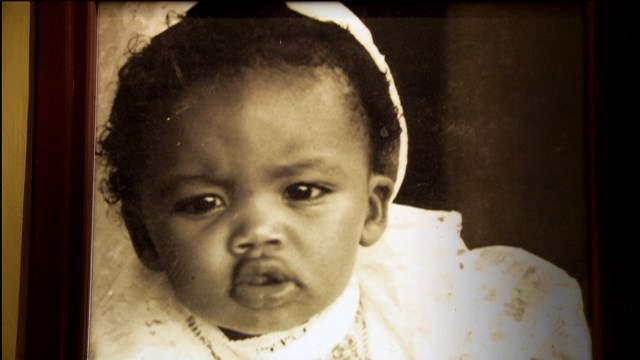

Roy Baumeister (1953)
Social Psychologist, Queensland University
[The myth of pure evil posits a] force, or person, that seeks relentlessly to inflict harm, with no positive or comprehensible motive, deriving enjoyment from the suffering of others …
It maliciously and gratuitously seeks out unsuspecting, innocent victims from among the good people of the world.
It is
- the eternal other,
- the enemy,
- the outsider,
(pp 74-5)
[In reality there] are four major root causes of evil, or reasons that people act in ways that others will perceive as evil.
Ordinary, well-intentioned people may perform evil acts when under the influence of these factors, singly or in combination. …
- The first root cause of evil is the simple desire for material gain, such as money or power. …
- The second root of evil is threatened egotism. …
- The third root of evil is idealism. …
- The fourth root of evil is the pursuit of sadistic pleasure.
[However,] only about 5-6% of perpetrators actually get enjoyment out of inflicting harm. …
The answer is that violent impulses are typically restrained by inner inhibitions; people exercise self-control to avoid lashing out at others every time they might feel like it.
The four root causes of evil must therefore be augmented by an understanding of the proximal cause, which is the breakdown of these internal restraints.
(pp 376-7)
A common and important cause of evil is the quest to avenge blows to one's pride.
Dangerous people, from playground bullies to warmongering dictators, consist mainly of those who have highly favorable views about themselves.
They strike out at others who question or dispute those favorable views.
(p 135)
[Most] violent people have high opinions of themselves, but most people with high opinions of themselves are not violent.
Violent people are an important but distinct, atypical minority of people with high self-esteem.
The most potent recipe for violence is a favorable view of oneself that is disputed or undermined by someone else—in short, threatened egotism.
(p 341)
The individualism of modern American society leads directly to worship of self-esteem and contempt for guilt. …
Self-esteem is better for the individual and worse for the community, and so Americans prize self-esteem.
Guilt is better for the community and worse for the individual, and so they detest guilt.
The American attitude that values the rights of the individual above the community's best interest apparently contributes to high levels of happiness contributes to individual freedom, and deters tyranny.
But it also promotes violence, along with oppression and individual forms of evil.
(p 313)
Egotism is … on the rise, especially now that modern morality has abandoned its religious commitment to humility and the condemnation of selfishness.
At the international level, one has to worry about Russia, whose rapid loss of global prominence and prestige is reminiscent of the humiliations that pushed Germany toward World War II. …
In the United States, the [national trend is] toward pursuing self-esteem and relaxing self-control.
As long as this trend predominates, it seems safe to expect that individual crime and violence in the United States will be high. …
Idealistic violence is difficult to forecast.
Christianity no longer seems to have the force to set off holy wars, but Islam does.
(p 384)
[All] over the world, regardless of culture or background, the same biological group is responsible for the bulk of the violence: young males from puberty through the prime age of reproductive potency.
(p 381)
The tendency to align with one's fellows and feel hostile toward potential opponents and rivals seems almost ineradicable. …
Yet culture can exert a great deal of influence in teaching people how to express and control their aggressive impulses. …
Equalizing opportunity can perhaps reduce the tendency to resort to violent means as a way of achieving material gain, although there is no very convincing proof of this.
Decreasing the emphasis on pride, self-esteem, and public respect, or providing multiple and clear criteria for proving oneself, may work against the tendency to use violence to maintain one's face.
A strong cultural belief in the rights of individuals and in the inability of noble ends to justify violent means can help prevent idealism from fostering brutality.
(p 382)
Future generations are likely to look back on people living now as evil, because of the profligate use of the planet's limited and dwindling resources. …
[But, unlike] the slave traders or warmongers of past eras [it will be future populations who] will be our victims …
The future will have its own version of Satan, and it is likely to be you and me (and our governments).
But, like most perpetrators, we do not see ourselves as doing evil.
(p 385, emphasis added)
[While the] victim's perspective [needs to be temporarily] suppressed for the sake of [understanding] the perpetrator, [it] is essential for making a moral judgment of the perpetrator.
It is a mistake to let moral condemnation interfere with trying to understand — but it would be a bigger mistake to let that understanding, once it has been attained, interfere with moral condemnation.
(p 387)
(Evil: Inside Human Violence and Cruelty, W H Freeman / Holt, 1997 / 2001)
Subscribe to:
Posts (Atom)