Showing posts with label Communications. Show all posts

January 6, 2018

Brothers in Arms

PBS American Experience


Forever Free

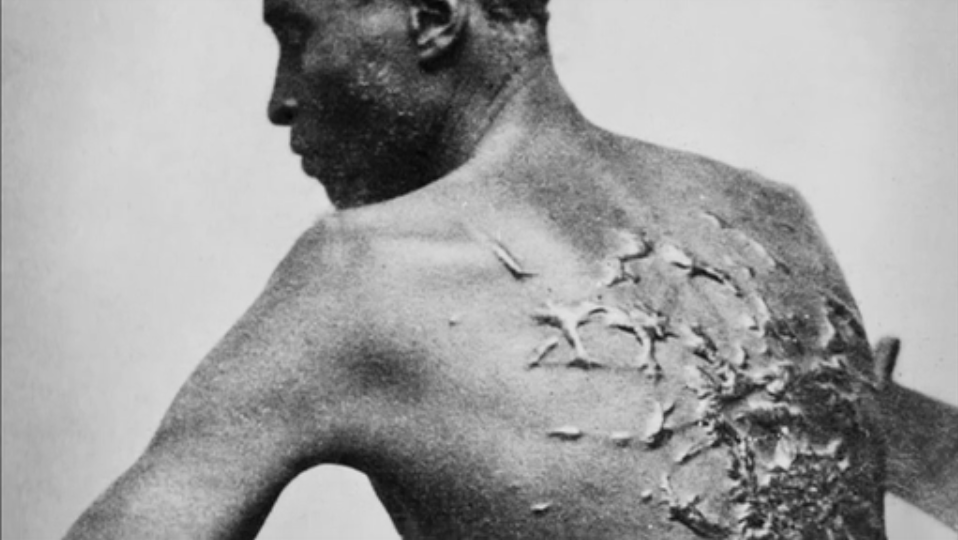
[As of] the first day of January in the year of our Lord, one thousand eight hundred and sixty-three, all persons held as slaves within any State, or designated part of a State, the people whereof shall then be in rebellion against the United States shall be then, thenceforward, and forever, free …

Abraham Lincoln (1809 – 65), The Emancipation Proclamation, 22 September 1862.


Fellow-citizens, we cannot escape history. …
The fiery trial through which we pass will light us down in honor or dishonor to the latest generation. …
In giving freedom to the slave … we shall nobly save, or meanly lose, the last best hope of earth.


Abraham Lincoln (1809 – 65), State of the Union Address, 1 December 1862.


Neither slavery nor involuntary servitude … shall exist within the United States, or any place subject to their jurisdiction.

Thirteenth Amendment, Section 1, United States Constitution, 18 December 1865.


Mine eyes have seen the glory of the coming of the Lord;
He is trampling out the vintage where the grapes of wrath are stored;
He hath loosed the fateful lightning of His terrible swift sword:
His truth is marching on.


Julia Howe (1819 – 1910), Battle Hymn of the Republic, November 1861.


[Men] with hoses squirt kerosene on the oranges …
A million people hungry, needing the fruit and kerosene sprayed over the golden mountains. …
Burn corn to keep warm, it makes a hot fire.
Dump potatoes in the rivers and place guards along the banks to keep hungry people from fishing them out.
Slaughter the pigs and bury them …

[A crime] that goes beyond denunciation.
[A sorrow] that weeping cannot symbolize. …
[Children] dying of pellagra … because a profit cannot be taken from an orange. …
[And,] in the eyes of the hungry, there is a growing wrath.
In the souls of the people the grapes of wrath are filling and growing heavy, growing heavy for the vintage.


John Steinbeck (1902 – 68), The Grapes of Wrath, 1939.


And that servant, which knew his lord's will, and prepared not himself, neither did according to his will, shall be beaten with many stripes.

Luke 12:47, King James Bible, 1611.


(Sarah Colt, A Nation Reborn, PBS God in America, Episode 3, 2010)

(Phillip Montgomery, Building the Economy, The American Presidency with Bill Clinton, Episode 3, 2022)


(Ken Burns, The Universe of Battle, The Civil War, Episode 5, 1990)

June 14, 2015

Big Ideas

ABC Radio National


Tony Abbott (1957):
Nauru is humane, cost effective and it's proven.
(Nauru turns on charm for visiting Abbott, Sydney Morning Herald, 13 June 2011)

Gillian Triggs (1940) [President, Australian Human Rights Commission]:
As of February [2017:]
  • 1,400 (approximately) continue to be detained in indefinite immigration detention in Australia.
  • 378 detainees, including 45 children remain in Nauru, [and]
  • 837 adult men remain, and have remained for years, on Manus.
The average time in detention is about 490 to 500 days but many have been detained for years.
When I was at Villawood, just a few days ago, I didn't meet anybody under 4 years in detention and one woman … had been detained for 7 years …
The countries of origin, of most asylum seekers and refugees, are predominantly Muslim nations: Iraq, Syria, Afghanistan, and Iran …
Religious persecution is one of the five grounds on which people can seek protection under the refugee convention. …
It is notable that Australia is the only common law country in the world that does not have a bill or charter of rights.
(Islamophobia and human rights, 18 July 2017)

John Winston Howard (1939) [Prime Minister of Australia, 1996-2007]:
[If] you try to institute a bill of rights, you run the danger of limiting, rather than expanding freedoms …
All you'll do is open up yet another avenue for lawyers to make a lot of money being human-rights … practitioners.
(Jon Faine, ABC Local Radio, Melbourne, 25 August 2000)

David Marr (1947):
[In February 2007, 85 Sri Lankan] men were brought in by barge from HMAS Success and herded onto Christmas Island's only wharf. …
Keeping the press at bay has remained a top priority in all the operations that have followed to scoop up boat people wherever they appear and detain them on Christmas Island.
(p 41)

According to the Australian government these people are not prisoners.
They've committed no crimes. …
(p 42)

The Immigration Department was playing its usual cat-and-mouse game: asylum seekers can only have a lawyer if they ask for one, and they have to ask for one by name.
Holding them incommunicado for as long as possible is about denying them a voice in both the press and refugee processing.
Good people take their careers in their hands to smuggle lawyers' names to asylum seekers.
(His Master's Voice, Quarterly Essay, Issue 26, 2007, p 44)

Lionel Shriver (1957):
My politics … are libertarian …
I don't like being told what to do.
Actually, deep down inside, I'm a 10 year old child with a problem with temper tantrums.
(Lionel Shriver on free speech, identity and the future of the US, 19 September 2016)

Bryan Stevenson [Professor of Law, New York University]:
Each of us is better than the worst thing we've ever done.
(The fight for racial justice in America, 19 March 2015)

Augustine (354 – 430):
The good Christian should be wary of mathematics and all those who make empty prophesies.
The danger already exists that mathematicians have made a covenant with the Devil to darken the spirit and confine Man to the bonds of Hell.

November 24, 2013

ABC Radio National

Australian Broadcasting Corporation


Disobedience is a greater sin than murder, unchastity, theft and dishonesty …

Martin Luther (1483 – 1546)

Scott Stevens:
Dead Poet's Society demonstrates why Aristotle did not believe that you should teach children to think for themselves.
Because the first thing they need to be taught is obedience.
In other words, respect for a master; someone who knows more than they do.
The next thing they need to be taught is the proper place of the moral emotions.
They need to be able to feel what is good, [to] feel what is beautiful, before they should be empowered to think for themselves — much less [to] think critically.
Dead Poet's Society is this orgy of free thinking and the wilful casting off of tradition.
That is the least moral approach [to] how these sorts of things ought to be taught in schools. …
If we're thinking about ethics as critical thinking … or even [of] empowering kids to think for themselves and simply not adopt tradition, or whatever their parents said, especially at an early age … this is nihilistic.
This is a recipe for disaster.
And, in fact, it's a counter-ethical or anti-ethical position to take.
(Does ethics belong in schools?, The Minefield, 13 October, 2016)

Pokemon Go is the harbinger of the end of the world as we know it.
(Pokémon Go: Revolution, Fad or Omen?, 7 July 2016)

Alvin Toffler (1928 – 2016):
Herbert Spencer maintained that:
Education has for its object the formation of character
— which, freely translated, means the seduction or terrorization of the young into the value systems of the old.
(Future Shock, Pan, 1970, p 377)


I Am Special


Lynne Malcolm:
[A] study of 15,000 college students in the US [by Jean Twenge and Kevin Campbell] showed that those from today's generation scored significantly higher on narcissistic personality traits than those from the two generations before.

Jean Twenge (1971) [Assistant Professor of Psychology, San Diego State University]:
[The] key difference between self-esteem and narcissism [is that somebody] high in self-esteem values individual achievement but they also value their relationships and caring for others.
Narcissists are missing that piece about valuing, caring and their relationships, so they tend to lack empathy, they have poor relationship skills.
[Those] communal and caring traits tend to be high in most people with self-esteem but not among those who are high in narcissism. …

[There] is a book called Good to Great that looks at the CEOs of companies …
[It turns out] that the most successful CEOs were not the narcissistic ones, it was those who were humble and hard-working and gave their teams credit.
They were team players, they got along well with others. …

So in a stock market simulation … when the stock market is going up, people who score high in narcissism, they do well, but the minute it goes down they crash harder than everyone else. …

[There is evidence of a] generational shift toward more narcissism … across many age groups …
  • there is more materialism,
  • that plastic surgery rates have gone up so much,
  • that people are buying bigger houses so each person can have more space,
  • that there is troubles in relationships. …

[People who are narcissistic … are actually less successful [in the long run] because they take too many risks, they are overconfident instead of just confident.
[And they] tend to alienate other people because they don't care about others.

[The] key to success, sure, having some self-efficacy, which is different from self-esteem, thinking — yes, I know I can do this — that's beneficial.
Self-control and hard work, that's beneficial.
And perspective-taking, something that narcissists don't do very well, to take someone else's perspective, to think about what it's like to walk around in their shoes.
That is so useful for getting along with people, whether that's at work or in your relationships.
[So it is] those qualities — self-efficacy, self-control, perspective-taking [— that] are actually more likely to lead to success than self-esteem or narcissism. …

[There] is some indication that is a little more interest in social problems and … caring for others than there was five or six years ago.
So the recession … may put the brakes on some aspects of narcissism.
[The] interesting question is what's going to happen when the economy comes back?
Will the caring and concern for others and interest in social problems and equality fade again as the economy improves?

(The Narcissism Epidemic, All In The Mind, 21 December 2014)

Would you like to know more?

October 19, 2013

Big Ideas 2013

ABC Radio National: Big Ideas


The Last Tree


Arlo Guthrie (1947)

I remember bein' a little kid one day, you know, and the teacher said:
When you see the white blast out of the school room window and the mushroom cloud, be sure and get under the desk right away. …
And that's fine, when you're five years old, or six years old.
You have to do what they say.

But when you're 12 or 13 and you start realizing it doesn't matter which way you fry.
That these people are actually insane, or they're just stupid.
And, either way, you're not expected to listen to them any more.
And so there was a time in the 60s, when it seemed like the whole world had a bunch of young people who said:
What else are these people tellin us, that is as ridiculous as that?
And so, we had, what we would call these days … a cultural revolution. …
It didn't change everything.
But it changed enough stuff.

Now we're talking about the environment.
We're arguing about it. …
We weren't doin that 50 years ago.
There was only one way to think about it, and that was:
Pollute to make money is the best way to do everything!
And that's changed.
It's changed because people started askin questions.

It doesn't matter whether they're on the Right, the Left, the this or that …
There needs to be people in every group who ask that group questions that an outsider could never ask.
So it's important to make friends in all the different groups, in all the different cultures, in all the different places …
And so that you support each other by having at least that attitude. …

I hate idea that, if you have enough money, and you have enough wealth, and you have enough influence — that you can influence entire nations, and groups of people, and take advantage of their, either, poverty or their fears, or their whatever … so that you profit by it.
Only for a short run.
You can destroy the whole world, for what?
Money.

You know, there's an old Cree Indian saying …
After you've poisoned the last lake,
And you've cut the last tree,
And you've killed the last river,
Only then will people realize that you can't eat money. …
I don't want to wait for that.
It's important to get out and talk about that.
You don't have to be right.
It's not a matter of bein right.
It's a matter of not being … herded, like some mindless cattle herd just goin down the road, goin along with the program, without at least askin.
And that's when things change.
When people are at least not afraid to ask.

(15 August 2013)

July 7, 2013

Background Briefing

ABC Radio National


Malcolm Turnbull (1954):
I regret to say, that a number of the state Labor governments have, over the years, set priorities and renewable targets that are extremely aggressive, extremely unrealistic, and have paid little or no attention to energy security. …

Tony Wood [Director, Energy Program, Grattan Institute]:
The policy that drove the 40% of electricity in South Australia coming from wind was actually a federal government policy introduced originally when John Howard was Prime Minister under a Coalition government for the Renewable Energy Target. …
[Industry then capitalised on the renewable energy target by building wind farms in the state with the most wind, that is, South Australia.]
So I would say that if you wanted to place blame on anybody for undertaking an aggressive renewable energy target and not thinking through the consequences, that blame could just as easily be laid, if not more so, at the foot of the federal government than the state government.
(System Black, 6 November 2016)

June 6, 2013

Rear Vision: 2012

ABC Radio National: Rear Vision

Peter Whiteford:
In Australia we spend about 3% of gross domestic product on age pensions currently, and by the middle of the century with the ageing of the population that’s projected to increase to 4.5 to 5% …

[The Scandinavians] spend a lot more than Australia [on welfare], but they [spend it] on childcare and labour market programs [—] on ways of getting people into work and keeping them in work, as opposed to retiring and withdrawing from the labour force.
[Because their] systems … support participation and … employment [they also] support the funding of the welfare state. …

[We] target to the lowest income groups more than any other country in the OECD …
[The] amount of money in terms of social security that we spend on the poorest 20% of the population is 12 times as much as we spend on the richest 20%.
[In] the next nearest country — New Zealand — that ratio’s about less than half of what it is in Australia. …

Francis Castles:
Australia has [arguably] the most coherent and consistent welfare state of any country in the western world in as far as virtually all its benefits have the same character:
  • they’re flat rate,
  • they’re not very generous …
  • they are invariably means tested, and
  • they’re funded from the general exchequer rather than by contributions. …

Australia’s welfare state is … considerably smaller than most western states …
[According to the OECD Australian expenditure] was the lowest of all the advanced states [on]
  • pensions,
  • unemployment benefits,
  • housing support,
  • childcare,
  • [aged care] and
  • health.
We spend less as a percentage of our national income … than the United States … Japan [or] Greece.

When the [Hawke] Labor government came into office in 1983 … we were spending … just above 10% of GDP on those things …
[We’re] spending something like 16% now and that hasn’t changed [significantly] since the Howard government came into office …

[We’re] not big spenders at all.
[We do welfare] in a very egalitarian [and frugal] way.
The money we spend is very focused on those who need it.
The downside is that [because it is funded] from general revenue … people are very resistant to paying … for it …
[It is perhaps because] our welfare state is less generous to those in need than other countries [that Australia has become an increasingly] less equal place than it was in the … 1950s and ‘60s.
(Australia's welfare state, 25 November 2012)

May 28, 2013

Future Leaders

Green Army: Communications


Challenges to Australian Agriculture


Lauren Rickards and Karlie Tucker

{Australia’s river systems [already] have the lowest and most variable streamflow of any continent.}

For dryland farms (those reliant only on local rainfall) [rainfall] events will … become more intense but less frequent …
[Precipitation] will be less reliable, and the rain that does fall will be less useful for plant growth.

For irrigated farms [any] reduction in rainfall leads to a proportionately greater reduction in streamflow (water flowing into storages).
[In] the Murray-Darling Basin … a 10% drop in rainfall leads to a 35% drop in streamflow. …
[The] Murray-Darling Basin … produces 40% of Australia’s agricultural produce …
[Agricultural output] is projected to fall by 12% by 2030 and by up to 92% by 2100, if adequate mitigation measures are not undertaken. …


If Not Now, When?


Peter Christoff

Since 1990, Australia’s domestic and industrial greenhouse emissions have increased, on balance, by some 4.2%.
Its underlying emissions have increased by 28.8%.
Most of this change is associated with the unchecked development of coal-fired and gas-fired power stations to produce electricity (+47% in emissions since 1990) and increased transport use (+27%).
It is only because emissions from land clearing have been halved … that Australia has managed to offset this underlying increase and approach its Kyoto Protocol-determined target of 108% above 1990 levels.

As a result, Australia has the world’s highest level of emissions per person …

(Climate Change: On For Young and Old, 2009)

April 12, 2013

The Guardian

Green Army: Communications


Noblesse Oblige


Paul Piff: Assistant Professor, Department of Psychology and Social Behaviour, University of California, Irvine

{Wealthier individuals [are] less likely to see the kinds of risks that are associated with acting unethically.}
[They're also better able to] afford lawyers [and] to pay for the downstream consequences of [their] behaviour.
[The upper echelons of society are] are more likely to think that the pursuit of self-interest and greed is a moral and positive thing.
[As] a result of those more favourable attitudes towards greed [they are] more inclined to behave unethically.

(Wealth linked to lying, cheating and crime, PM, ABC Radio National, 28 February 2012.)


What we have been finding in dozens of studies … is that as a person's levels of wealth increase, their feelings of compassion and empathy go down.
And their feelings of entitlement … and their ideology of self interest increases.

[In one investigation into generosity,] individuals who made twenty-five, sometimes under fifteen thousand dollars a year, gave 44% more of their money to the stranger than did individuals making one hundred and fifty [to] two hundred thousand dollars a year.
[Indeed,] for the last 60 or 70 years there's been a [documented trend showing that] lower income households give proportionately more of their income to charity than higher income households.
[It turns out] the less well off you, are the more charitable you are.

[Priming studies suggest that these] differences are not innate or categorical, but are [highly sensitive] to slight changes in people's values and little nudges of compassion and bumps of empathy.

(Does Money Make You Mean?, TED Radio Hour, NPR, 4 April 2014)


The more severe inequality becomes, the more entitled people may feel and less likely to share resources they become.
The wealthier [that] segments of society become then, the more vulnerable communities may be to selfish tendencies and the less charity the least among us can expect. …

[This] idea that the more you have, the less entitled and more grateful you feel; and the less you have, the more you feel you deserve [turns out to be wrong.]
[In fact, what we find] seems to be the opposite of noblesse oblige. …

We’re not suggesting rich people are bad at all, but rather that psychological effects of wealth have these natural effects. …
While having money doesn’t necessarily make anybody anything, the rich are way more likely to prioritise their own self-interests above the interests of other people.

(The Age of Entitlement: How Wealth Breeds Narcissism, The Guardian, 7 July 2014)

Would you like to know more?

March 24, 2013

RN Breakfast

ABC Radio National


Ephesians 5:22-33:
Wives, submit yourselves unto your own husbands, as unto the Lord.
For the husband is the head of the wife, even as Christ is the head of the church …
(King James Bible, 1611)

Julia Beard:
It was … a bishop in Queensland who [drew my attention to the] cultural issues surrounding the teaching of headship — which is an emphasis in some particularly conservative evangelical parts of the church on women submitting to their husbands and on men being the 'heads'. …
[In] Australia, 1 in 5 perpetrators of domestic violence go to church.
[And, according to American researchers,] the men most likely, whether religious or non-religious, to assault their wives are evangelical men who go to church sporadically. …

It is extremely common for abusers to use words of the bible to tell them that they must obey …
That if they disobey the husband, they are disobeying God. …
I found that marital rape was very common in these situations … and that the church had a very inadequate … response to it.
The women were not believed.
If they were pastor's wives, the pastor would be believed or moved to another parish.
And … a lot of [the women] had to leave the church while the men remained within it.
(Church enabling and concealing domestic violence: Advocates, 18 July 2017)

Joe Hockey (1965) [Federal Treasurer, 2013-5]:
… I find those wind turbines around Lake George to be utterly offensive. …
I think they are just a blight on the landscape. …
[Unfortunately, we] can't knock those ones off … because there's a certain contractual obligation — I'm told.
('Ideology' driving energy policy: Australian Solar Council, 8 May 2014)

Erwin Jackson [Deputy CEO, Climate Institute]:
Over the next 15 years [the Chinese have committed to building] a power sector the size of the United States completely powered by renewable energy.
(Australia to support UN Green Climate Fund, 11 December 2014)


Who Speaks for the Dead?


Fran Kelly:
We have heard a number of comments from Iraqis … saying that their lives are better today — free of Saddam Hussein.

Peter Kilfoyle [Former Defence Minister under Tony Blair]:
Many thousands of people would agree with that.
But there's many thousands who are dead, who are not in a position to agree or disagree. …

It's wholly specious of people to say, somehow 10 years ago, the evidence was not there to suggest that they were wrong.
What's more important is the evidence was not there to show that they were right.
They should have erred on the side of caution … and they never did.

(Ten years in Iraq, 20 March 2013)

March 15, 2013

Scientific American: 2012

Scientific American


Todd Akin (1947) [US Representative (R) for Missouri (2001-2013); Member of the House Committee on Science, Space, and Technology]:
[If] it's a legitimate rape, the female body has ways to try to shut that whole thing down.
(Shawn Otto, Antiscience Beliefs Jeopardize US Democracy, 1 November 2012)

Michael Mann (1965):
[On the prospects for action on climate change.]
If we look to history, in the end, science and honesty won out …
We acted later than we should have with tobacco [and ozone depletion.]
We presumably suffered far greater damage and loss of life because we delayed action.
But we did take action.
(March, p 70)

Board of Editors [1862]:
[Abraham Lincoln] proposes to inaugurate the great jubilee with the year 1900, by payment of the owners of slaves as a mutual concession on both sides, and as a matter of justice to those who are owners of this species of property.
It being quite evident that the war between slavery and freedom will continue to waged with increased vigor the President hopes to modify its intensity, by fixing upon a certain period, when the institution shall forever cease.
He thinks this policy will shorten the war, and secure justice to all concerned; while, at the same, the country will be saved from the effects of violent and sudden changes in its domestic arrangements.

This view of the case strikes us as humane, and if the more radical portion of the two sections would but accept it, as a ground for settlement, peace would again bless us …
[But] so intensely bitter have these contending elements become, that we fear no such compromise would be acceptable or satisfactory.
(December, p 71)

Euan Nisbet [Professor of Earth Sciences, Royal Holloway, University of London]:
What we're doing at the moment is [a climate] experiment comparable on a geological scale to the big events of the past, so we would expect the inputs to have consequences similar to those in the past …
(p 41)

Ken Caldeira:
Global warming may not decrease overall food supply, but it may give more to the rich and less to the poor.
(September, p 81)

January 12, 2013

The Economist

Green Army: Communications

Almost 100% of China’s rural population now have basic health insurance … and a majority have basic pensions. …
China’s minimum wage … rose by an average of 17% [in 2011.]
(Asia, Special Report: Inequality and Social Mobility, 13 October 2012, emphasis added)

A True Progressivism


Bold moves are needed to tackle inequality and boost growth …

  1. [Curbing] cronyism and [enhancing] competition …
    • [Freeing] monopoly sectors [such as mining and railways in China.]
    • [Freeing the] financial sector, with market-driven interest rates …
    • [Removing] subsidies for too-big-to-fail financial institutions …
    • [Increasing] competition in … education. …

  2. [More] targeted and progressive social spending.
    • [Replacing] expensive universal subsidies for energy with tailored social safety nets.
    • [Wider] use of conditional cash transfers [eg] tying social assistance to individuals’ investment in skills and education. …
    • [Shifting] government spending …
      • from transfers to education, and
      • from older and richer people to younger and poorer ones.
    [America] spends barely more than 0.1% of GDP on “active labour-market policies” to get the less skilled back to work, one-fifth of the OECD average.
    Only half of American children attend pre-school.
    China plans to have 70% of its children in three years of pre-school by 2020.

  3. [Tax reform.]
    Economists argue about the disincentive effects of higher tax rates.
    [Some analysis suggests] that the optimal top income-tax rate could be as high as 80%. …

    In countries where the state is already large, rebalancing government spending should take precedence over raising more revenue.
    [Given] the mess that public finances in most countries are in, more tax revenue is likely to be necessary, particularly in less highly taxed countries such as America. ..
    • Closing the] “carried-interest” loophole, which allows private-equity managers to pay (low) capital-gains rather than (higher) income tax on their earnings.
    • [Withdrawing tax deductibility] for charitable contributions [and] mortgage interest [which disproportionately benefit the wealthy].
    • [Reducing] corporate tax rates …
    • [Narrowing] the gap between individuals’ tax rates on capital and labour income would [lead to] richer people pay[ing] higher average tax rates.
    • Higher property taxes …
    • [Reforming inheritance tax] so that it falls on individual beneficiaries [to reduce the risk of a hereditary elite.]


December 24, 2012

Counterpoint: 2011

Counterpoint


Mark Steyn (1959):
In a democratic age, you can't buck demography — except through civil war.
The Serbs figured that out: if you can't outbreed [Muslims,] cull 'em.
The problem Europe faces is that Bosnia's demographic profile is now the model for the entire continent.
(America Alone: The End of the World As We Know It, Regnery Publishing, 2006)

[If Obama] can establish federal spending at 25% of GDP as the new baseline, then he fundamentally transforms the nature of American society in a way that is tremendously advantageous to those of his political disposition. …
(Armageddon will be brought to you by "the experts", 26 September 2011)

November 26, 2012

Sunday Extra

ABC Radio National


Budget of the Century


John Hewson (1946): Coalition Opposition Leader, 1990-4; Professor and Chair, Tax and Transfer Policy Institute, Australian National University

[The] inequity of the process!
To argue that everyone is sharing the burden, when obviously they are not, because, people at the bottom end of the income scale are losing between 12-15% of their disposable income and people at the top are losing less than 1%.
The inequity just screams at you …

I think [Abbott and Hockey] actually did believe they had brought down the 'budget of the century' — [one] that actually will be remembered as probably one of the worst; because, it was so ill conceived, so many incoherent messages, so many partial attempts to solve problems, with massive inequity overriding the lot.
A lot a pain for very little gain.
What do they do now?
If the revenue continues to be weaker than predicted, which is … a pretty high probability, and the deficit will start to blow out and they can't go back an try and fix it again.

(The rise of anti-establishment political parties, 25 May 2014)

November 24, 2012

American Experience

Public Broadcasting Service


Douglas Brinkley (1960) [Historian]:
It was in stark contrast to kind of the so called greed decade of the 80s to see somebody not looking to make big speaking fees, not looking to sit on corporate boards.
[There's] just something about an ex-president … in blue jeans, with a hammer, sleeping in cots and building houses for the poor.
It's an image seared on our imaginations.
(Adriana Bosch, Jimmy Carter, 2002)


John Adams ( 1735 – 1826) [2nd President of the United States]:
If we must erect an independent government in America, a republic will produce strength, hardiness, activity, courage, fortitude and enterprise.
But there is so much rascality, so much venality and corruption, so much avarice and ambition, such a rage for profit and commerce among all ranks and degrees of men, even in America, that I sometimes doubt whether there is public virtue enough to support a republic.
(Ken Burns, An Asylum for Mankind, The American Revolution, Episode 2, 2025)


The Gods of Profit and Production


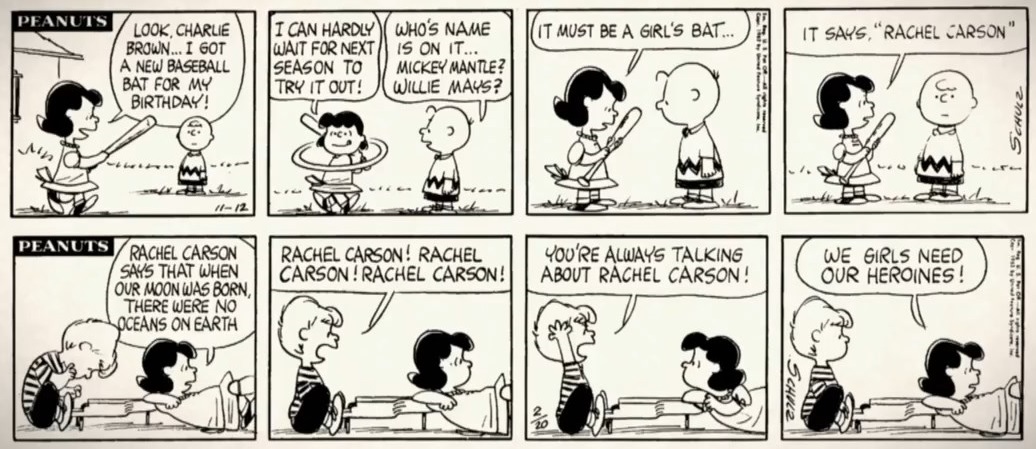
Rachel Carson is an American hero …

Naomi Oreskes & Erik Conway, Merchants of Doubt, 2010, p 216.


(Michelle Ferrari, Rachel Carson, 2017)

Rachel Carson (1907 – 64):
Is industry becoming a screen through which facts must be filtered so that the hard, uncomfortable truths are kept back and only the harmless morsels are allowed to filter through?
The tailoring, the screening of basic truth is done:
  • to accommodate to the short-term gain, [and]
  • to serve the gods of profit and production.
(Women's National Press Club, December 1962)

[I] could never again listen happily to a thrush song if I had not done all I could.
And last night the thoughts of all the birds and other creatures and all the loveliness that is in nature came to me with such a surge of deep happiness, that now I had done what I could — I had been able to complete [Silent Spring] — now it had its own life!
(Letter to Dorothy Freeman)

[On the island's] western shore the wet sand of the narrow beach caught the same reflection of palely gleaming sky that laid a bright path across the water from island beach to horizon.
Both water and sand were the colour of steel overlaid with the sheen of silver, so that it was hard to say where water ended and land began. …

With the dusk a strange bird came to the island from its nesting grounds on the outer banks. …
[And as] he neared the shore [the pure black] skimmer drifted closer to the water, bringing his dark form into strong silhouette against the grey sheet, like the shadow of a great bird [passing] unseen above.
[So] quietly did he approach that the sound of his wings … was lost in the whisper song of the water turning over shells on the wet sand. …

Shadowy forms moved through the night skies and pipings so soft as barely to be audible drifted down to [the sleeping villages] below, as the birds of shore and marsh poured northward along ancestral air lanes, seeking their nesting places.
(Under the Sea-Wind, 1952)

Linda Lear (1940):
It is one of the great paradoxes of the human condition that, while we are almost paranoid in our vigilance in regard to taking toxins into our bodies, we are all but oblivious to the possibility of poisoning our planet.
(Introduction, Silent Spring, 1962)

Would you like to know more?


Earth Days


If the people really understood, that in the lifetime of their children, they're going to have … perhaps made the globe unlivable in a
half-century, they'd do something about it.


Gaylord Nelson (1916 – 2005)


(Earth Day, Wikipedia, 29 August 2019)

Rachel Carson (1907 – 64):
[We,] in this generation, must come to terms with Nature.
[We're] challenged, as mankind has never been challenged before, to prove our maturity and our mastery:
Not of nature — but of ourselves.

Jimmy Carter (1924):
The energy crisis has not yet overwhelmed us.
But it will — if we do not act quickly.
It's a problem that we will not be able to solve in the next few years.
And is likely to get progressively worse through the rest of this century.

We must not be selfish or timid, if we hope to have a decent world for our children and grand-children.
We simply must balance our demand for energy with our rapidly shrinking resources.
By acting now, we can control our future, rather than letting the future control us.


Ronald Reagan (1911 – 2004):
They tell us we must learn to live with less.
And teach our children that their lives will be less full and prosperous than ours have been.
That the America of the coming years, will be a place — because of our past excesses — it will be impossible to dream and make those dreams come true.
I don't believe that. …

I cannot, and will not, stand by and see this great country destroy itself.
Our leaders attempt to blame their failures on circumstances beyond their control.
On false estimates by unknown, unidentifiable experts who rewrite modern history in an attempt to convince us our high standard of living, the result of thrift and hard work, is somehow selfish extravagance which we must renounce as we join in sharing scarcity. …

We must and will be sensitive to the delicate balance of our ecosystems, the preservation of endangered species, and the protection of our wilderness lands. …
Preservation of our environment is not a liberal or conservative challenge, it's common sense.
Our physical health, our social happiness, and our economic well-being will be sustained only by all of us working in partnership as thoughtful, effective stewards of our natural resources.

(Robert Stone, Earth Days, 2010)

November 18, 2012

Scientific American: 2011

Scientific American


Radioactive Smoke


[The WHO estimates that over a million people a year die from smoking related lung cancers.]
If polonium had been reduced through methods [long] known to the [tobacco] industry, many thousands of those deaths could have been avoided.

(January 2011, p 67)

October 29, 2012

Big Ideas TV

ABC Television


Sam Harris (1967):
Values reduce to facts about the wellbeing of conscious creatures. …
[We] are right to be more concerned about our fellow primates than we are about insects.
Because … there is an inner dimension there that can be modulated to a much greater degree by changes in the universe.
For changes in the universe to matter, they have to matter to some conscious system. …
(Can Science Determine Human Values?, 10 May 2011)

Mark Lewis [Lawyer]:
[The initial prosecution into phone hacking was the responsibility of] Assistant Commissioner Andy Hayman.
[He subsequently left the Metropolitan Police to become] a journalist for The Times newspaper which belongs to Rupert Murdoch
[He] wrote an article which said, the phone hacking investigation in 2006 [— which uncovered one 'rogue reporter' —] was a 'proper' investigation [in which] 'not a stone was left unturned'. …
[His article was reprinted in the News of the World —] the very paper he should have been investigating …
(Politics and the Murdoch Press, 23 April 2012)

October 15, 2012

Life Matters

ABC Radio National


Contents


Values and Ethics in Schools


Life Matters


Natasha Mitchell

  • Everybody Matters: A Memoir by Mary Robinson, 15 January 2013.
  • Values and ethics classes in schools, 28 September 2009.
    Philip Cam: Associate Professor, School of History and Philosophy, University of New South Wales; Author, Thinking Together: Philosophical Inquiry for the Classroom.

    Richard Aedy:
    Should government schools be able to offer a secular ethics and values alternative who don't attend faith based lessons?
    In some states schools must offer … scripture or special religious education [SRE].
    The instruction's provided by representatives from different faiths in school hours.
    [Students] who opt out of religious education, can't really do anything else.
    So you hear stories of kids being put in the library, watching a DVD …
    At the moment, those kids aren't offered a secular alternative. …

    The [State] Education minister's just been presented with proposal to trial an ethics based complement to scripture in NSW state primary schools.
    The man who will devise the curriculum for the proposed trial, under the auspices of the St James Ethics Centre is [Philip Cam (an internationally recognized expert in the area of philosophical and ethical inquiry for children).]

    Philip Cam:
    [Religious education in schools] goes right back to the beginning of free secular state education system … when a bargain was struck with the churches.
    [When] the state took over education from the churches, they put in this provision, so that provision has been there since the late 19th century.
    It's part of the state legislation for education …

    In relation to the kids that go to scripture, they're getting an extra special extension of that … in terms of their own faith and beliefs or their parent's faith and belief system.
    The other kids are now not getting that extension.
    They're not getting that opportunity to think further about ethics frameworks. …

    [Some] faith based groups are actually interested in this.
    In having some ethics based material that they could use to strengthen what they do.
    So what's on offer here … is something that could be helpful to other faith based groups. …

    [In] part it's a social justice issue, because [at the moment,] if you don't have religion, you get nothing at all. …

    Richard Aedy:
    You have to opt out.
    You are automatically opted in.
    That's the default position. …

    Philip Cam:
    [And if] those kid's parents opt out …
    Why should [the kids] thereby be disadvantaged?
    Why should it be religion or nothing? …

    Richard Aedy:
    [The] Inter-church Commission of Religious Education in Schools [has] come out against this idea; even though the proposal does not advocate that ethcs and values based education replace religious education for those parents who want it. …

    Philip Cam:
    I'd understood that the St James Ethics Centre had made approaches to a number of faith based groups and, in fact, had a wide range of support from faith based groups. …

    Richard Aedy:
    The St James Ethics Centre has been working on this [since 2003.]

    Philip Cam:
    In the past … when this was taken to [two education] ministers in succession.
    One of the things that was suggested was that there wasn't a ground swell of support for this in the community. …
    In fact, once you start looking around in the community, you find there's a huge amount of support for this.
    [At] the NSW Parents and Citizens associations [AGM this year] there was absolutely unanimous support for this proposal. …

    [What's being proposed is] a 10 week pilot in [seven schools for] kids in the last 2 years of primary school. …
    What they would get is 10 different lessons, each on a different issue [—] friendship, bullying, lying and telling the truth, ganging up on kids …
    A whole range of things like that, that come within the experience of these kids in their everyday lives.
    [And] rather than now being told what to think about those things; they'd be presented with … problematic little scenarios that they could relate to. …
    They would discuss these [situations] in small groups and [as a class] with a view to exploring these issues together. …

    Richard Aedy:
    You want to give them the tools, to work things out for themselves. …

    Philip Cam:
    It's a matter of them using their reason, in the right sort of social setting.
    To think about, and reflect upon, conduct and ethical issues and ideas. …

    [It's] about wellbeing …
    Kid's who have been able to think about conduct, about issues and problems, and learnt how to deal with them, are going to be in a better position to take control of all the kinds of problems and issues that they have to confront in their lives than kids who have not had that opportunity.
    [Ethical] reflection, is something that could help to support that process.