Showing posts with label Green Army. Show all posts

October 19, 2023

Devon Price

Green Army: Persons of Interest


Devon Price


Autism Activist.
Professor of Social Psychology.

  • How "unmasking" leads to freedom for autistic and other neurodivergent people, Life Kit, NPR, 18 April 2022.
  • Unmasking Autism: Discovering the New Faces of Neurodiversity, 2022.

    Autism: From Disorder to Oppression


    Price reconceptualizes autism in three stages:
    1. Demedicalization: from disorder to difference.
    2. Identitarianism: from difference to identity.
    3. Politicization: from identity to oppression.

    Price accepts that the central problem in autism is in the domain of social communication and interpersonal functioning.
    What he rejects is that this due to an impairment or deficits in the capacity for verbal or non-verbal communication and social cognition.
    Price's frames autism as a normal human variant with a different cognitive / communication style.
    It is this mismatch of styles, he asserts, that accounts for the interactional problems between autistics and non-autistics.
    Devon Price:
    Autism is neurological.
    Autism is a developmental disability that … appears to be largely genetically heritable …

    [Much] of what researchers consider the “social deficits” of Autism aren’t really deficits at all; they’re just differences in our communication style that neurotypicals don’t adjust to. …
    Autistic people don’t actually lack communication skills, or a drive to connect. …

    [The] idea of pursuing a treatment “for” Autism is predicated on the idea we are broken or sick … an idea the neurodiversity movement completely rejects. …
    Where the medical model of disability fails is in making sense of disabilities that come from social exclusion or oppression. …

    [We] are disabled, robbed of empowerment and agency in a world that is not built for us. …
    The world actively dis-ables people by failing to provide accommodations they need.
    Naming the reality of disability shows respect for disabled people and awareness of how we are oppressed. …

    [Neurotypicality] is more of an oppressive cultural standard than it actually is a privileged identity a person has. …
    [There] are just so many ways in which we are punished for deviating from the norm. …
    Ableism is a pervasive social force, and one we can’t entirely escape …
    The criminal justice system and mental health system are deeply interwoven, and they both serve to perpetuate ableism.
    Ableism is a powerful force of oppression. …

    Almost every person with a mental illness or disability … has repeatedly tried and failed to earn acceptance by playing the rules of a game that was designed to harm us. …
    Being Autistic in a neurotypical world is often traumatizing, and being forced to mask is essentially an experience of society-driven abuse.…
    [Your] disability isn’t to blame for what happened, and neither are you.
    It was a far-reaching, centuries-old system of injustice that left you in such a difficult spot. …

    Almost anyone can be viewed as defective or abnormal under our current medicalized model of mental illness …
    By tearing down our current, constricting definition of mental health, and celebrating different ways of thinking, feeling, and behaving, we can improve countless lives. …
    Our caring professionals and educators must be made aware … that their prejudicial attitudes often create disability where none might otherwise be there. …

    When we teach children about racism, sexism, and imperialism throughout history, we should highlight how the oppressed were often branded as hysterical, paranoid, and insane.
    It’s important that all people — neurodiverse and neurotypical alike — come to realize how narrow definitions of sanity and “functioning” are used to harm and dehumanize.
    Price's conceptualization of disability is most easily understood by examining the ways in which it departs from the standard biopsychosocial model of disability as described in the public health literature:
    As the diagram indicates … disability and functioning are viewed as outcomes of interactions between health conditions (diseases, disorders and injuries) and contextual factors.

    Among contextual factors are
    • external environmental factors (for example, social attitudes, architectural characteristics, legal and social structures, as well as climate, terrain and so forth); and
    • internal personal factors, which include gender, age, coping styles, social background, education, profession, past and current experience, overall behaviour pattern, character and other factors that influence how disability is experienced by the individual.
    (Concepts of functioning and disability, Towards a Common Language for Functioning, Disability and Health: The International Classification of Functioning, Disability and Health, 2002, p 10)

    So the standard view of disability is that it results from an interaction between individual impairment (due to a disease or disorder) and environmental conditions.
    The archetypal example someone in a wheelchair being disabled due to the absence of wheelchair access.
    The impairment is an inability to walk.
    The disability is due to impairment (due to some disease or disorder) interacting with an external environmental factor (eg a lack of accessibility).
    No impairment (ie no disorder), no disability.
    If there is impairment, whether or not there is associated disability may depend on environmental conditions (eg ramps).


    In contrast with mobility, is it likewise possible that a neurologically based social ineptitude could be severe enough to cause significant psychosocial impairment?
    The scientific community says yes.
    Price says no: autism does not cause impairment, therefore it is not a disorder.


    In what sense, then, is autism a disability?
    Here Price draws a distinction between impairment related (medical) disability and non-impairment related (social) disability; arguing that autism is a social / political / cultural / normative disability, not a medical disability.
    And the source of this social disability?
    Ablelist / neurotypical oppression.
    Though, if Price is correct about the lack of impairment, this cannot, strictly speaking, be 'ablelist' in the usual sense of the word.
    Ablelism is discrimination based on actual medical impairment.
    Since, for Price, there is no impairment in autism, one would need to expand the meaning of ableism to include the false imputation of impairment where none exists, then stigmatizing autism based on this mislabeling.
    So, these semantic contortions leave us with two novel senses of 'disability' and of 'ablelism'.


    In summary, neurotypical oppression leads to social disability based on a biological difference between non-autistics and autistics (or alternatively between the neurotypical and the neurodiverse), not a difference between health and disorder, but a difference between two normal human developmental variants.
    The source of the disability is not individual disorder / impairment but the prevailing system of oppressive societal norms.
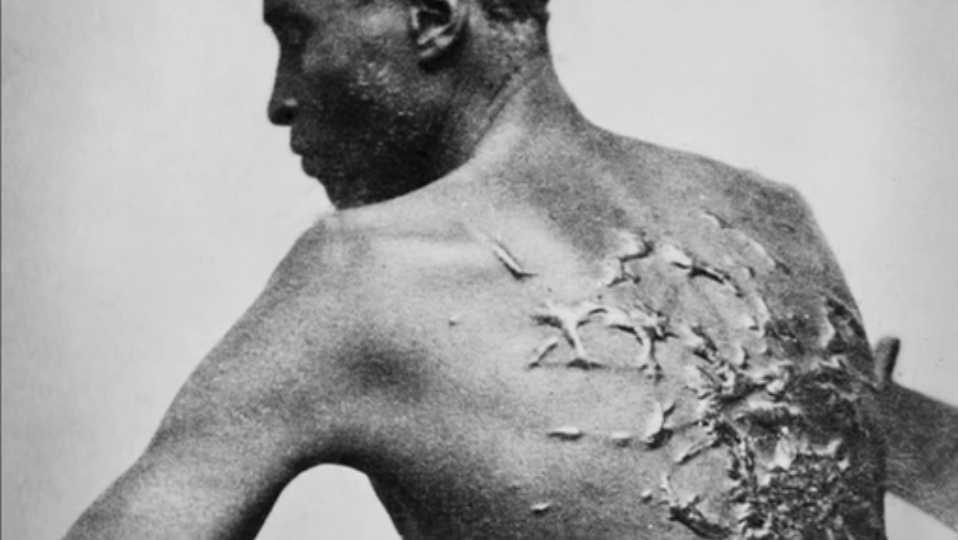
    Ableism dis-ables autistics in the same way as slavery dis-ables the enslaved.
    According to this view autistics are being compelled to conform to unjust cultural standards only to be excluded when they (inevitably) fail.


    What are the difficulties of this theory?
    To describe severe autistics, those without language, unable to attend to their own basic self-care and protection, as being normal developmental variants, seems to deny an obvious reality, hiding it behind a screen of confusing language and political ideology.
    In any other context — perinatal anoxia, traumatic brain injury, disabling genetic syndromes — such reduced capabilities would be regarded as major psychosocial impairments .
    They require intensive professional (ie formal) assistance and support.


    Consider the definition of mental disorder:
    Mental_disorder:
    A mental disorder … is a behavioral or mental pattern that causes significant distress or impairment of personal functioning.
    (Wikipedia, 18 September 2023)
    One might add that by 'significant' is meant severe enough to be the focus of clinical / research attention ie professional (formal) intervention as distinct from subclinical, which is manageable by informal supports (self-help, peer-support, life-coaching, personal development).
    That is to say, those who fall below the clinical threshold of severity do not have a disorder in the sense of requiring formal assistance.
    Whether the 'challenges' of this population are primarily due to systematic oppression, as Price contends, is debatable.
    While there is overlap between the concepts of oppression, stigmatized difference, and discrimination, they are not the same thing and are not freely interchangeable.


    The mind-body distinction plays a role here.
    Certain physical problems, like a broken bones, are not stigmatized.
    Communicable diseases on the other hand are stigmatized, for obvious reasons.
    Problems with the brain, affecting mind and behavior, are more closely linked with moral personhood.
    Mental dysfunction naturally bleeds over into adverse judgements of the self.


    Price's seeks to demedicalize autism (presumably) in order to destigmatize it.
    Because he takes an identitarian approach to autism, demedicalization is necessary because it is unacceptable to identify with a stigmatized entity.
    If autism is identified with the self, and autism is a disorder, then the self is disordered.
    And the self has to be defended at all costs.
    There's nothing wrong with me, society's to blame.
    It's not me that needs to be fixed, but the world.
    One can address medical stigma directly, or as in Price's case, indirectly, by denying one has a disorder so as to avoid the associated stigma.
    The alternative is to directly address the stigmatizing of illness in general, and developmental disorder in particular.


    This identitarianism is expressed in the preference for disability-first over person-first terminology:
    • being an Autistic person vs a person with autism,
    • being an schizophrenic person vs a person who suffers from schizophrenia,
    • being an Asian person vs being a person of Asian descent,
    • being a gay person vs being a person who is same sex attracted.
    Identitarianism invites essentialist thinking.
    In the area of race this is especially dangerous.
    Defining people by their ethnicity is the foundation of biological racism.
    It essentializes ethnicity and conflates linguistic and cultural identity with biological descent.
    There are numerous diasporas where immigrants are fully integrated with the majority culture despite differences in physical appearance.
    One is not defined by one's ancestry any more than one is defined by one's neurology.
    Benjamin Zachariah [Historian]:
    Once upon a time, essentializing people was considered offensive, somewhat stupid, anti-liberal, anti-progressive, but now this is only so when it is done by other people.
    Self-essentializing and self-stereotyping are not only allowed but considered empowering.
    (After the Last Post: The Lives of Indian Historiography, 2019)


    Devon Price:
    [It’s] more sensible to view Autistic identity through a social lens than a strictly medical one. …
    [The] social model of disability, originally coined in the 1980s by disabled academic [sociologist] Mike Oliver.
    In his writing, Oliver described disability as a political status, one that is created by the systems that surround us, not our minds and bodies.
    While it is true that Oliver sought to draw attention to the environmental factors contributing to disability it seems he did not believe these were the only factors involved.
    That he distinguished between impairment and disability indicates he did believe that impairments existed and played a role in disability.
    As originally conceived, the social model of disability was a model of impairment-related disability, not a social model (or lens) of identity.
    Social model of disability:
    The social model of disability diverges from the dominant medical model of disability, which is a functional analysis of the body as a machine to be fixed in order to conform with normative values. …
    In this model, the word impairment is used to refer to the actual attributes (or lack of attributes) that affect a person, such as the inability to walk or breathe independently.
    It seeks to redefine disability to refer to the restrictions caused by society when it does not give equitable social and structural support according to disabled peoples' structural needs. …

    Oliver did not intend the social model of disability to be an all-encompassing theory of disability, but rather a starting point in reframing how society views disability.
    This model was conceived of as a tool that could be used to improve the lives of disabled people, rather than a complete explanation for every experience and circumstance.

    A primary criticism of the social model is its centering of the experiences of individuals with physical impairments, which has resulted in overlooking other forms of disability, such as mental health conditions. …

    In the late 20th century and early 21st century, the social model of disability became a dominant identity for disabled people in the UK.
    Under the social model of disability, a disability identity is created by:
    • "the presence of impairment,
    • the experience of disablism, and
    • self-identification as a disabled person."
    (Wikipedia17 September 2023)

    In addition to with arguing that autism is not a disorder, Price also criticizes the syndromic approach to diagnosis in general, at least when it is applied to conditions whose manifestations are 'mental' (psychological or behavioral), rather than 'physical' (neuropathic pain).
    Again, he concedes that autism has a physical cause, but not that it is a disorder.
    Devon Price:
    [For] many illnesses and disabilities, medical care and a medical lens is undeniably appropriate.
    If you’re someone who is in excruciating, daily pain due to nerve damage, medical treatment and medication can help you.
    If you have a degenerative condition that progressively gets worse, such as multiple sclerosis, you have every reason to support medical research in pursuit of a cure. …

    [It’s] arguable whether the disability should even be defined by the presence of clear behavioral signs, such as
    • trouble reading social cues or
    • hesitating to initiate contact with other people. …
    Instead of looking to the external signals of autism that others might pick up on, it’s important that we instead focus on
    • the neurobiological markers of the neurotype, and
    • the internal experiences and challenges that Autistic people themselves report. …
    [Autism is] diagnosed based on behavior and reported challenges the Autistic person is facing, not on a brain scan. …

    When it comes to mental illness and disability, diagnostic categories are really flawed things.
    A disorder is a cluster of symptoms and traits that tend to go together, but don’t always, and the way those clusters get organized tends to change over time. …
    Our understandings of these labels are constantly in flux, and who gets stuck with a particular label varies across time and cultural context. …
    This dynamic is particularly challenging for people with Autism Spectrum traits, because our neurotype is so multifaceted and so easily mistaken for other conditions. …

    I prefer the terms self-determination or self-realization to self-diagnosis, because I believe it’s more sensible to view Autistic identity through a social lens than a strictly medical one.
    Diagnosis is a gatekeeping process, and it slams its heavy bars in the face of anyone who is too poor, too busy, too Black, too feminine, too queer, and too gender nonconforming, among others. …

    [Self-definition] is a means of reclaiming our power from the medical establishment that has long sought to corral and control us.


    Neurotype:
    A type of brain, in terms of how a person interprets and responds to social cues, etc.
    • 2018, Steve Bloem, The Pastoral Handbook of Mental Illness, page 56:
      And the neurotypes aren't random.
      They align with their symptom clusters along two major axes: anxiety and anhedonia (the inability to feel pleasure).
    (Wiktionary, 23 April 2023)

    ('Neurotype' does not yet appear in OED online)
    If you reject expert opinion using on objective criteria (syndromal diagnosis based on patterns of signs and symptoms), how do you determine your neurotype?
    Is it something you knows instinctively, like same sex attraction?
    Do you conclude you are Autistic because you feel an affinity with others who identify as Autistic?
    How did they discover they were Autistic?
    Is it all about identification:
    • gender: male / female / non-binary?
    • race: black / white / colored?
    • neurotype: neurotypical / neurodiverse?

    There are no 'neurobiological markers of the neurotype'.
    There is no neuroscience or recognized classification of neurotypes.
    There are only neurobiological correlates of known clinical syndromes.
    Substituting the word 'neurotype' for 'diagnosis' is just trying to demedicalize autism by linguistic manipulation.
    This is no substitute for a rational debate about alternative ways of categorizing phenomena.
    Like using the word 'disability' in a non-impairment-related (social) sense, when in common usage it refers to disability in the impairment-related (medical) sense.
    Unless done carefully, argument by redefinition just creates confusion.


    Since it is unclear what the general properties of a neurotype are, one cannot be certain what entities should be included in this category.
    Is anyone who is neurodiverse (ie not neurotypical), possessed of a neurotype?
    Where do temperaments and personality traits fit in?
    Price mentions both:
    • a range of specific conditions apart from autism: Tourettes, ADHD, PTSD, depression, schizophrenia, epilepsy, and Social Anxiety Disorder; as well as
    • certain general categories: Mental Illness / Disorder and Cognitive Disability (TBI, CTE, dementia, ID).
    Clearly many putative neurotypes are neither congenital / developmental nor permanent / unchangeable as Price asserts autism is.
    Many with PTSD were neurotypical before being traumatized, and some recover.
    Likewise, in a significant proportion of cases schizophrenia, depression, and epilepsy are not permanent conditions.


    Price's perspective echos a range of past and current intellectual traditions:

    1. Demedicalization:

      R D Laing:
      Laing took the expressed feelings of the individual patient or client as valid descriptions of personal experience rather than simply as symptoms of mental illness. …
      Laing regarded schizophrenia as the normal psychological adjustment to a dysfunctional social context, but he later acknowledged that his views on schizophrenia were wrong.
      (Wikipedia, 24 September 2023)

      Labeling Theory:
      Labeling theory holds that deviance is not inherent in an act, but instead focuses on the tendency of majorities to negatively label minorities or those seen as deviant from standard cultural norms.
      (Wikipedia, 26 September 2023)

    2. Identitarianism:

      Devon Price:
      … I capitalize “Autistic” … to indicate it is a part of my identity I am proud of, and to signal Autistics have our own culture, history, and community. …
      Because the neural and cognitive features of autism are so pervasive, it affects almost every aspect of a person’s body and brain. …
      autism is a core part of who we are, impossible to separate from our personalities, talents, preferences, and general outlook. …
      Without our disability (or our gender identity) we’d be entirely different people.
      They’re both core parts [of our personhood or personality …]


      Neurodiversity:
      The framework grew out of the autism rights movement and builds on the social model of disability, arguing that disability partly arises from societal barriers, rather than attributing disability purely to inherent deficits.
      It instead situates human cognitive variation in the context of biodiversity and the politics of minority groups.
      Some neurodiversity advocates and researchers argue that the neurodiversity paradigm is the middle ground between strong medical model and strong social model.
      The neurodiversity paradigm has been controversial among disability advocates, with opponents arguing it risks downplaying the suffering associated with some disabilities, and that it calls for the acceptance of things some would wish to be treated.
      (Wikipedia, 26 September 2023)


      Identity Politics:
      Many contemporary advocates of identity politics take an intersectional perspective, which accounts for the range of interacting systems of oppression that may affect their lives and come from their various identities.
      According to many who describe themselves as advocates of identity politics, it centers the lived experiences of those facing systemic oppression; the purpose is
      • to better understand the interplay of racial, economic, sex-based, and gender-based oppression (among others) and
      • to ensure no one group is disproportionately affected by political actions, present and future.
      Such contemporary applications of identity politics describe people of specific race, ethnicity, sex, gender identity, sexual orientation, age, economic class, disability status, education, religion, language, profession, political party, veteran status, recovery status, and geographic location.
      These identity labels are not mutually exclusive but are in many cases compounded into one when describing hyper-specific groups.
      (Wikipedia, 14 August 2023)

    3. Politicization:

      • sexism — discrimination / oppression based on patriarchy (eg the feminist 'male gaze' recast as the 'neurotypical gaze');
      • biological racism — discrimination / oppression based on imagined biological differences between races;
      • homophobia — discrimination / oppression based on sexual taboos;
      • ableism — discrimination / oppression on physical or mental impairment.

      Kenneth Minogue:
      Ideology is commonly signaled by the presence of a tripartite structure of theory.
      The first stage reveals to us that the past is the history of the oppression of some abstract class of person.

      It is concerned
      • with workers as a class, not (as a politician might be) with workers at a particular time and place; or
      • with women in general, or
      • with this or that race.
      Specific discontents are all swept up into the symptomatology of the structurally determined oppression.
      The duty of the present is thus to mobilize the oppressed class in the struggle against the oppressive system.
      This struggle is not confined to the conventional areas of politics.
      It flares up everywhere, even in the remoter recesses of the mind.
      And the aim of this struggle is to attain a fully just society, a process generally called liberation.
      Ideology is thus a variation played on the triple theme of oppression, struggle, and liberation.
      (Politics: A Very Short Introduction, Oxford University Press, 1995)

April 24, 2022

Simon Chapman

Green Army: Persons of Interest


I am a cigarette with a life attached.

— Raymond Carver (1938 – 88)

Simon Chapman (1951)


Smoking kills 19,000 Australians a year, more than 4,000 before retirement age, more than those who die from breast, cervical and skin cancer, AIDS, suicide, alcohol and road crashes combined.
(p 192)

Globally, an estimated 4 million people die each year from tobacco-related illness, compared to 2.7 million from malaria and 2.8 million from AIDS.
After malnutrition (5.9 million in 1990) and violence and injury (5.8 million), tobacco claims more deaths than any other single cause.

(Smoke Signals, 2016, p 141)


Simon Chapman [Director of Research, School of Public Health, University of Sydney]:
[According to] internal tobacco industry documents [the price of cigarettes] is the single greatest determinant of smoking in the community. …

[They also] show that the main purpose of [cigarette additives] is to make smoking more palatable for young people.
[A] lot of work has gone [into reducing] 'throat grab' [‒ that initial coughing you get when you first start smoking.]
[Menthol] acts as a sort of a gentle local anaesthetic in the throat, which makes [smoking] easier, particularly for young women, who tend to favour menthol cigarettes …

Robert Proctor:
[Smoking] is not like drinking …
[It's] like being an alcoholic.
Only about three per cent of people who drink are addicted, whereas 80 to 90 per cent of people who smoke are addicted. …
[Smoking] is not a recreational drug …

[The] cigarette pack itself [is] the last bastion of advertising.
The cigarette pack [is] like a micro-ad …
[Cigarettes are an undifferentiated product, they're] basically all … the same.
[From a marketing viewpoint, the packaging is the] product. …

Simon Chapman (1951):
[If you] open any tobacco industry trade magazine [there is] page after page of advertisements from packaging companies, talking about how packaging is front and centre of branding …
[The package] is the centre of the advertising effort.

There's been a lot of experimental evidence by people showing young people different versions of packs and asking them which ones that they would prefer.
[They] always say that they don't like the plain-packaged ones, they want the nice looking packs …
[It's] a no-brainer.
[The] next generation of kids will grow up never having seen a packet of carcinogenic products packaged in a beautiful box.

(Plain packaging of cigarettes, ABC Rear Vision, 19 October 2011)

Would you like to know more?


E-cigarettes


Banks E, Yazidjoglou A, Brown S, Nguyen M, Martin M, Beckwith K, Daluwatta A, Campbell S & Joshy G

Among non-smokers, there is currently strong evidence that use of e-cigarettes is harmful to health overall, with multiple health harms and no health benefits identified in this population. …
There is no available evidence as to how e-cigarette use affects clinical mental-health outcomes. …
There is strong evidence that e-cigarettes increase combustible smoking uptake in non-smokers, particularly youth …

Use of e-cigarettes results in inhalation of a complex array of chemicals originating from:
  • the e-liquid,
  • chemical reactions in the heating coil and the device itself.
These include:
  • nicotine,
  • solvent carriers (propyleneglycol, ethylene glycol and glycerol),
  • tobacco-specific nitrosamines,
  • volatile organic compounds,
  • phenolic compounds,
  • flavourings,
  • tobacco alkaloids,
  • aldehydes,
  • free radicals,
  • reactive oxygen species,
  • furans, and
  • metals.
Toxicological studies indicate that exposure to these substances can result in adverse health effects. Nicotine is highly addictive and there is evidence from basic human and animal studies that it adversely affects:
  • cardiovascular measures, and
  • brain development and functioning. …
Nicotine e-cigarettes are highly addictive, underpinning increasing and widespread use among children and adolescents in many settings. …

There is conclusive evidence that:
  • e-cigarettes and their constituents cause poisoning, injuries and burns and immediate toxicity through inhalation, including seizures …
  • their use leads to addiction, and that
  • they cause less serious adverse events, such as throat irritation and nausea.
There is conclusive evidence that the use of e-cigarettes can cause [EVALI (e-cigarette or vaping product use-associated lung injury)] among smokers and non-smokers … with
  • half of cases related to THC in conjunction with vitamin E acetate, and
  • 14% in patients reporting the use of nicotine-delivering products only …

(Executive Summary, Electronic cigarettes and health outcomes: systematic review of global evidence, Report for the Australian Department of Health, National Centre for Epidemiology and Population Health, Canberra, April 2022, pp viii‒xiv, emphasis added)


Wind Turbines


There is currently no published scientific evidence to positively link wind turbines with adverse health effects. …
The evidence on shadow flicker does not support a health concern. …
[Wind] turbines of contemporary design … produce very low levels of infrasound. …
The risk of blade glint from modern wind turbines is … very low.
[The] closeness of the electrical cables counters the electromagnetic field [generated by wind turbines], as does shielding with metal armour. …
[Evidence is limited, therefore] it is recommended that relevant authorities take a precautionary approach and continue to monitor research outcomes.

(NHMRC Public Statement, July 2010)


Table 3 (Adapted): Typical A-weighted sound levels for different sources

ActivitySound pressure level (dBA)
Busy general office60
Car travelling at 64km/h at 100m55
Typical wind farm (at moderate wind speed 7 m/s)*40 ± 5
Background noise in rural area at night30 ± 10
*Based on sound level measurements taken from multiple resident locations near two Victorian wind farms, at distances 500–1,000 m from the nearest turbine.

(p 8)

November 25, 2019

John Quiggin

Green Army: Persons of Interest


[The] culture wars are just a device to keep the right-wing base agitated enough to turn out [and] keep pro-rich politicians in office. …
The great majority of [climate change] “sceptics” are, in fact, credulous believers in what they are told by trusted authority figures, notably including conservative political leaders.


— Climate claims a victory in the culture wars, Inside Story, 17 December 2015.


The Global Financial Crisis has shown that, for most of the past decade, market estimates of the relative riskiness and return of alternative investments have been entirely unrelated to reality. …

In Australia … it has become routine for retired politicians, of all political persuasions, to be offered cushy jobs in the financial sector, provided, of course, that they have followed the right kinds of policies when in office. …
Public office is no longer a goal in itself but a stepping stone to bigger and more profitable goals.
The incentives to promote the interests of the financial sector while in office are obvious. …

An analysis by the New Economics Foundation concluded that for each pound paid to British bankers, society incurred a net loss of ten pounds. …
A study by the Center for Responsive Politics showed that about two-thirds of US senators were millionaires in 2008.


— Zombie Economics, Princeton University Press, 2012, pp 190, 186, 174-5.


Traditional models of on-the-job training (apprenticeships and traineeships) are in decline.
Funding for vocational education through the Technical and Further Education (TAFE) system has been slashed leading to the closure of manyTAFEs and large-scale loss of teaching staff.
Meanwhile, billions of dollars have been wasted on ideologically driven experiments with market competition and forprofit provision.


— Submission to the South Australian Senate inquiry into Vocational Education and Training.

January 6, 2018

Brothers in Arms

PBS American Experience


Forever Free

[As of] the first day of January in the year of our Lord, one thousand eight hundred and sixty-three, all persons held as slaves within any State, or designated part of a State, the people whereof shall then be in rebellion against the United States shall be then, thenceforward, and forever, free …

— Abraham Lincoln (1809 – 65), The Emancipation Proclamation, 22 September 1862.


Fellow-citizens, we cannot escape history. …
The fiery trial through which we pass will light us down in honor or dishonor to the latest generation. …
In giving freedom to the slave … we shall nobly save, or meanly lose, the last best hope of earth.


— Abraham Lincoln (1809 – 65), State of the Union Address, 1 December 1862.


Neither slavery nor involuntary servitude … shall exist within the United States, or any place subject to their jurisdiction.

— Thirteenth Amendment, Section 1, United States Constitution, 18 December 1865.


Mine eyes have seen the glory of the coming of the Lord;
He is trampling out the vintage where the grapes of wrath are stored;
He hath loosed the fateful lightning of His terrible swift sword:
His truth is marching on.


— Julia Howe (1819 – 1910), Battle Hymn of the Republic, November 1861.


[Men] with hoses squirt kerosene on the oranges …
A million people hungry, needing the fruit and kerosene sprayed over the golden mountains. …
Burn corn to keep warm, it makes a hot fire.
Dump potatoes in the rivers and place guards along the banks to keep hungry people from fishing them out.
Slaughter the pigs and bury them …

[A crime] that goes beyond denunciation.
[A sorrow] that weeping cannot symbolize. …
[Children] dying of pellagra … because a profit cannot be taken from an orange. …
[And,] in the eyes of the hungry, there is a growing wrath.
In the souls of the people the grapes of wrath are filling and growing heavy, growing heavy for the vintage.


— John Steinbeck (1902 – 68), The Grapes of Wrath, 1939.


And that servant, which knew his lord's will, and prepared not himself, neither did according to his will, shall be beaten with many stripes.

— Luke 12:47, King James Bible, 1611.


(Sarah Colt, A Nation Reborn, PBS God in America, Episode 3, 2010)

(Phillip Montgomery, Building the Economy, The American Presidency with Bill Clinton, Episode 3, 2022)


(Ken Burns, The Universe of Battle, The Civil War, Episode 5, 1990)

October 31, 2016

Tyndall Centre for Climate Change Research

Green Army: Research and Development


Developers can still get rich, politicians can still get payoffs, megaprojects can still be funded, but it needs to be in the context of strengthening defenses against environmental change, not weakening them — because once they get too weak, no one is going to be making money anymore.
In a time of environemntal change, limiting loss will be just as important as promoting growth.


— Cleo Paskal, Global Warring, Palgrave Macmillan, 2010, p 245.


Caroline Ash, Elizabeth Culotta, Julia Fahrenkamp-Uppenbrink, David Malakoff, Jesse Smith, Andrew Sugden and Sacha Vignieri:
Anthropogenic climate change is now a part of our reality.
Even the most optimistic estimates of the effects of contemporary fossil fuel use suggest that mean global temperature will rise by a minimum of 2°C before the end of this century and that CO2 emissions will affect climate for tens of thousands of years. …
[Terrestrial ecosystems] will face rates of change unprecedented in the past 65 million years.
(Science, Vol 314, AAAS, 2 August 2013, p 473)

IPCC AR5 Working Group I:
The globally averaged combined land and ocean surface temperature data as calculated by a linear trend, show a warming of 0.85 [0.65 to 1.06] °C [3], over the period 1880–2012, when multiple independently produced datasets exist.
(Climate Change 2013: The Physical Science Basis — Summary for Policymakers, 27 September 2013, p 4)

Alan Austin:
In [the fourth biennual] Global Green Economy Index released yesterday [by Dual Citizen, Australia fell 27 places to] 37th out of 60 countries on clean energy performance [and ranked] last on global leadership.
(Abbott takes Australia to last place on global climate change leadership, Independent Australia, 21 October 2014, emphasis added)

Robert Nicholls & Jason Lowe:
[The] loss of the Greenland Ice Sheet and the collapse of the West Antarctic Ice Shelf could raise global-mean sea levels by up to 10 m or more over the next 1,000 years.
(Climate Stabilisation and Impacts of Sea-Level Rise, Avoiding Dangerous Climate Change, Hans Schellnhuber, Editor in Chief, Cambridge University Press, 2006, p 202)


[Observational data corrected for sources of short-term variability (El Nino/Southern Oscillation, volcanic aerosols and solar variability) reveals the underlying trend.]
(Foster & Rahmstorf, Global temperature evolution 1979–2010, Environmental Research Letters, 6(4), 2011)


(Boden, T A , G Marland, and R J Andres, Global, Regional, and National Fossil-Fuel CO2 Emissions, Carbon Dioxide Information Analysis Center, Oak Ridge National Laboratory, US Department of Energy, 2017)

October 15, 2016

Robert Putnam

Green Army: Persons of Interest


Poverty amongst riches is the most grievous form of want.

— Lucius Seneca (~4 BCE – 65 CE), Epistulae morales ad Lucilium, LXXIV, 4, adapted.


No society can be flourishing and happy, of which the greater part of members are poor and miserable.

— Adam Smith (1723 – 90)


We got to keep these here people down or they'll take the country. …
Outlanders.
Foreigners.
Sure, they talk the same language, but they ain't the same.
Look how they live. …
Why, Jesus, they're as dangerous as niggers in the South!
If they ever get together there ain't nothin' that'll stop 'em.


— John Steinbeck (1902 – 68), The Grapes of Wrath, 1939, p 250.


John Kennedy (1917 – 63):
If a free society cannot help the many who are poor, it cannot save the few who are rich.
(Chris Matthews, Jack Kennedy: Elusive Hero, Simon & Schuster, 2011, Reader's Digest, 2013,
p 129)

Abraham Lincoln (1809 – 65):
Fellow citizens, we cannot escape history. …
The fiery trial through which we pass, will light us down, in honor or dishonor, to the latest generation. …
The dogmas of the quiet past, are inadequate to the stormy present. …
In giving freedom to the slave we assure freedom to the free. …
We must disenthrall ourselves, and then we shall save our country.
(Message to Congress, 1 December 1892)

Clement Vallandigham ( 1820 – 71) [Leader, Peace Democrats, 14 January 1863]:
I see more of barbarism and sin, a thousand times, in the continuance of this war … and the enslavement of the white race by debt and taxes and arbitrary power [than in Negro slavery.]
In considering terms of settlement [with the South, we should] look only to welfare, peace, and safety of the white race, without reference to the effect that settlement may have on the African.
(James McPherson, Battle Cry of Freedom, 2nd Edition, Oxford University Press, 2003, p 513)

George Gilder (1939):
In order to succeed … the poor need, most of all, the spur of their poverty.
(Wealth and Poverty, 1981)

Robert Putnam (1941):
Over the four decades between 1974 and 2014, inflation-adjusted annual market income
  • fell $320 for households at the 10th percentile (the bottom tenth),
  • rose $388 for those at the 20th percentile (the bottom fifth),
  • rose $5,232 for those at the national median,
  • rose $75,053 for households in the top 5 percent,
  • rose $929,108 for those in the top 1 percent, and
  • rose $4,846,718 for those in the top 0.1 percent. …
If today’s income were distributed in the same way that 1970 income was distributed, it is estimated,
  • the bottom 99 percent would get roughly $1 trillion more annually, and
  • the top 1 percent would get roughly $1 trillion less.
(The Upswing, 2020)

Would you like to know more?

Mark Blyth (1967):
72% of the working population [in the US live from] paycheck to paycheck, have few if any savings, and would have trouble raising $2000 on short notice.
(Austerity, Oxford University Press, 2013, p 48)

Thomas Jefferson (1743 – 1826):
All eyes are opened, or opening, to the rights of man.
The general spread of the light of science has already laid open to every view the palpable truth that the mass of mankind has not been born with saddles on their backs; nor a favored few booted and spurred, ready to ride them legitimately, by the grace of God.
(Letter to Roger C Weightman, 24 June 1826)

Kim Robinson (1952):
There were of course very powerful forces on Earth adamantly opposed to … creating full employment …
Full employment, if enacted, would remove “wage pressure” — which phrase had always meant fear struck into the hearts of the poor, also into the hearts of anyone who feared becoming poor, which meant almost everyone on Earth.
This fear was a major tool of social control, indeed the prop that held up the current order despite its obvious failures.
Even though it was a system so bad that everyone in it lived in fear, either of starvation or the guillotine, still they clutched to it harder than ever.
(2312, Orbit, 2012, p 373-4)

Ridley Scott (1937):
Quite an experience to live in fear, isn't it?
That's what it is to be a slave.
(Blade Runner, 1982)

American Political Science Association Task Force on Inequality and American Democracy:
Today, the voices of American citizens are raised and heard unequally.
The privileged participate more than others and are increasingly well organized to press their demands on government.
Public officials, in turn, are much more responsive to the privileged than to average citizens and the least affluent.
Citizens with lower or moderate incomes speak with a whisper that is lost on the ears of inattentive government officials, while the advantaged roar with a clarity and consistency that policy-makers readily hear and routinely follow.
(American Democracy in an Age of Rising Inequality, Perspectives on Politics, December 2004, p 651)

Don Watson (1949):
[The US minimum wage has fallen by a third since 1968.]
More than 20% of children in the United States live in poverty, more than twice the rate of any European country.
[The Australian child poverty rate is 17.4%.]
With a quarter of totalitarian China's population, democratic America has about the same number of people in jail.
(Enemy Within: American Politics in the Time of Trump, Issue 63, 2016, p 34)

Sean Reardon [Sociologist, Stanford University]:
The achievement gap [in education] between children from high- and low-income families is roughly 30–40% larger among children born in 2001 than among those born 25 years earlier.
(The Widening Academic Achievement Gap Between the Rich and the Poor: New Evidence and Possible Explanations, in Whither Opportunity? Rising Inequality, Schools, and Children’s Life Chances, Greg Duncan & Richard Murnane, Editors, Russell Sage Foundation, 2011)

Andrew Cherlin:
The wages of men without college degrees have fallen since the early 1970s, and the wages of women without college degrees have failed to grow.
(Demographic Trends in the United States: A Review of Research in the 2000s, Journal of Marriage and Family, 72, June 2010, p 404)

Milton Friedman (1912 – 2006):
[In] a free choice [educational] system, you would have more heterogeneous schools [and] far less segregation by social and economic class than you now have. …
I went to a state school, Rutger's university.
I went on a state scholarship.
The poor suckers in the state of New Jersey paid for my going to college.
I personally think that was a good thing. ….
[And] I don't see any reason whatsoever, why I shouldn't have been required to pay back that money.
(What's Wrong With Our Schools, Free to Choose, Episode 6, PBS, 1980)

Robert Putnam (1941)


A World Without Trust


I've told you about my granddaughter, Miriam …
Mary Sue and Miriam are exactly the same age.
They are both granddaughters of Port Clinton [Ohio] in the 1950s. …
I'm just going to read to you, the field notes from [our meeting with Mary Sue:]
Mary Sue tells a harrowing tale of loneliness, distrust and isolation.
Her parents split up when she was 5.
And her mother turned to stripping and left her alone and hungry for days.
Her dad hooked up with another woman who hit her, refused to feed her, and confined her to room with baby-gates.
Caught trafficking marihuana at 16, Mary Sue … spent several months in a juvenile detention center, failed out of high school and got a "diploma" online.

[Mary Sue's] experiences have left her with a deep seated mistrust of anyone and everyone embodied in the scars on her arms (which we saw) where her boyfriend had burned her in the middle of the night, just a few days earlier.
Mary Sue wistfully recalls her stillborn baby, born when she was 13.
Since breaking up with the baby's dad, who left her for someone else, and with a second fiance who cheated on her after his release from prison, Mary Sue is currently dating an older man with two infants born two months apart to two other women.
And to Mary Sue this feels like the best that she can hope for. …

Mary Sue posted on facebook, not long ago, that she'd figured out her problems.
Her problem, she said, is that no one in the world loves her — which is probably true …
And, she's figured out how to solve that problem.
Mary Sue's going to have baby, because the baby will love her.
And if you think Mary Sue is in a pickle, imagine Mary Sue's baby …

[The] most important feature of the life of a poor kid in America today, bar none, is that poor kids are isolated and alone.
And they don't trust anyone.
They don't trust their parents …
They don't trust schools.
They don't trust anybody.

Mary Sue recently posted on facebook:
Love hurts.
Trust kills.
Think what it means to grow up in a society in which you cannot trust anyone.

(Closing the Opportunity Gap, RSA, 6 October 2015)

July 4, 2016

Mark Blyth

Green Army: Persons of Interest


  • Democracy is Asset Insurance for the Rich
  • Redistribution and Debt is Reinsurance for Democracy
  • Austerity is Anorexia for the Economy

— Mark Blyth (1967)


The day of democracy is past …
Today is the day of wealth.
Wealth now is power as it never was power before —
     it commands earth and sea and sky.
All power is for those who can handle wealth.


— Herbert Wells (1866 – 1946), When the Sleeper Wakes, Chapter 19, The Graphic, 1898-9.


It is difficult to get a man to understand something, when his salary depends upon his not understanding it!

— Upton Sinclair (1878 – 68), I, Candidate for Governor: And How I Got Licked, 1935.


The easiest thing in the world is self-deceit; for every man believes what he wishes, though the reality is often different.

— Demosthenes (384 – 22 BCE), Third Olynthiac, Section 19, 349 BCE.


(Terry Hillman, The Complete Idiot's Guide to Economics, Penguin, 2014, p 265)

June 17, 2016

Francis Fukuyama

Blue Army: Persons of Interest


Francis Fukuyama (1952):
From the days of Aristotle … thinkers have believed that stable democracy rests on a broad middle class and that societies with extremes of wealth and poverty are susceptible either to
  • oligarchic domination or
  • populist revolution.
(Foreign Affairs)

Today leaders of democracies do not lead their countries to war for other than serious national causes, and must hesitate before taking such grave decisions for they know their polities will not permit them to behave recklessly.
When they do … they are severely punished.
((The End of History, 2006, p 261 )

Alexis de Tocqueville (1805 – 59):
Democracy, carried to its furthest limits, is … prejudicial to the art of government; and for this reason it is better adapted to a people already versed in the conduct of administration than to a nation which is uninitiated in public affairs.
(Democracy in America, 1835, Bantam, 2011, p 256)

February 21, 2016

Franklin Roosevelt

PBS American Experience


Franklin Roosevelt (1882 – 1945):
[The] only thing we have to fear is fear itself …

[There] must be an end to a conduct in banking and in business which too often has given to a sacred trust the likeness of callous and selfish wrongdoing. …

[In] our progress toward a resumption of work we require two safeguards against a return of the evils of the old order:
  • there must be a strict supervision of all banking and credits and investments, so that there will be an end to speculation with other people's money; and
  • there must be provision for an adequate but sound currency. …

[We] now realize as we have never realized before, our interdependence on each other …
[That] we cannot merely take but we must give as well …
(First Inauguration Address, 4 March 1933)

Henry Fletcher (1873 – 1959) [Chairman, Republican National Committee, 1934-6]:
The New Deal is government from above.
It is based on the proposition that the people cannot manage their own affairs and that a government bureaucracy must manage for them.
(David Grubin, FDR, PBS American Experience, WGBH, 1994)

Franklin Roosevelt (1882 – 1945):
The time may be coming when the Germans and the Japs will do some fool thing that will put us in [the war].
That's the only real danger of our getting in.
(1940)

August 31, 2015

Thomas Piketty

Green Army: Persons of Interest


[Some] animals are more equal than others.

— George Orwell, Animal Farm, 1949.


Equality of Opportunity


Parental income and university access, United States, 2014

Thomas Piketty (1971):
In 2014, the rate of access to higher education (percentage of individuals age 19–21 enrolled in a college, university, or other institution of higher education) was barely 30 percent for children of the poorest 10 percent in the United States and 90 percent for the richest 10 percent.
(Figure I.8, Capital and Ideology, 2020)

The persistence of hyperconcentrated wealth


EuropeUnited States
Wealth Cohort191320182018
Top 10%89%55%74%
Middle 40%10%40%14%
Bottom 50%1%5%2%
Top 10% : Bottom 50%445:155:1185:1
Europe = Average of United Kingdom, France, and Sweden.

Thomas Piketty (1971):
The sharp increase of the top decile share, especially in the United States, reflects a gradual and worrisome erosion of the share owned by the rest of the population.
The lack of diffusion of wealth is a central issue for the twenty-first century, which may undermine the confidence of the lower and middle classes in the economic system …
(Figure 13.10, Capital and Ideology, 2020)

Financial assets held in tax havens

Thomas Piketty (1971):
By exploiting anomalies in international financial statistics and breakdowns by country of residence from the Bank for International Settlements (BIS) and the Swiss National Bank (SNB), one can estimate that the share of financial assets held in tax havens is:
  • 4 percent for the United States,
  • 10 percent for Europe, and
  • 50 percent for Russia.
These figures exclude nonfinancial assets (such as real estate) and financial assets unreported to BIS and SNB, and should be considered minimum estimates.
(Figure 12.5, Capital and Ideology, 2020, emphasis added)

The fall of the bottom 50 percent share of total income in the United States, 1960–2015

Thomas Piketty (1971):
The share of the bottom 50 percent of the income distribution fell from about 20 percent of total income in the United States in the 1970s to 12–13 percent in the 2010s.
During the same period, the top centile share rose from 11 percent to 20–21 percent.
(Figure 11.5, Capital and Ideology, 2020)

Low and high incomes in the United States, 1960–2015

Thomas Piketty (1971):
It is now well known that the explosion of inequality in the United States since 1980 was due to an unprecedented increase in very high incomes, especially the famous '1 percent'. …
In 1970, the average income of the poorest 50 percent was $15,200 per year per adult, and that of the richest 1 percent was $403,000, for a ratio of 1 to 26.
In 2015, the average income of the poorest 50 percent was $16,200 and that of the richest 1 percent was $1,305,000, for a ratio of 1 to 81.
All amounts are in 2015 dollars. …

[One] of the main consequences of the extremely high marginal rates (70–90 percent) on top incomes between 1930 and 1980, especially in the United States and United Kingdom, was to put an end to the most extravagant executive pay.
By contrast, the sharp reduction of top tax rates in the 1980s strongly contributed to the skyrocketing of executive pay.
Indeed, if one looks at the evolution of executive pay in listed companies in all the developed countries since 1980, one finds that variations in tax rates explain much of the variation in executive pay — much more than other factors such as sector of activity, firm size, or performance. …
In the 1950s and 1960s, the top executives of major British and American firms had little interest in fighting for huge raises … because 80–90 percent of any raise would have gone directly to the government.
In the 1980s, however, the nature of the game changed completely.
The evidence suggests that executives began to devote considerable effort to persuading others that enormous raises were warranted, which was not always difficult to do, since it is hard to measure how much any individual executive contributes to the firm’s success.
What is more, compensation committees were often constituted in a rather incestuous fashion.
This also explains why it is so difficult to find any statistically significant correlation between executive pay and firm performance (or productivity). …

In the 1950s and 1960s, the United States had by far the highest minimum wage in the world.
In 1968–1970 the federal minimum wage was more than $10 an hour in today’s dollars.
Since 1980, however, the failure to raise the minimum wage regularly gradually eroded its value in real terms: in 2019 it was only $7.20, representing a 30 percent decline in purchasing power over half a century — remarkable for a country at peace and growing economically. …
Many works have shown that the drop in the minimum wage in the United States contributed strongly to the declining position of low-wage workers since the 1980s in a general climate of decreased worker bargaining power.
(Figure 11.7, Capital and Ideology, 2020)


Inequality of labor income and capital ownership across time and space

(Adapted from Tables 7.2 and 7.3, Capital in the Twenty First Century, pp 248-9)

Total Income

(income from labor and capital)

Wealth

(capital ownership)
Europe US Europe US
Class (Percentile) 1910 2010 2010 1910 2010 2010

Top 10% (P90-100)50%35%50%90%60%70%
Dominant 1% (P99-100) 20% 10% 20% 50% 25% 35%
Well-off 9% (P90-99)30%25%30%40%35%35%

Middle 40% (P50-90)30%40%30%5%35%25%

Bottom 50% (P0-50)20%25%20%5%5%5%

Ratio between the Dominant 1% and the Bottom 50%
50:120:150:1500:1250:1350:1

Ratio between the Top 10% and the Bottom 50%
12.5:17:112.5:190:160:170:1
peaceandlonglife:
Figures are approximate and deliberately rounded off.
The disparity of total income in the US in 2010 is comparable to that in Europe in 1910.
Between 1910 and 1970, 25% of national wealth was transferred from the top 1% to the middle 40% as a result of:
  • wartime destruction,
  • progressive tax policies and
  • exceptional post-war growth (p 356).

Assuming US wealth inequality was comparable to that Europe in 1910, it would appear that in the US since 1970, the top 1% has managed to claw back two fifths (10%) of that 25% from the middle classes.
Wealth inequality lags behind income inequality because it takes time for wealth to accumulate.
The wealth share of the top 10% in the US (%70) has not yet reached the peak in Europe in 1910 (90%); but, given the rising income disparity, it is only a matter of time before it catches up.
In the meantime, the relative shares of income (20%) and wealth (5%) of the bottom 50% have remained the same for over a century.

James McPherson (1936):
In the largest American cities [in] the 1840s, the wealthiest 5% … owned about 70% of the taxable property, while the poorest half owned almost nothing.
[In] the nation as a whole by 1860 the top 5% of free adult males owned 53% of the wealth and the bottom half owned only 1%.
(Battle Cry of Freedom, 2nd Edition, Oxford University Press, 2003, p 21)

The growth rate of top global wealth:
Real rate of return on capital as a function of size of fortune

(Adapted from Table 12.1, Capital in the Twenty First Century, p 435)

Wealth Holders

1980s

2010

Average annual growth rate (1987-2013)

Top 1 in 100 million30456.8%
Top 1 in 20 million1502256.4%
Average adult3 billion4.5 billion2.1%


The Great Divergence


Share of the richest 10% of the American population in total income.
(Based on Piketty and Saez, Income Inequality in the United States, 1913–1998, Quarterly Journal of Economics, 118(1), 2003, pp 1–39)

Paul Krugman (1953):
[America is] no longer a middle-class society in which the benefits of economic growth are widely shared:
[Between] 1979 and 2005
  • the real income of the median household rose only 13%, [while]
  • the income of the richest 0.1% [rose 296%.]
On the political side, you might have expected rising inequality to produce a populist backlash.
Instead, however, the era of rising inequality has also been the era of “movement conservatism" [during which] taxes on the rich have fallen, and the holes in the safety net have gotten bigger, even as inequality has soared.
(Introducing This Blog, NYT, 18 September 2007)

John Quiggin (1956):
The top 0.01% … doubled their share of [US national] income between 2000 and 2007, from 3% of all income to 6% …
This group of around 15,000 households earned more than the the bottom quarter of the population — around 75 million people.
(p 141)

Since 2000, [US] median household incomes have [fallen over a full business cycle for] the first time in modern history …
(Zombie Economics, Princeton University Press, 2012, p 157)

Thomas Hungerford:
[The] share of income accruing to the top 0.1% of US families increased from 4.2% in 1945 to 12.3% in 2007.
[And, while] changes over the past 65 years in the top marginal tax rate and the top capital gains tax do not appear correlated with economic growth [they have been] associated with the increasing concentration of income.
(Taxes and the Economy: An Analysis of the Top Tax Rates Since 1945, Congressional Research Service R42729, September 14 2012)

Peter Singer (1946):
[Under Ronald Reagan,] 60% of the growth in the average after-tax income of all American families between 1977 and 1989 went to the richest 1% of families [ie those with] average annual income of at least $310,000 a year, for a household of four.
(How Are We to Live?, 1993, p 97)

Robert Wade (1944):
The highest-earning 1% of Americans doubled their share of aggregate income … from 8% in 1980 to over 18% in 2007 [excluding capital gains.]
The top 0.1% (about 150,000 taxpayers) quadrupled their share, from 2% to 8%.
Including capital gains [the income share of the] top 1% [reached 23%] by 2007.
During the seven-year economic expansion of the Clinton administration, the top 1% captured 45% of the total growth in pre-tax income …
[While] during the four-year expansion of the Bush administration the top 1% captured 73% …
During the seven-year economic expansion of the Clinton administration, the top 1% captured 45% of the total growth in pre-tax income; while during the four-year expansion of the Bush administration the top 1% captured 73% …
(John Ravenhill, Global Political Economy, 3rd Edition, Oxford University Press, 2010, p 396)

Nate Silver (1978):
[US Senators:]
  • who often gain access to inside information about a company while they are lobbied and
  • who also have some ability to influence the fate of companies through legislation,
return a profit on their investments that beats the market average by [nearly one percentage point per month.]
(The Signal and the Noise, 2012, p 342)

Mark Twain | Samuel Clements (1835 - 1910):
It takes a thousand men to invent a telegraph, or a steam engine, or a phonograph, or a telephone or and other important thing — and the last man gets the credit and we forget the others.

Alexis de Tocqueville (1805–1859):
We may naturally believe that it is not the singular prosperity of the few, but the greater well-being of all, which is most pleasing in the sight of the Creator and Preserver of men. …
A state of equality is perhaps less elevated, but it is more just; and its justice constitutes its greatness and its beauty.
(Democracy in America, 1835, Bantam, 2011, p 878)

Thomas Piketty (1971)

OWNERSHIP SOCIETY (sometimes called proprietarian society):
A social order based on a quasi-religious defense of property rights as the sine qua non of social and political stability.
Ownership societies flourished in Europe and the United States in the nineteenth and early twentieth centuries. …
Proprietarian ideology is the ideology of ownership society, based on the sacralization of property rights.
[In] 1880 nearly 80% of the land in the United Kingdom was … owned by 7,000 noble families (less than 0.1% of the population), with more than half belonging to just 250 families (0.01% of the population), a tiny group that largely coincided with the hereditary peers who sat in the House of Lords. …

[The] House of Lords played a clearly dominant role in British becameralism until the last third of the nineteeth century. …
Specifically, all laws had to be approved in identical terms by both houses, effectively conferring a veto power over all legislation, including fiscal and budgetary matters and anything to do with property rights, on the House of Lords (and thus on a few hundred hereditary peers). …

In the early 1860s, roughly 75 percent of the seats in the House of Commons were still occupied by members of the [landed] aristocracy, which accounted for less than 0.5 percent of the British population at the time. …
[Before the] secret ballot was … introduced [in] 1872 … each individual vote was announced publicly and recorded …
Hence it was not easy for voters to make political choices that went against the wishes of their landlords or employers. …
The local member of Parliament (MP) was reelected in election after election and often in generation after generation.
In 1860 the House of Commons was still profoundly aristocratic and oligarchic. …

[The] famous Black Act of 1723 … stipulated the death penalty for anyone caught pilfering wood or poaching game on land they did not own.
Humble folk had taken to blackening their faces and trying their luck by night, and landlords in the House of Lords and their allies in the House of Commons were determined to prevent this.
Anyone who killed a deer, cut down a tree, poached fish from a breeding pond, pulled up plants, or abetted or incited such activity fell under the shadow of the act and could be sentenced to death by hanging without trial of any kind.
Initially intended to expire after three years, the law was renewed and reinforced over the next century until these acts of rebellion ceased and the proprietarian order was restored. …

Universal male suffrage was established in 1918, and the vote was finally extended to women in 1928.
This final phase of reform also witnessed the first decisive successes of the Labour Party.

The [Swedish] social democrats of the SAP came to power in the early 1920s …
The party subsequently held power more or less permanently from 1932 to 2006, and this long period in government allowed it to develop a very sophisticated welfare and tax system, which in turn achieved one of the lowest levels of inequality ever observed anywhere.
[Prior to] the early twentieth century, Sweden was a profoundly inegalitarian country …

[In] Sweden from 1865 to 1911 … the number of votes each voter could cast depended on the size of that voter’s tax payments, property, and income.
The men sufficiently wealthy to vote in elections for the lower house were divided into forty-odd groups, and each group was assigned a different electoral weight.
Specifically, each member of the least wealthy group could cast one vote, while each member of the wealthiest group could cast as many as fifty-four votes.

A similar system applied to municipal elections … with the additional wrinkle that corporations also had the right to vote in local elections, again casting a number of ballots that depended on their tax payments, property, and profits.
No voter in an urban municipal election, whether a private individual or a corporation, could cast more than one hundred ballots.
In rural towns, however, there was no such ceiling; indeed, in the municipal elections of 1871, there were 54 rural towns in Sweden where one voter cast more than 50% of the votes. …

[Yet] in the space of a few years Sweden moved from the most extreme hyper-inegalitarian proprietarian system … to a quintessential egalitarian social-democratic society once the SAP came to power in the 1920s …

People sometimes imagine that each culture or civilization has some “essence” that makes it naturally egalitarian or inegalitarian. …
In fact, everything depends on the rules and institutions that each human society establishes, and things can change very quickly depending on the balance of political and ideological power among contending social groups as well as on the logic of events and on unstable historical trajectories …
Sweden reminds us that equality is always a fragile sociopolitical construct, and nothing can be considered permanent: what was transformed in the past by institutions and the mobilization of political movements and ideologies can be transformed again by similar means, for better or for worse.

In 1885, Sweden still had a law on the books allowing anyone without either a job or sufficient property to live on to be arrested and sentenced to a term of forced labor. …

In 2015, a clear political decision was made to humiliate Greece, which in the eyes of European (and especially German and French) authorities had elected a “radical left” party, Syriza (a coalition of communist, socialist, and green parties to the left of Pasok, the Greek socialist party, which had been discredited by having held power between 2009 and 2012 at the height of the financial crisis).
Having won the election, Syriza sought to soften the terms of the austerity policy imposed on Greece by Europe’s leaders.
But to avoid handing Syriza a symbolic victory, which European leaders feared might lead to a contagious spread of left-wing resistance (especially in Spain, where Podemos was on the rise), they decided to force the new Greek government to accept an even harsher austerity policy …

(Capital and Ideology, Chapter 5, 2019)

July 29, 2015

Michael Lewis

Green Army: Persons of Interest

Mark Baum:
[In] a few years people are going to be doing what they always do when the economy tanks: they will be blaming immigrants and poor people.
(The Big Short, 2015)

Charlie Munger [Vice-chairman, Berkshire Hathaway]:
[High frequency trading is] the functional equivalent of letting a lot of rats into a granary [— it does] the rest of the civilization no good at all.
(Investors Conference, 2014)

Michael Lewis:
Financial intermediation is a tax on capital …
[It’s] the toll paid by both the people who have it and the people who put it to productive use.
[It is, in effect, a private Tobin tax.]
(Flash Boys, 2014, p 109)

Fair Trading Versus Free Riding


In 2014, [one] money manager bought and sold roughly $80 billion in US stocks.
The teachers and firefighters and other middle-class investors whose pensions it managed were collectively paying a tax of roughly $240 million a year for the benefit of interacting with high-frequency traders in unfair markets. …

The big banks and the exchanges have a clear responsibility to protect investors — to handle investor stock-market orders in the best possible way, and to create a fair marketplace.
Instead, they’ve been paid to compromise investors’ interests while pretending to guard those interests. …

[There] is now a minority [of Wall Street dissidents] trying to fix the [system:]
  • their new stock market [IEX] is flourishing;
  • their company is profitable;
  • Goldman Sachs remains their biggest single source of volume; [and]
  • they still seem to be on their way to changing the world.
All they need is a little help from the silent majority.

(Flash Boys: One Year Later, Vanity Fair, March 2015, emphasis added)

June 14, 2015

Big Ideas

ABC Radio National


Tony Abbott (1957):
Nauru is humane, cost effective and it's proven.
(Nauru turns on charm for visiting Abbott, Sydney Morning Herald, 13 June 2011)

Gillian Triggs (1940) [President, Australian Human Rights Commission]:
As of February [2017:]
  • 1,400 (approximately) continue to be detained in indefinite immigration detention in Australia.
  • 378 detainees, including 45 children remain in Nauru, [and]
  • 837 adult men remain, and have remained for years, on Manus.
The average time in detention is about 490 to 500 days but many have been detained for years.
When I was at Villawood, just a few days ago, I didn't meet anybody under 4 years in detention and one woman … had been detained for 7 years …
The countries of origin, of most asylum seekers and refugees, are predominantly Muslim nations: Iraq, Syria, Afghanistan, and Iran …
Religious persecution is one of the five grounds on which people can seek protection under the refugee convention. …
It is notable that Australia is the only common law country in the world that does not have a bill or charter of rights.
(Islamophobia and human rights, 18 July 2017)

John Winston Howard (1939) [Prime Minister of Australia, 1996-2007]:
[If] you try to institute a bill of rights, you run the danger of limiting, rather than expanding freedoms …
All you'll do is open up yet another avenue for lawyers to make a lot of money being human-rights … practitioners.
(Jon Faine, ABC Local Radio, Melbourne, 25 August 2000)

David Marr (1947):
[In February 2007, 85 Sri Lankan] men were brought in by barge from HMAS Success and herded onto Christmas Island's only wharf. …
Keeping the press at bay has remained a top priority in all the operations that have followed to scoop up boat people wherever they appear and detain them on Christmas Island.
(p 41)

According to the Australian government these people are not prisoners.
They've committed no crimes. …
(p 42)

The Immigration Department was playing its usual cat-and-mouse game: asylum seekers can only have a lawyer if they ask for one, and they have to ask for one by name.
Holding them incommunicado for as long as possible is about denying them a voice in both the press and refugee processing.
Good people take their careers in their hands to smuggle lawyers' names to asylum seekers.
(His Master's Voice, Quarterly Essay, Issue 26, 2007, p 44)

Lionel Shriver (1957):
My politics … are libertarian …
I don't like being told what to do.
Actually, deep down inside, I'm a 10 year old child with a problem with temper tantrums.
(Lionel Shriver on free speech, identity and the future of the US, 19 September 2016)

Bryan Stevenson [Professor of Law, New York University]:
Each of us is better than the worst thing we've ever done.
(The fight for racial justice in America, 19 March 2015)

Augustine (354 – 430):
The good Christian should be wary of mathematics and all those who make empty prophesies.
The danger already exists that mathematicians have made a covenant with the Devil to darken the spirit and confine Man to the bonds of Hell.