August 13, 2022

Public Decency

Would you like to know more?


Hanged, drawn and quartered:
To be hanged, drawn and quartered became a statutory penalty for men convicted of high treason in the Kingdom of England from 1352 …
The convicted traitor was …
  • hanged (almost to the point of death),
  • emasculated,
  • disembowelled,
  • beheaded, and
  • quartered (chopped into four pieces).
His remains would then often be displayed in prominent places across the country, such as London Bridge, to serve as a warning of the fate of traitors.
For reasons of PUBLIC DECENCY, women convicted of high treason were instead burned at the stake.
(Wikipedia, 19 July 2022, emphasis added)


John Barilaro (1971) {18th Deputy Premier of NSW, 2016– 21]:
[Barilaro's] attempt at a post-political career as the New South Wales trade commissioner to the United States resulted in a political scandal … after a series of embarrassing disclosures over [his] creation of the highly paid role prior to his departure from Parliament, and the role of NSW Government ministers and public servants in the process.
That process saw the originally successful applicant fired from her public service job. …
He ultimately won the job and had his position confirmed but the scandal erupted in the middle of 2022 and he quit prior to moving to New York.
The issue was referred to the NSW Independent Commission Against Corruption, and minister Stuart Ayres resigned from his cabinet role over the matter.
(Wikipedia, 8 August 2022)


Vitamin D:
Vitamin D3 [cholecalciferol] supplementation has been tentatively found to lead to a reduced risk of death in the elderly, but the effect has not been deemed pronounced, or certain enough, to make taking supplements recommendable. …
High blood levels appear to be associated with a lower risk of death, but it is unclear if supplementation can result in this benefit.
Both an excess and a deficiency in vitamin D appear to cause abnormal functioning and premature aging.
The relationship between serum calcifediol concentrations and all-cause mortality is "U-shaped": mortality is elevated at high and low calcifediol levels, relative to moderate levels.
(Wikipedia, 9 August 2022)


Douglas Adams (1952 – 2001):
Now it is such a bizarrely improbable coincidence that something so mind-bogglingly useful [as the Babel fish] could have evolved purely by chance that some thinkers have chosen to see it as a final and clinching proof of the non-existence of God.
The argument goes something like this:
'I refuse to prove that I exist,' says God, 'for proof denies faith, and without faith, I am nothing.'

'But, says Man, the Babel fish is a dead giveaway, isn't it?
It could not have evolved by chance.
It proves you exist, and, by your own arguments, you don't. QED.'

'Oh dear,' says God, 'I hadn't thought of that,' and vanishes in a puff of logic.
(The Hitchhiker's Guide to the Galaxy, 1979)

(Tim Flach, How Birds Hear Birdsong, Scientific American, May 2022, p 41)

(Jane Goodall, 1934)

(Gertrude Bell, 1868 – 1926)


Our Brain

How to get money

The Science of Gender & Science

US Elections

Pill MIlls
By the late aughts, nearly 50,000 Americans are dying each year from opiate abuse, triple the number from just a decade earlier.
So many die, that the average American's life expectancy drops nearly a year.

How to Disagree
Independent Women
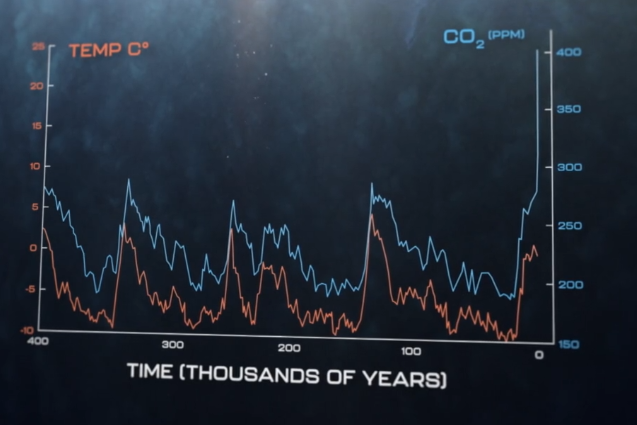
Polar Change
Factional warfare / branch stacking within the Liberal Party of Australia
Branch Stacking:
Branch stacking itself is legal under Australian law since it is an internal party matter, but some activities like providing false information to the Australian Electoral Commission, such as the numbers of members, can be prosecuted as fraud.
(Wikipedia, 7 May 2022)


Ross Garnaut (1946)


After being on a strongly increasing trajectory for many years, Australian emissions have stabilised under the new [Labor] policies.
Emissions from the electricity sector fell by more than 7% over the year to June 2013. …
Current policies can meet the more and more demanding reductions that Austrlaia is likely to be called to make, at a relatively low cost and with minimal political discretion and business uncertainty.
(p 207)

The new [Abbott] government is bound by its election commitments to … remove carbon pricing. …
[Doing this] would deepen the budgetary problems with which the government will eventually have to deal.
It would lead to larger sacrificies of productivity than would be necessary with broadly based carbon pricing.
It would lead either:
  • to much higher costs later in the decade; or
  • to Australia breaching its committments to the international community and damaging its own interest in the global mitagation effort.
And it would set the Australian polity on another long journey to find a way to make our contribution to combating global climate change, distracting the government and the polity from the great economic challenges facing Australia.
(p 211)

Non-Labor governments have greater longevity .
There have been five long-term (three or more terms) non-Labor governments and only one long-term Labor government.
This reflects and electoral advantage in conservatisim, in the sense of defending the status quo and resisting change.
As Machiavelli explained to the Medici princes, reform excites the passions of all who will be hurt by it, but the enthusiasm of [none of the] beneficiaries.

(Dog Days: Australia After The Boom, 2013, p 227)


William Wordsworth (1770 – 1850)


For I have learned
To look on nature, not as in the hour
Of thoughtless youth; but hearing oftentimes
The still, sad music of humanity …
And I have felt … a sense sublime
Of something far more deeply interfused,
Whose dwelling is the light of setting suns,
And the round ocean and the living air,
And the blue sky …

(Lines written a few miles above Tintern Abbey, 1798)


One impulse from a vernal wood
May teach you more of man,
Of moral evil and of good,
Than all the sages can.

(The Tables Turned, Lyrical Ballads, 1798)


Aeschylus (c 525/524 – c 456/455 BCE)


[He] who learns must suffer.
And even in our sleep, pain that cannot forget
falls drop by drop upon the heart,
and in our own despite, against our will,
comes wisdom to us by the awful grace of God.

(Agamemnon, Oresteia, 458 BCE)

April 24, 2022

Simon Chapman

Green Army: Persons of Interest


I am a cigarette with a life attached.

Raymond Carver (1938 – 88)

Simon Chapman (1951)


Smoking kills 19,000 Australians a year, more than 4,000 before retirement age, more than those who die from breast, cervical and skin cancer, AIDS, suicide, alcohol and road crashes combined.
(p 192)

Globally, an estimated 4 million people die each year from tobacco-related illness, compared to 2.7 million from malaria and 2.8 million from AIDS.
After malnutrition (5.9 million in 1990) and violence and injury (5.8 million), tobacco claims more deaths than any other single cause.

(Smoke Signals, 2016, p 141)


Simon Chapman [Director of Research, School of Public Health, University of Sydney]:
[According to] internal tobacco industry documents [the price of cigarettes] is the single greatest determinant of smoking in the community. …

[They also] show that the main purpose of [cigarette additives] is to make smoking more palatable for young people.
[A] lot of work has gone [into reducing] 'throat grab' [‒ that initial coughing you get when you first start smoking.]
[Menthol] acts as a sort of a gentle local anaesthetic in the throat, which makes [smoking] easier, particularly for young women, who tend to favour menthol cigarettes …

Robert Proctor:
[Smoking] is not like drinking …
[It's] like being an alcoholic.
Only about three per cent of people who drink are addicted, whereas 80 to 90 per cent of people who smoke are addicted. …
[Smoking] is not a recreational drug …

[The] cigarette pack itself [is] the last bastion of advertising.
The cigarette pack [is] like a micro-ad …
[Cigarettes are an undifferentiated product, they're] basically all … the same.
[From a marketing viewpoint, the packaging is the] product. …

Simon Chapman (1951):
[If you] open any tobacco industry trade magazine [there is] page after page of advertisements from packaging companies, talking about how packaging is front and centre of branding …
[The package] is the centre of the advertising effort.

There's been a lot of experimental evidence by people showing young people different versions of packs and asking them which ones that they would prefer.
[They] always say that they don't like the plain-packaged ones, they want the nice looking packs …
[It's] a no-brainer.
[The] next generation of kids will grow up never having seen a packet of carcinogenic products packaged in a beautiful box.

(Plain packaging of cigarettes, ABC Rear Vision, 19 October 2011)

Would you like to know more?


E-cigarettes


Banks E, Yazidjoglou A, Brown S, Nguyen M, Martin M, Beckwith K, Daluwatta A, Campbell S & Joshy G

Among non-smokers, there is currently strong evidence that use of e-cigarettes is harmful to health overall, with multiple health harms and no health benefits identified in this population. …
There is no available evidence as to how e-cigarette use affects clinical mental-health outcomes. …
There is strong evidence that e-cigarettes increase combustible smoking uptake in non-smokers, particularly youth …

Use of e-cigarettes results in inhalation of a complex array of chemicals originating from:
  • the e-liquid,
  • chemical reactions in the heating coil and the device itself.
These include:
  • nicotine,
  • solvent carriers (propyleneglycol, ethylene glycol and glycerol),
  • tobacco-specific nitrosamines,
  • volatile organic compounds,
  • phenolic compounds,
  • flavourings,
  • tobacco alkaloids,
  • aldehydes,
  • free radicals,
  • reactive oxygen species,
  • furans, and
  • metals.
Toxicological studies indicate that exposure to these substances can result in adverse health effects. Nicotine is highly addictive and there is evidence from basic human and animal studies that it adversely affects:
  • cardiovascular measures, and
  • brain development and functioning. …
Nicotine e-cigarettes are highly addictive, underpinning increasing and widespread use among children and adolescents in many settings. …

There is conclusive evidence that:
  • e-cigarettes and their constituents cause poisoning, injuries and burns and immediate toxicity through inhalation, including seizures …
  • their use leads to addiction, and that
  • they cause less serious adverse events, such as throat irritation and nausea.
There is conclusive evidence that the use of e-cigarettes can cause [EVALI (e-cigarette or vaping product use-associated lung injury)] among smokers and non-smokers … with
  • half of cases related to THC in conjunction with vitamin E acetate, and
  • 14% in patients reporting the use of nicotine-delivering products only …

(Executive Summary, Electronic cigarettes and health outcomes: systematic review of global evidence, Report for the Australian Department of Health, National Centre for Epidemiology and Population Health, Canberra, April 2022, pp viii‒xiv, emphasis added)


Wind Turbines


There is currently no published scientific evidence to positively link wind turbines with adverse health effects. …
The evidence on shadow flicker does not support a health concern. …
[Wind] turbines of contemporary design … produce very low levels of infrasound. …
The risk of blade glint from modern wind turbines is … very low.
[The] closeness of the electrical cables counters the electromagnetic field [generated by wind turbines], as does shielding with metal armour. …
[Evidence is limited, therefore] it is recommended that relevant authorities take a precautionary approach and continue to monitor research outcomes.

(NHMRC Public Statement, July 2010)


Table 3 (Adapted): Typical A-weighted sound levels for different sources

ActivitySound pressure level (dBA)
Busy general office60
Car travelling at 64km/h at 100m55
Typical wind farm (at moderate wind speed 7 m/s)*40 ± 5
Background noise in rural area at night30 ± 10
*Based on sound level measurements taken from multiple resident locations near two Victorian wind farms, at distances 500–1,000 m from the nearest turbine.

(p 8)

July 4, 2021

Gigi Foster

Blue Army: Persons of Interest


An Epidemic of Socialism

COVID didn't crush the economy.
Government crushed the economy.


Kristi Noem (1971), Govenor of South Dakota, CPAC, 2021.


[You] need to control the virus to get people back to work.

Alan Kohler (1952)


(ABC News, 2 September 2020)


(ABC News, 7 December 2020)


Liberty Or Death

(Pandemic 2020)


Gigi Foster


Associate Professor of Economics, UNSW Business School.
PhD (Economics), University of Maryland.
BA (Ethics, Politics, and Economics), Yale University.


Are Lockdowns a Crime Against Humanity?


The Nuremberg code [is] a code of ethical standards …
It's something that, essentially, the war criminals of period during the WWII atrocities were facing, in the 1950s kind of period, to try to draw them to account for the massive damage they had done, the genocides.
And this code is something that requires governments defend the actions on the basis of public health.
So the sixth Nuremberg code demands that the decision maker must have a reasonable view that the benefits of an intervention will be higher than the costs, and failure to abide by that is a crime against humanity …
Museum Note:
On August 19, 1947, the judges of the American military tribunal in the case of the USA vs Karl Brandt et al … confronted the difficult question of medical experimentation on human beings. …
Although the [Nuremberg] code addressed the defense arguments in general remarkably none of the specific findings against Brandt and his codefendants mentioned the code.
Thus the legal force of the document was not well established.
The uncertain use of the code continued in the half century following the trial when it informed numerous international ethics statements but failed to find a place in either the American or German national law codes.
Nevertheless, it remains a landmark document on medical ethics …

Permissible Medical Experiments:
The degree of risk to be taken should never exceed that determined by the humanitarian importance of the problem to be solved by the experiment.
(Nuremberg Code, United States Holocaust Memorial Museum)
Have you seen a cost-benefit analysis produced by the government to defend its decisions during this period?
To strip people of their liberties.
To close schools.
To shut borders.
To cease trade.
I went for months waiting for that and finally produced one on the back of a cocktail napkin basically myself [in approximately … 15 hours in August 2020.]

[You can't assume] that it was those tough early restrictions that, as a package, created the outcomes we've seen.
My reading of the data is that pretty much how well or not you did in this period health-wise and economics-wise was kind of unrelated whether you locked down really hard or not so hard or whatever.
In fact the best thing to do probably would have been to target of our protection and our attention to the people who were actually vulnerable to this virus, and to invest in things like prophylactic treatments evaluation and evaluation of what can we do, medicines we can use, not just vaccines, but all sorts of cheaper things, when somebody gets the virus to prevent them getting serious symptoms. …

[We're] an island nation …
But there are many [other] reasons why the virus didn't run like it did, in the US for example, here that have nothing to do with our policy responses and you can compare Victoria to NSW if you want to get a sense of what's possible without locking down. …


[We] knew that this thing was killing mainly older people … which is why … in March of last year I called for the radical protection of older people, people in danger from this virus, and everybody else be allowed to go about their business as they deemed fit …
And the thing is, it's very uncomfortable right now to admit that we messed up.
For the politicians to admit it …

(Lockdowns and the path forward , ABC The Economists, 24 June 2021)


If you look at the people who have died from [COVID-19, they] have 5-6 years on average still to live …
How much does a developed society typically spend in normal times per [Quality Adjusted Life Year?]
Usually somewhere between $50,000 and $150,000 per QALY. …
Office of Best Practice Regulation:
Willingness to pay is the appropriate way to estimate the value of reductions in the risk of physical harm – known as the value of statistical life.
Based on international and Australian research a credible estimate of … the value of statistical life year is $195,000 in 2018 dollars.
(Best Practice Regulation Guidance Note: Value of statistical life, Department of the Prime Minister and Cabinet, Australian Government, October 2018)

William Viscusi (1947):
Unlimited personal freedoms will lower our well‐being, particularly when confronting crises for which collective, responsible behavior is desirable.

Mortality costs of COVID‐19 in Australia as of January 1, 2021
(Table A1 extract)
Number of deaths909
VSL ($ millions)8.6636
VSL × deaths ($ millions)7875
VSL = Value of a Statistical Life

(Economic lessons for COVID‐19 pandemic policies, South Economic Journal, 4 March 2021)
[So] every death we [prevent] from COVID-19 is [worth] around $500,000 and $600,000. …
Then you have a currency. …
Then you can say … when we do this lockdown:
  • [Firstly,] are we actually preventing that many more deaths?
  • [Secondly,] whatever number we are saving [we] multiply that by whatever the amount is we're willing to spend in normal times to save that amount of lives, that quality of life.
[Then] we get a dollar figure.
And then we can say: …
Is the economic cost of implementing these measures less than that?
  • [If] so — good idea.
  • If not — let's think about it more.
(Who'll pay the COVID-19 bill?, ABC The Signal, 5 May 2020)


What Have The Capitalists Ever Done For Us?


[Shutdowns are] very much a cure that's worse than the disease …
We had Trump saying that, by Easter, he wants things to be back on game …
He's right … to try to give a stopping point, to try to increase a bit of certainty about what to expect.
Because businesses … are in free freefall — people are stressed and they're going to be dying from that at some stage. …

This is the way that economies in communist systems organise …
[Whereas, Capitalism] has kept us all doing so well and having such luxurious lives, by historical and international comparisons, for so long. …

We know GDP is a huge predictor of [longevity.]
[Life] spans have increased over the last 100 years … on the back of rises in GDP per capita that pay for research and development, and health … and education services, and better roads, and everything that makes our lives better …
We giving that up with every day we are in shutdown …

[The global response to COVID-19] is actually killing people …
I'm talking about statistical lives lost.
Human welfare which is tanking because the economy is tanking. …

[Keeping the economy running] saves many more lives than are saved by quarantining the entire economy …
[The tradeoff is] not lives against money, it's lives against more lives. …

We need to be aggressively targeting isolation of older people, because those are the people who are dying. …
But to say to young people you should stay home and worry, and not go to pubs, is … absolutely a disgrace.
[These people] won't die from it — under 40 it's a 0.2% death rate …
[When Boris Johnson] could not stay that ["herd immunity"] course in the face public opinion — that was an entirely political move. …


The young people who lived through this, the coronavirus cohort, they are going to see negative effects throughout their lives because of what has already happened.
The longer this goes on, the worse off those people are going to be, 10 years, 20 years, 30 years …

I just want to see us open for business as soon as possible.

(As the coronavirus marches on, can wartime measures save us from a depression?, ABC The Economists, 26 March 2020)

March 13, 2021

The Logic of War

Live Long and Prosper: Ministry of Peace


For such is the logic of war.
If people do not display wisdom, they will clash like blind moles.
And then mutual annihilation will commence. …

What good would it have done me in the last hour of my life to know that,
though our great nation and the United States were in complete ruins,
the national honor of the Soviet Union was intact?


Nikita Khrushchev (1894 – 1971), October 1962 & 1963.


[Peace is] the necessary rational end of rational men. …
[The] expenditure of billions of dollars every year on weapons acquired for the purpose of making sure we never need to use them [is not] the most efficient, means of assuring peace. …

[In] the final analysis, our most basic common link is that …
  • we all inhabit this small planet …
  • we all breathe the same air …
  • we all cherish our children's future, and
  • we are all mortal.

John Kennedy (1917 – 63), Commencement Address, American University, Washington, 10 June 1963)

(Susan Bellows, JFK, PBS American Experience, WGBH, 2013)

(Adriana Bosch, Eisenhower, PBS American Experience, WGBH, 1993)

Harry Haldeman (1926 – 93) [White House Chief of Staff, Nixon Administration, 1969–73]:
When Eisenhower arrived in the White House, the Korean War was stalemated.
Eisenhower ended the impasse in a hurry.
He secretly got word to the Chinese that he would drop nuclear bombs on North Korea unless a truce was signed immediately.
In a few weeks, the Chinese called for a truce and the Korean War ended.
(The Ends of Power, Times Books, 1978)

Daniel Ellsberg (1931):
Whether such threats actually affected the Chinese decision makers or whether they even received them remains uncertain and controversial.
What is neither uncertain nor inconsequential is that the Eisenhower administration, including [then vice president] Richard Nixon, regarded them as successful.
In line with this belief, Eisenhower and Dulles relied on such threats repeatedly, in a series of crises.
[And later Nixon, as president, made similar threats towards the North Vietnamese.]
(pp 311-2)

[Eisenhower’s judgment was] that no war between any significant forces of the United States and the Soviet Union could remain limited more than momentarily.
Therefore, if such a conflict were pending, the United States should immediately go to an all-out nuclear first strike rather than allow the Soviets to do so. …

[Any] alternative approach was unacceptable from a fiscal point of view.
[His economic advisors had convinced him] that preparation to fight even a limited number of Soviet divisions on the ground … would compel an increase in defense spending that would cause inflation, precipitating a depression and "national bankruptcy."
(pp 94-5)

In 1961, [within the US] arsenal there were some 500 bombs with an explosive power of 25 megatons.
Each of these warheads had more firepower than all the bombs and shells exploded in all the wars of human history. …
The preplanned targets for the whole force included … every city in the Soviet Union and China.
There was at least one warhead allocated for every city of 25,000 people or more in the Soviet Union.
(pp 98-9)

In 1986, the US had 23,317 nuclear warheads and Russia had 40,159, for a total of 63,836 weapons.
(p 144)

[The Strategic Integrated Operations Plan:]
  • provided for no distinction between the USSR and China; …
  • allowed for no avoidance or postponement of attacks on cities; …
  • allowed for no option to minimize nonmilitary casualties; …
  • offered no option for preserving enemy command and control capability, [and]
  • allowed for no Stop order once an authenticated Execute order was received by [Strategic Air Command] forces.
Since this unleashed attacks on all major Sino-Soviet urban-industrial centers and governmental and military control centers, this policy maintained no plausible basis for inducing any Soviet commanders or units to terminate operations prior to expending all their weapons upon US and allied cities.
(pp 126-7)

David Shoup (1904 – 83) [General, US Marine Corp]:
[Any] plan that murders 300 million Chinese when it might not even be their war is not a good plan.
That is not the American way.
(p 103, emphasis added)

Daniel Ellsberg (1931):
Deterring a surprise Soviet nuclear attack — or responding to such an attack — has never been the only or even the primary purpose of our nuclear plans and preparations.
The nature, scale, and posture of our strategic nuclear forces has always been shaped by the [imperative] to limit the damage to the United States from Soviet or Russian retaliation to a US first strike against the USSR or Russia.
(p 12)

The … arrangements made in Russia and the United States have long made it highly likely, if not virtually certain, that a single Hiroshima-type fission weapon exploding on either Washington or Moscow — whether deliberate or the result of a mistaken attack (as in Fail Safe or Dr Strangelove) or as a result of an independent terrorist action — would lead to the end of human civilization (and most other species).
(The Doomsday Machine, Bloomsbury, 2017, p 305)

Robert McMahon:
By 1960, the United States [had achieved] the coveted ‘triad’ of bomber-, land-, and submarine-based nuclear weapons, each part of the triad capable of obliterating major Soviet targets.
The total US nuclear arsenal had grown from approximately 1,000 warheads in 1953, Eisenhower’s first year in office, to 18,000 in 1960, his last.
By then, the US Strategic Air Command (SAC) boasted a total of 1,735 strategic bombers capable of dropping nuclear weapons on Soviet targets. …
Aided by secret reconnaissance photographs [Eisenhower knew] that the United States maintained a formidable lead over its rival in deliverable nuclear weapons.
Still, a political frenzy surrounded the supposed missile gap, and the non-existent gap actually emerged as a galvanizing issue in the 1960 presidential election.
(The Cold War: A Very Short Introduction, Oxford University Press, 2003, pp 74‒6)

Friedrich Nietzsche (1844 – 1900):
Madness is something rare in individuals — but in groups, parties, peoples, [and] ages, it is the rule.
(Aphorism 156, Beyond Good and Evil, 1886)

(Nuclear Nightmeres, While the Rest of Us Die: Secrets of America's Shadow Government, Episode 5, Season 2, Vice, 2021)


Rationality Alone Will Not Save Us

Against stupidity
The Gods themselves
Contend in vain


Friedrich von Schiller (1759 – 1805)


India and Pakistan have fought three vicious conventional land wars.
Yet despite their border disputes [they] have not fought a major conflict since since they generated nuclear capacity in the 1970s. …
Post-WWII history is littered with examples of deterrence preventing powers from using nuclear weapons in an offensive manner.
During the long peace of the Cold War there was actually a very limited chance of nuclear war.
Why?
Because Washington and Moscow were rational calculators of nuclear risks. …
Now it's true that Pakistan could one day implode into chaos and one or more of its nukes could fall into the hands of jihadists who are irrational enough to use them.
Still, the lesson [of history] is clear: nuclear deterrence works.


Tom Switzer (1971), India and Pakistan nuclear tests 1998, ABC Between the Lines, 31 May 2018.