November 26, 2012

Sunday Extra

ABC Radio National


Budget of the Century


John Hewson (1946): Coalition Opposition Leader, 1990-4; Professor and Chair, Tax and Transfer Policy Institute, Australian National University

[The] inequity of the process!
To argue that everyone is sharing the burden, when obviously they are not, because, people at the bottom end of the income scale are losing between 12-15% of their disposable income and people at the top are losing less than 1%.
The inequity just screams at you …

I think [Abbott and Hockey] actually did believe they had brought down the 'budget of the century' — [one] that actually will be remembered as probably one of the worst; because, it was so ill conceived, so many incoherent messages, so many partial attempts to solve problems, with massive inequity overriding the lot.
A lot a pain for very little gain.
What do they do now?
If the revenue continues to be weaker than predicted, which is … a pretty high probability, and the deficit will start to blow out and they can't go back an try and fix it again.

(The rise of anti-establishment political parties, 25 May 2014)

November 24, 2012

American Experience

Public Broadcasting Service


(Ken Burns, Mark Twain, 2002)


Douglas Brinkley (1960) [Historian]:
It was in stark contrast to kind of the so called greed decade of the 80s to see somebody not looking to make big speaking fees, not looking to sit on corporate boards.
[There's] just something about an ex-president … in blue jeans, with a hammer, sleeping in cots and building houses for the poor.
It's an image seared on our imaginations.
(Adriana Bosch, Jimmy Carter, 2002)


John Adams ( 1735 – 1826) [2nd President of the United States]:
If we must erect an independent government in America, a republic will produce strength, hardiness, activity, courage, fortitude and enterprise.
But there is so much rascality, so much venality and corruption, so much avarice and ambition, such a rage for profit and commerce among all ranks and degrees of men, even in America, that I sometimes doubt whether there is public virtue enough to support a republic.
(Ken Burns, An Asylum for Mankind, The American Revolution, Episode 2, 2025)


The Gods of Profit and Production


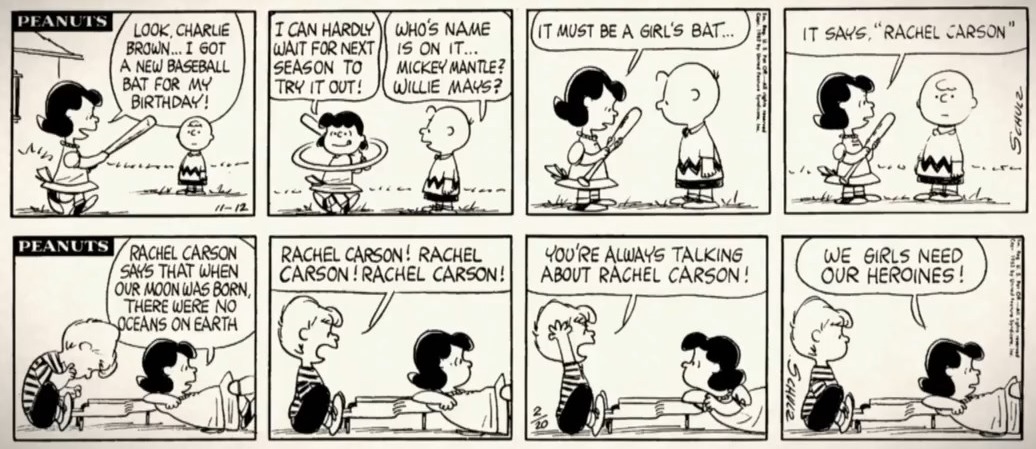
Rachel Carson is an American hero …

— Naomi Oreskes & Erik Conway, Merchants of Doubt, 2010, p 216.


(Michelle Ferrari, Rachel Carson, 2017)

Rachel Carson (1907 – 64):
Is industry becoming a screen through which facts must be filtered so that the hard, uncomfortable truths are kept back and only the harmless morsels are allowed to filter through?
The tailoring, the screening of basic truth is done:
  • to accommodate to the short-term gain, [and]
  • to serve the gods of profit and production.
(Women's National Press Club, December 1962)

[I] could never again listen happily to a thrush song if I had not done all I could.
And last night the thoughts of all the birds and other creatures and all the loveliness that is in nature came to me with such a surge of deep happiness, that now I had done what I could — I had been able to complete [Silent Spring] — now it had its own life!
(Letter to Dorothy Freeman)

[On the island's] western shore the wet sand of the narrow beach caught the same reflection of palely gleaming sky that laid a bright path across the water from island beach to horizon.
Both water and sand were the colour of steel overlaid with the sheen of silver, so that it was hard to say where water ended and land began. …

With the dusk a strange bird came to the island from its nesting grounds on the outer banks. …
[And as] he neared the shore [the pure black] skimmer drifted closer to the water, bringing his dark form into strong silhouette against the grey sheet, like the shadow of a great bird [passing] unseen above.
[So] quietly did he approach that the sound of his wings … was lost in the whisper song of the water turning over shells on the wet sand. …

Shadowy forms moved through the night skies and pipings so soft as barely to be audible drifted down to [the sleeping villages] below, as the birds of shore and marsh poured northward along ancestral air lanes, seeking their nesting places.
(Under the Sea-Wind, 1952)

Linda Lear (1940):
It is one of the great paradoxes of the human condition that, while we are almost paranoid in our vigilance in regard to taking toxins into our bodies, we are all but oblivious to the possibility of poisoning our planet.
(Introduction, Silent Spring, 1962)

Would you like to know more?


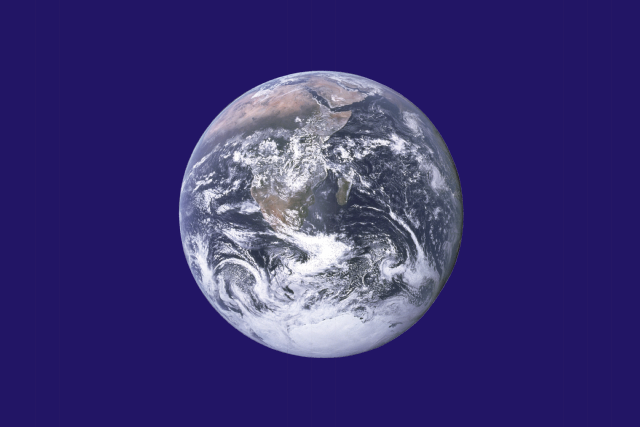
Earth Days


If the people really understood, that in the lifetime of their children, they're going to have … perhaps made the globe unlivable in a
half-century, they'd do something about it.


— Gaylord Nelson (1916 – 2005)


(Earth Day, Wikipedia, 29 August 2019)

Rachel Carson (1907 – 64):
[We,] in this generation, must come to terms with Nature.
[We're] challenged, as mankind has never been challenged before, to prove our maturity and our mastery:
Not of nature — but of ourselves.

Jimmy Carter (1924):
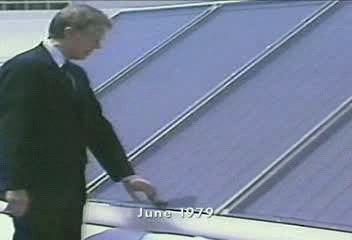
The energy crisis has not yet overwhelmed us.
But it will — if we do not act quickly.
It's a problem that we will not be able to solve in the next few years.
And is likely to get progressively worse through the rest of this century.

We must not be selfish or timid, if we hope to have a decent world for our children and grand-children.
We simply must balance our demand for energy with our rapidly shrinking resources.
By acting now, we can control our future, rather than letting the future control us.


Ronald Reagan (1911 – 2004):
They tell us we must learn to live with less.
And teach our children that their lives will be less full and prosperous than ours have been.
That the America of the coming years, will be a place — because of our past excesses — it will be impossible to dream and make those dreams come true.
I don't believe that. …

I cannot, and will not, stand by and see this great country destroy itself.
Our leaders attempt to blame their failures on circumstances beyond their control.
On false estimates by unknown, unidentifiable experts who rewrite modern history in an attempt to convince us our high standard of living, the result of thrift and hard work, is somehow selfish extravagance which we must renounce as we join in sharing scarcity. …

We must and will be sensitive to the delicate balance of our ecosystems, the preservation of endangered species, and the protection of our wilderness lands. …
Preservation of our environment is not a liberal or conservative challenge, it's common sense.
Our physical health, our social happiness, and our economic well-being will be sustained only by all of us working in partnership as thoughtful, effective stewards of our natural resources.

(Robert Stone, Earth Days, 2010)

November 18, 2012

Scientific American: 2011

Scientific American


Radioactive Smoke


[The WHO estimates that over a million people a year die from smoking related lung cancers.]
If polonium had been reduced through methods [long] known to the [tobacco] industry, many thousands of those deaths could have been avoided.

(January 2011, p 67)