July 2, 2023

Non-Random Evolution

Would you like to know more?


Richard Dawkins (1941)


[Fred Hoyle (1915 – 2001) compared] the spontaneous formation by ‘chance’ of a working enzyme is like a hurricane blowing through a junkyard and spontaneously having the luck to put together a Boeing 747. …


[To] invoke chance, on its own, as an explanation [for objects such as eyes and protein molecules], is equivalent to vaulting from the bottom to the top of Mount Improbable’s steepest cliff in one bound.
And what corresponds to inching up the kindly, grassy slopes on the other side of the mountain?
It is the slow, cumulative, one-step-at-a-time, non-random survival of random variants that Darwin called natural selection.
The metaphor of Mount Improbable dramatizes the mistake of the sceptics quoted at the beginning of this chapter.
Where they went wrong was to keep their eyes fixed on the vertical precipice and its dramatic height.
They assumed that the sheer cliff was the only way up to the summit on which are perched eyes and protein molecules and other supremely improbable arrangements of parts.
It was Darwin’s great achievement to discover the gentle gradients winding up the other side of the mountain. …


Darwinism is widely misunderstood as a theory of pure chance. …
One stage in the Darwinian process is indeed a chance process—mutation.
Mutation is the process by which fresh genetic variation is offered up for selection and it is usually described as random.
But Darwinians make the fuss that they do about the ‘randomness’ of mutation only in order to contrast it to the non-randomness of selection, the other side of the process.
It is not necessary that mutation should be random in order for natural selection to work.
Selection can still do its work whether mutation is directed or not.
Emphasizing that mutation can be random is our way of calling attention to the crucial fact that, by contrast, selection is sublimely and quintessentially non-random.
It is ironic that this emphasis on the contrast between mutation and the non-randomness of selection has led people to think that the whole theory is a theory of chance. …


The Darwinian explanation for why living things are so good at doing what they do is very simple.
They are good because of the accumulated wisdom of their ancestors.
But it is not wisdom that they have learned or acquired.
It is wisdom that they chanced upon by lucky random mutations, wisdom that was then selectively, non-randomly, recorded in the genetic database of the species.
In each generation the amount of luck was not very great …
But, because the luck has been accumulated over so many generations, we are eventually very impressed by the apparent improbability of the end product. …
[Heredity] the basic ingredient [of] Darwinism, and hence life, will follow, more or less inevitably, on any planet in the universe where something equivalent to heredity arises. …


The message from the mountain is threefold.
First is the message we have already introduced: there can be no sudden leaps upward—no precipitous increases in ordered complexity.
Second, there can be no going downhill—species can’t get worse as a prelude to getting better.
Third, there may be more than one peak—more than one way of solving the same problem, all flourishing in the world.

Take any part of any animal or plant, and … ask: how that part has been formed by gradual transformation from some other part of an earlier ancestor? …
A famous example is the gradual derivation of our mammalian ear bones …
Fossil evidence clearly shows that these three bones, called the hammer, the anvil and the stirrup, are lineally descended from three corresponding bones that, in our reptile ancestors, formed the jaw joint.

(Climbing Mount Improbable, 1996)


Charles Darwin (1809 – 82)


Under nature, the slightest difference of structure or constitution may well turn the nicely-balanced scale in the struggle for life, and so be preserved.
How fleeting are the wishes and efforts of man! how short his time! and consequently how poor will his products be, compared with those accumulated by nature during whole geological periods.
Can we wonder, then,
  • that nature’s productions should be far ‘truer’ in character than man’s productions;
  • that they should be infinitely better adapted to the most complex conditions of life, and should plainly bear the stamp of far higher workmanship?

It may be said that natural selection is daily and hourly:
  • scrutinising, throughout the world, every variation, even the slightest;
  • rejecting that which is bad, preserving and adding up all that is good;
  • silently and insensibly working, whenever and wherever opportunity offers, at the improvement of each organic being in relation to its organic and inorganic conditions of life.
We see nothing of these slow changes in progress, until the hand of time has marked the long lapse of ages, and then so imperfect is our view into long past geological ages, that we only see that the forms of life are now different from what they formerly were.

(On the Origin of Species by Means of Natural Selection, 1859)


The Final Victory


Christian Krause:
Where cities once bloomed, the ruins reach up to the sky.
The war is our destiny.
We must accept it.
And it is proof of our unique greatness that we are not prepared to give in to our enemies.
Better dead than a slave!
Our task is to mature for victory or death.
(1945)

Margarete Krause:
The Führer is there, where the danger is greatest.
He is true to himself.
Should we not be true to him, unto victory or ruin?
We have no choice!
We must fulfil the destiny he gies us with our bravest hearts, with the best we have, loyal, upright, without hesitating or wavering.
(1945)

Johannes Tuchal {German Resistance Memorial Centre]:
The people supported the dictatorship.
At no point did a majority of Germans ever turn against Hitler.
It was always a very, very small minority of the German people who turned against him and grasped what the dictatorship had done to Germany.

Claus von Stauffenberg (1907 – 44):
It is time for something to be done.
Anyone who dares to do something must accept that he will probably go down in German history as a traitor.
But if he fails to act, he would be a traitor to his own conscience.

Adolf Hitler (1889 – 1945):
However great the crisis of the moment may be, we will master it in the end through our unbreakable will.
(30 January 1945)


Seven Days On Mars
Wagner

Soldiers of Fortune

Does language shape how we think?

I don't need a ride

The cost of speaking out on Afghanistan

June 7, 2023

Human Capital

Would you like to know more?


Kenneth Minogue (1930 – 2013):
The Greek despotes and the Roman dominus both signify the specific form of power exercised by the master of slaves. …
The essence of despotism is … the unchecked power of the master. …
The sole object of the subjects must be to please.
There is … no public voice except that of the despot.

Such powerlessness is, oddly enough, the reason why despotisms are notable generators of spiritual enlightenment.
A reaction sets in against a world governed by the caprice of power, and thoughtful subjects take up mysticism, Stoicism, and other forms of withdrawal.
The essence of life is then found in a spiritual realm beyond that of the senses, and social and political life is devalued as illusion.
The result is usually scientific and technological stagnation …

All that one can confidently say about despotism is that able rulers will sooner or later be followed by mad or feeble heirs.
(Politics: A Very Short Introduction, Oxford University Press, 1995)


Thomas Piketty (1971)


Land of the Free


The total number of slaves on Euro-American plantations in the Atlantic region [peaked at] 6 million in 1860 (4 million of whom were in the southern United States, 1.6 million in Brazil, and 0.4 million in Cuba). …
[The] 4 million slaves exploited in the southern United States on the eve of the Civil War (1861–1865) constituted the largest concentration of slaves that ever existed. …
[The] market value of all slaves exceeded the value of all other private property (land, buildings, and equipment). …

[Politically,] the number of slaves played a key role in determining the number of seats assigned to each state in the House of Representatives and therefore the number of members of the Electoral College, which chooses the president: each slave counted for three-fifths of a free person. …
Of the fifteen presidents who served prior to the election of the Republican Abraham Lincoln in 1860, no fewer than eleven were slaveowners. …

In the 1850s, on the eve of the American Civil War, 75 percent of the cotton imported by European textile factories came from the southern United States.
[It] was this “empire of cotton,” intimately associated with slave plantations, that was the heart of the Industrial Revolution and more generally of the economic domination of Europe and the United States. …

The necessity of compensating slaveowners [for loss of their property] was obvious not only to the political and economic elites of the time but also to many thinkers and intellectuals. …
Tocqueville … proposed in 1843 that half the indemnity be paid to slaveholders in the form of government annuities (hence by increasing the public debt, to be repaid by the taxpayers) and the other half by the slaves themselves, who would work for the state for ten years at low wages, allowing the wage differential to be used to reimburse their former owners.
In that way, he argued, the solution would be “fair to all participating parties,” since the former slaveowners would, after ten years, be obliged to pay “the increased price of labor” due to emancipation. …
[He also] proposed that former slaves be deprived of property rights for a long period of time, from ten to twenty years, to give them time to acquire a taste for work and effort; this lesson might be lost if they were to discover the comforts of property too quickly (and “unnaturally”).


From Ownership Society to Social Democracy

OWNERSHIP SOCIETY (sometimes called proprietarian society):
A social order based on a quasi-religious defense of property rights as the sine qua non of social and political stability.
Ownership societies flourished in Europe and the United States in the nineteenth and early twentieth centuries. …
Proprietarian ideology is the ideology of ownership society, based on the sacralization of property rights.
[In] 1880 nearly 80% of the land in the United Kingdom was … owned by 7,000 noble families (less than 0.1% of the population), with more than half belonging to just 250 families (0.01% of the population), a tiny group that largely coincided with the hereditary peers who sat in the House of Lords. …

[The] House of Lords played a clearly dominant role in British becameralism until the last third of the nineteeth century. …
Specifically, all laws had to be approved in identical terms by both houses, effectively conferring a veto power over all legislation, including fiscal and budgetary matters and anything to do with property rights, on the House of Lords (and thus on a few hundred hereditary peers). …

In the early 1860s, roughly 75 percent of the seats in the House of Commons were still occupied by members of the [landed] aristocracy, which accounted for less than 0.5 percent of the British population at the time. …
[Before the] secret ballot was … introduced [in] 1872 … each individual vote was announced publicly and recorded …
Hence it was not easy for voters to make political choices that went against the wishes of their landlords or employers. …
The local member of Parliament (MP) was reelected in election after election and often in generation after generation.
In 1860 the House of Commons was still profoundly aristocratic and oligarchic. …

[The] famous Black Act of 1723 … stipulated the death penalty for anyone caught pilfering wood or poaching game on land they did not own.
Humble folk had taken to blackening their faces and trying their luck by night, and landlords in the House of Lords and their allies in the House of Commons were determined to prevent this.
Anyone who killed a deer, cut down a tree, poached fish from a breeding pond, pulled up plants, or abetted or incited such activity fell under the shadow of the act and could be sentenced to death by hanging without trial of any kind.
Initially intended to expire after three years, the law was renewed and reinforced over the next century until these acts of rebellion ceased and the proprietarian order was restored. …

Universal male suffrage was established in 1918, and the vote was finally extended to women in 1928.
This final phase of reform also witnessed the first decisive successes of the Labour Party.

The [Swedish] social democrats of the SAP came to power in the early 1920s …
The party subsequently held power more or less permanently from 1932 to 2006, and this long period in government allowed it to develop a very sophisticated welfare and tax system, which in turn achieved one of the lowest levels of inequality ever observed anywhere.
[Prior to] the early twentieth century, Sweden was a profoundly inegalitarian country …
In 1885, Sweden still had a law on the books allowing anyone without either a job or sufficient property to live on to be arrested and sentenced to a term of forced labor. …

[In] Sweden from 1865 to 1911 … the number of votes each voter could cast depended on the size of that voter’s tax payments, property, and income.
The men sufficiently wealthy to vote in elections for the lower house were divided into forty-odd groups, and each group was assigned a different electoral weight.
Specifically, each member of the least wealthy group could cast one vote, while each member of the wealthiest group could cast as many as fifty-four votes.

A similar system applied to municipal elections … with the additional wrinkle that corporations also had the right to vote in local elections, again casting a number of ballots that depended on their tax payments, property, and profits.
No voter in an urban municipal election, whether a private individual or a corporation, could cast more than one hundred ballots.
In rural towns, however, there was no such ceiling; indeed, in the municipal elections of 1871, there were 54 rural towns in Sweden where one voter cast more than 50% of the votes. …

[Yet] in the space of a few years Sweden moved from the most extreme hyper-inegalitarian proprietarian system … to a quintessential egalitarian social-democratic society once the SAP came to power in the 1920s …

People sometimes imagine that each culture or civilization has some “essence” that makes it naturally egalitarian or inegalitarian. …
In fact, everything depends on the rules and institutions that each human society establishes, and things can change very quickly depending on the balance of political and ideological power among contending social groups as well as on the logic of events and on unstable historical trajectories …
Sweden reminds us that equality is always a fragile sociopolitical construct, and nothing can be considered permanent: what was transformed in the past by institutions and the mobilization of political movements and ideologies can be transformed again by similar means, for better or for worse.

(Capital and Ideology, 2019)


Satanic Paedophillic Cannabilistic LGBT Nazi Drug Addicts

The Fall of King Roger

Whale Wisdom

The global rise of unhappiness

Race Suicide: Jews Will Not Replace Us

Replication in Psychology

Liberals Hate Medicare

May 4, 2023

The First Australian Civilization

Would you like to know more?


Expansion is everything
These stars … these vast worlds which we can never reach
I would annex the planets if I could


Cecil Rhodes (1853 – 1902)


Bertrand Russell (1872 – 1970):
The men who advocate an unpopular reform are exceptional in disinterestedness and zeal for the public good; but those who hold power after the reform has been carried out are likely to belong, in the main, to the ambitious executive type which has in all ages possessed itself of the government of nations.
And this type has never shown itself tolerant of opposition or friendly to freedom.
(Proposed Roads to Freedom, 1918 / 2014)


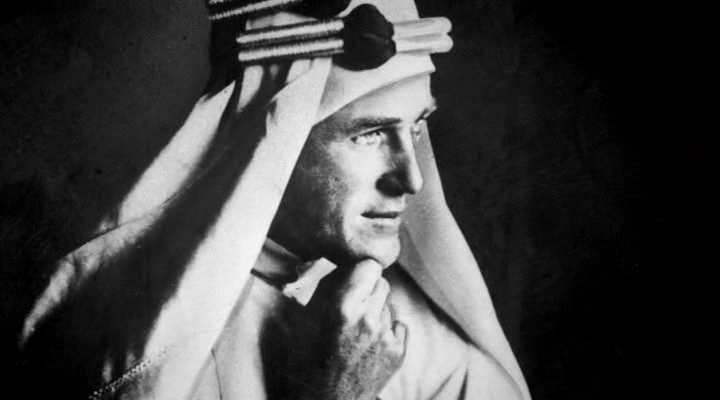
Thomas Lawrence
(1888 – 1935) [Lawrence or Arabia]:

There is a preliminary Arab success, the British reinforcements go out as a punitive force.
They fight their way … to their objective, which is meanwhile bombarded by artillery, aeroplanes, or gunboats.
Finally perhaps a village is burnt and the district pacified.
It is odd that we don’t use poison gas on these occasions.
Bombing the houses is a patchy way of getting the women and children. …
By gas attacks the whole population of offending districts could be wiped out neatly; and as a method of government it would be no more immoral than the present system.
(France, Britain and the Arabs, The Observer, 1920)


Jared Diamond (1937)


Nomadism, the hunter-gatherer lifestyle, and minimal investment in shelter and possessions were sensible adaptations to Australia's ENSO-driven resource unpredictability.
When local conditions deteriorated, Aborigines simply moved to an area where conditions were temporarily better.
Rather than depending on just a few crops that could fail, they minimized risk by developing an economy based on a great variety of wild foods, not all of which were likely to fail simultaneously.
Instead of having fluctuating populations that periodically outran their resources and starved, they maintained smaller populations that enjoyed
  • an abundance of food in good years, and
  • a sufficiency in bad years.

The Aboriginal Australian substitute for food production has been termed "firestick farming."
The Aborigines modified and managed the surrounding landscape in ways that increased its production of edible plants and animals, without resorting to cultivation.
In particular, they intentionally burned much of the landscape periodically.
That served several purposes:
  • the fires drove out animals that could be killed and eaten immediately;
  • fires converted dense thickets into open parkland in which people could travel more easily;
  • the parkland was also an ideal habitat for kangaroos, Australia's prime game animal; and
  • the fires stimulated the growth both
    • of new grass on which kangaroos fed, and
    • of fern roots on which Aborigines themselves fed.

We think of Australian Aborigines as desert people, but most of them were not.
Instead, their population densities varied
  • with rainfall (because it controls the production of terrestrial wild plant and animal foods) and
  • with abundance of aquatic foods in the sea, rivers, and lakes.
The highest population densities of Aborigines were in Australia's wettest and most productive regions:
  • the Murray-Darling river system of the Southeast,
  • the eastern and northern coasts, and
  • the southwestern corner.
Those areas also came to support the densest populations of European settlers in modern Australia.
The reason we think of Aborigines as desert people is simply that Europeans killed or drove them out of the most desirable areas, leaving the last intact Aboriginal populations only in areas that Europeans didn't want. …

Why did [Indigenous Australians] not develop metal tools, writing, and politically complex societies?
A major reason is that Aborigines remained hunter-gatherers, whereas … those developments arose elsewhere only in populous and economically specialized societies of food producers.
In addition, Australia's aridity, infertility, and climatic unpredictability limited its hunter-gatherer population to only a few hundred thousand [widely dispersed] people.
Compared with the tens of millions of people in ancient China or Mesoamerica, that meant that Australia had
  • far fewer potential inventors, and
  • far fewer societies to experiment with adopting innovations. …

European settlement reduced the number of Aborigines by two means.
  • One involved shooting them …
    The last large-scale massacre, of 31 Aborigines, occurred at Alice Springs in 1928.
  • The other means involved European-introduced germs to which Aborigines had had no opportunity to acquire immunity or to evolve genetic resistance. …
Within one century of European colonization, 40,000 years of Aboriginal traditions had been mostly swept away. …

How, except by postulating deficiencies in the Aborigines themselves, can one account for the fact that white English colonists apparently created a literate, food-producing, industrial democracy, within a few decades of colonizing a continent whose inhabitants after more than 40,000 years were still nonliterate nomadic hunter-gatherers?
Doesn't that constitute a perfectly controlled experiment in the evolution of human societies, forcing us to a simple racist conclusion?

The resolution of this problem is simple.
White English colonists did not create a literate, food-producing, industrial democracy in Australia.
Instead, they imported … 10,000 years of development in Eurasian environments. …
Europeans have never learned to survive in Australia or New Guinea without their inherited Eurasian technology. …
The people who did create a society in Australia were Aboriginal Australians.
Of course, the society that they created was not a literate, food- producing, industrial democracy.
The reasons follow straightforwardly from features of the Australian environment.

(Yali's People, Guns, Germs, and Steel, Chapter 15, 1997)


The Dark Universe

Onward Christian Soldier: Israel Folau

The War on Woke

Separate but Unequal
The Right to be Unequal

Winner Takes All

Lock Him Up

Catch and Kill

April 1, 2023

The Right to be Unequal

Would you like to know more?


Soak the Rich

In order to succeed … the poor need, most of all, the spur of their poverty.

George Gilder (1939), Wealth and Poverty, 1981.


Everything that is economically efficient is morally justified.


Yegor Gaidar (1956 – 2009)


Margaret Thatcher (1925 – 2013):
[The] pursuit of equality itself is a mirage.
What's more desireable and more practicable than the pursuit of equality is the pursuit of equality of opportunity.
And opportunity means nothing unless it includes the right to be unequal and the freedom to be different. …
I would say, let our children grow tall and some taller than others if they have the ability in them to do so.
Because we must build a society in which each citizen can develop his full potential, both for his own benefit and for the community as a whole …
(Let Our Children Grow Tall, Institute of SocioEconomic Studies, 15 September 1975)


Ronald Reagan (1911 – 2004):
The minimum wage has caused more misery and unemployment than anything since the Great Depression.
(1980)


Thomas Piketty, Emmanuel Saez, and Gabriel Zucman:
The bottom half of the adult population has thus been shut off from economic growth for over 40 years, and the modest increase in their post-tax income has been absorbed by increased health spending. …
[The] stagnation of bottom 50% incomes and the upsurge in the top 1% coincided with:
  • reduced progressive taxation,
  • widespread deregulation (particularly in the financial sector),
  • weakened unions, and
  • an erosion of the federal minimum wage.
(Distributional National Accounts: Methods and Estimates for the United States, The Quarterly Journal of Economics 133, no. 2:553–609, May 2018)

Mean Wealth Holdings in the United States (2013)

(Adapted from Table 3: Edward Wolff, Household Wealth Trends in the United States, 1962-2013: What Happened Over the Great Recession?, National Bureau of Economic Research, 2014, p 51)
PercentileNet Worth
P99-100$18,623,400
P90-99$2,266,400
P40-90$242,800
P0-40−$10,800


Income in the United States (1970)

(US Department of Commerce, Statistical Abstract of the United States, 1972, p 324)
Percentile% of Total Income
P50-100 (50%)77
P0-50 (50%)23


Income in the United States (2012)

Percentile# per 100,000 Taxpayers% of Total Income% of Total Income Tax
P99-100 (1%)1,00021.938.1
  P99.999-100 (0.001%)12.43.3
  P99.99-99.999 (0.009%)93.18.3
  P99.9-99.99 (0.09%)905.510.3
  P99-99.9 (0.9%)90010.919.5
P50-99 (49%)49,00067.059.1
P0-50 (50%)50,00011.12.8

peaceandlonglife:
The share of total US income going to the bottom 50% fell by more than half between 1970 and 2012 (from 23% to 11%).
(Looked at the other way, the income share of the top 50% rose from 77% to 89%.)
For a doubling of the income pie (equivalent to 2% annual growth in national income for 35 years) this amounts to:
  • a 131% rise in income for the top 50%, and
  • a 4% fall in income for the bottom 50%.
A rising tide does you no good if your boat is sinking faster than the water is rising.


Anna Stansbury & Lawrence Summers (1954):
[Since 1973 there has been] a 75% increase in labor productivity.
(Working Paper 24165, National Bureau of Economic Research, December 2017, p 2)

Robert Putnam (1941)


Over the four decades between 1974 and 2014, inflation-adjusted annual market income
  • fell $320 for households at the 10th percentile (the bottom tenth),
  • rose $388 for those at the 20th percentile (the bottom fifth),
  • rose $5,232 for those at the national median,
  • rose $75,053 for households in the top 5 percent,
  • rose $929,108 for those in the top 1 percent, and
  • rose $4,846,718 for those in the top 0.1 percent. …
If today’s income were distributed in the same way that 1970 income was distributed, it is estimated,
  • the bottom 99 percent would get roughly $1 trillion more annually, and
  • the top 1 percent would get roughly $1 trillion less. …

On issue after issue [since 1975, the Democrats have] remained mostly on the center-left, [while] the Republican center of gravity moved further and further to the right …
In other words, bipartisanship has disappeared from American politics over the last half century largely because the Republican Party has become steadily more extreme.
At least part of the explanation for this rightward shift is the investment by wealthy, highly conservative business elites in a sustained effort to shift American politics rightward, an effort signaled, symbolically at least, in a memo by Lewis F Powell, Jr in 1971, articulating a coordinated, long-term political strategy. …

[One] of the most robust findings of the ensuing half century of research is that most ordinary voters are ill-informed about the details of public issues, so much so that they entirely lack views on many issues of the day.
Most people have more urgent everyday things to worry about than policy debates. …
Partisan identification is more a tribal affiliation than an ideological commitment …
Shanto Iyengar, Tobias Konitzer, & Kent Tedin:
[The] most significant fault line in the second decade of the twenty-first century [in America] is not race, religion, or economic status but political party affiliation.
(The Home as a Political Fortress: Family Agreement in an Era of Polarization, The Journal of Politics 80, 4:1326–38, October 2018)
[People] are increasingly choosing their partners on the basis of political affiliation, even more than on the basis of education or religious orientation.
Over the last half century:
  • marriage across racial and religious lines has become much more common than either used to be, whereas
  • marriage across party lines has become much less common. …

This increasing agreement between husband and wife about politics in turn strengthens the inheritance of party identity by the next generation, since we know that children are more likely to inherit party identity when both parents agree politically.
In this very intimate way, over the last half century partisanship has gradually replaced religion as the main basis of “tribal” affiliation in America. …

In 1960, [George Romney's salary as CEO of American Motors peaked at] just over $661,000 (roughly $5.5 million today). …
In 1960 … he refused a $100,000 bonus, and in a five-year period he turned down a total of $268,000 (roughly 20 percent of his total earnings during the period). …
Moreover, he paid over a third of his income in taxes.

Fifty years later, his son Mitt pulled in $21.7 million in 2010, roughly four times his father’s peak income.
Of this, he paid an effective tax rate of 13.9 percent, roughly one third the rate his father had paid.
We know of no evidence Mitt has ever voluntarily returned any of his compensation, though he and his wife gave away $3 million in charitable donations in 2010, including $1.5 million to the Mormon Church. …

[George Romney, as Nixon's] first secretary of housing and urban development (HUD) … exemplified the last gasp of progressive Republicanism.
Romney’s Republicanism didn’t see the world as a zero-sum contest between:
  • capital and labor,
  • white and black,
  • friend and enemy,
  • us and them.
As secretary of HUD, he was implacable that minorities deserved access to quality housing in affluent white suburbs.
But in the new Republican Party he had become a political liability, a fossil from earlier in the century, and he was forced from his position by Nixon in 1972.

(The Upswing: How America Came Together a Century Ago and How We Can Do It Again, 2020)

Mitt Romney (1947) [US Senator from Utah]:
There are 47% of the people
  • who will vote for [President Obama] no matter what …
  • who are dependent upon government,
  • who believe that they are victims …
  • who believe the government has a responsibility to care for them …
  • who believe they are entitled to health care, to food, to housing, [and that] the government should give it to them. …
These are people who pay no income tax. …
[My] job is not to worry about those people.
I’ll never convince them that they should take personal responsibility and care for their lives.
(David Corn, Romney Tells Millionaire Donors What He Really Thinks of Obama Voters, Mother Jones, 17 September 2012)

Tom Bergin


Financial Journalist, Reuters

In 1990, the average CEO of a company in the S&P 500 index of major firms earned around $3.7 million in 2018 prices.
In 2000, they received $22 million. …
One study calculated that the aggregate compensation paid by public companies to their top-five executives between 2001 and 2003 amounted to 10.3% of the aggregate earnings of these firms during the period.

In 1992 the average boss of a company in the FTSE 100 index of the biggest UK firms earned £450,000. …
By 2010, FTSE CEOs were earning an average £4.5 million.

In the more than a hundred economic studies of executive pay I have studied, I have not found one that explains how aligning the interests of shareholders and managers could help the managers make smarter choices.
As one former CEO who went on to teach at Harvard Business School said,
All the financial incentives in the world won’t transform CEOs into better decision makers. …

Efficient Markets Theory [EMT], which years later would win [Eugene] Fama a Nobel memorial prize, argued that stock markets were perfectly efficient and rational.
This meant that if share prices were languishing, it reflected the fact that investors had carefully considered all the evidence and concluded firms’ management was bad. …
By reframing the employment contract to make a manager’s experience reflect that of investors, [it was] argued that managers would, in working for their own benefit, simultaneously and almost incidentally perfectly serve shareholders’ interests.
The key to everything was to link pay to share prices.
[According to EMT] the stock market prices all relevant information about the performance of a company into its share price immediately.
This meant that one didn’t have to think about how to measure whether a manager did a good job: if they did, the share price would go up. …

Robert Shiller, who mapped the relationship between earnings and share prices across many decades and concluded markets were fundamentally irrational … ironically won the Nobel prize jointly with Eugene Fama in 2013 …
The Nobel prize committee tried to justify their decision to honour two men with diametrically opposed views by arguing that Fama was talking about the short term and Shiller about the long term, a distinction Shiller didn’t entertain.

(Free Lunch Thinking: How Economics Ruins the Economy, 2021)


Allison Gill: Blue dots in Red states

Parvyn Kaur Singh

Robert Douglas-Fairhurst

Octavia Butler

Child Goddess of Nepal

Generation F'd

Freeing Willy

Terminal Man

Andrew Solomon