November 9, 2013

Australian Centre for Independent Journalism

Green Army: Research and Development


Kim Carr (1955) [Minister for Science, 2013]:
We don't have to accord superstition and wishful thinking with the same status as science.
This is much more than fairness requires, and much more than reason permits.
(Australian Museum Eureka Prizes, 2010)

Wendy Bacon (1946):
The underpinning of journalism is the pursuit of the truth. …
(Climate Change Policy, A Sceptical Climate, 2011, p 19)

Wendy Bacon (1946)


Professorial Fellow, Australian Centre for Independent Journalism

Climate Science in Australian Newspapers


[No] reports that could be called exaggerated or alarmist were found in this sample [Feb-Apr 2011 and Feb-Apr 2012].
(p 213)


An Australian Purge


[Mike] Steketee examined the [climate change] sceptic claims and found them wanting in evidence and logic.
He then investigated the issue of what interests might be behind them.
This is exactly what a independent and professional journalist might be expected to do.
Some time later, Steketee was told the paper no longer wished to publish his column.
Not long after that he left News Corp. …

Other journalists who had written strong reports on climate science had also left.
One of these was rural reporter Asa Wahquist who left the paper in 2010.
Crikey later reported that she had told a journalism education conference that it was “torture” trying to report climate change at The Australian.

In addition … Leigh Dayton a well respected science reporter who had written many reports on climate science left the paper in 2012.

The Australian’s coverage of climate change has come at a cost.
It has [been forced to sacrifice] some of its best reporters [in order] to pursue its political agenda on climate change.
(p 171-2)

Would you like to know more?


News Corp Australia vs Fairfax Media in Melbourne and Sydney


The newspaper that most actively promotes climate scepticism is also the biggest selling newspaper in Australia, the Herald Sun. …
The next most sceptical publication is The Daily Telegraph …
(p 91)

[Audiences] of The Age and the SMH are more likely to read news about climate science and reports of peer reviewed research and features quoting a range of sources with competing perspectives.
They rarely receive climate sceptic material and are more likely to have read investigations of the economic interests underpinning climate scepticism. …

[On the other hand, climate] science reporting in the News Corp tabloids [the Herald Sun and The Daily Telegraph,] is dominated by [sceptical commentary and scathing attacks] on journalists and scientists who research and publish material that accepts the climate consensus position. …
Apart from occasional news stories based on press releases from climate research organisations, readers receive almost no information that would enable them to understand the complexities or likely impacts of the impact of climate change domestically or internationally.
The research findings of climate scientists are largely rendered invisible for News Corp audiences [and there is] no critique of the sceptic position.
(p 133)

[In other states,] Hobart’s The Mercury and Brisbane’s The Courier Mail did not promote scepticism [during the study period (Feb-Apr 2011 and Feb-Apr 2012).]
[However, since] Brisbane editorial director David Fagan left News Corp in June 2013, The Courier Mail has begun to publish Andrew Bolt’s columns including a number of sceptic ones about climate change.
(p 211)


Australia Leads the Way

  • Australia … emits more greenhouse gas emissions per capita than any other country in the OECD.
  • Australia may have the highest concentration of [climate change] scepticism in its media in the world.

(pp 5 & 20)


The Australian

  • Publications targeting high-income readers, the Sydney Morning Herald, The Age and The Australian, provide more coverage of climate science than those targeting lower income readers [ie the tabloids.] …
  • The Australian … is Australia’s only national newspaper targeted at a general audience {[and] casts itself as a national agenda setter.}

(p 11)

  • [Out of 602 articles making a significant mention of climate science published across two three month periods in 2011 and 2012, The Australian] produced 24% … compared to 15% in the Sydney Morning Herald, which had the second highest number of articles. …
  • Nearly half (47%) of the articles and 50% of the words in The Australian’s coverage did not accept the consensus position. …
  • While only 5% of articles [rejected] the scientific consensus about anthropogenic climate change [45%] of articles [questioned] the scientific consensus [or asserted] that its validity was a matter of debate.

(p 23)

  • While scientists overwhelmingly agree on anthropogenic climate change, The Australian represents climate science as matter of opinion or debate …
  • The Australian was more sceptical in 2012 than 2011 …
    [In 2012,] 59% of the words allocated to climate change coverage either suggest[ed] doubt or reject[ed] the scientific consensus …
    {[In particular, commentary] about climate science … increased in 2012 and was more sceptical [than in 2011.]}
  • A substantial proportion of the articles that [accepted] the consensus position were written in ways that undermined the credibility of climate scientists and those that support climate change policies opposed by The Australian.
    [Articles which ostensibly] accepted the scientific consensus position or specific scientific findings … underplayed their seriousness [and the] need for urgent action. …
    {[Findings] that suggested climate change impacts [might] be less than previously reported [were highlighted. …]}
  • News articles published by The Australian were less sceptical than commentary …
    [That being said, the] news articles that questioned the scientific consensus position [were, on average,] 51% longer than [those] that accepted it. …

    {News selection tends to favour angles that are negative towards climate science organisations and climate scientists.
    [Coverage focuses on] scientific findings that suggest less urgency or cast doubt on the reliability of climate scientists and advocates for action.
    (p 145)}

  • Commentary about climate science published by The Australian was almost equally divided between [that which accepted] the consensus position [and that which] did not. …

(p 24, emphasis added)

  • The Australian attacks journalists at Fairfax Media and the ABC who [accept] the scientific consensus position …
  • The Australian promotes … the work of climate sceptics without critiquing their work or the interests they promote. …
  • The Australian frames the climate science in terms of an ideological battle and its critics as dogmatists who threaten free speech and rationality.

(p 25, emphasis added)

(Climate Science in Australian Newspapers, A Sceptical Climate: Media coverage of climate change in Australia, Part 2, 31 October 2013)

Would you like to know more?

November 7, 2013

American Association for the Advancement of Science

Green Army: Research and Development

One of the great achievements of science has been, if not to make it impossible for intelligent people to be religious, then at least to make it possible for them not to be religious.
We should not retreat from this accomplishment.


— Steven Weinberg (1933) [Nobel Prize in Physics, 1979], AAAS Conference on Cosmic Design, 1999.

A World Without Hunger?


Tim Wheeler & Joachim von Braun

Crop yields are more negatively affected across most tropical areas than at higher latitudes, and impacts become more severe with an increasing degree of climate change.
[Those] parts of the world where crop productivity is expected to decline under climate change coincide with countries that currently have a high burden of hunger.
[There] is a robust and coherent pattern on a global scale of the impacts of climate change on crop productivity and, hence, on food availability …
[Climate] change will exacerbate food insecurity in areas that already currently have a high prevalence of hunger and undernutrition.

(Climate Change Impacts on Global Food Security, Science, Vol 314, 2 August 2013, p 511)

Would you like to know more?


The Human Dimension


Noah Diffenbaugh & Christopher Field

Terrestrial ecosystems have experienced widespread changes in climate over the past century.
It is highly likely that those changes will intensify in the coming decades, unfolding at a rate that is at least an order of magnitude — and potentially several orders of magnitude — more rapid than the changes to which terrestrial ecosystems have been exposed during the past 65 million years.
In responding to those rapid changes in climate, organisms will encounter a highly fragmented landscape that is dominated by a broad range of human influences.
The combination of high climate-change velocity and multidimensional human fragmentation will present terrestrial ecosystems with an environment that is unprecedented in recent evolutionary history.

However, the ultimate velocity of climate change is not yet determined.
Although many Earth system feedbacks are uncertain, the greatest sources of uncertainly — and greatest opportunities for modifying the trajectory of change — lie in the human dimension.
As a result, the rate and magnitude of climate change ultimately experienced by terrestrial ecosystems will be mostly determined by the human decisions, innovations, and economic developments that will determine the pathway of GHG emissions.

(Changes in Ecologically Critical Terrestrial Climate Conditions, Science, Vol 314, 2 August 2013, p 490)

Would you like to know more?

October 19, 2013

Ministry of Truth

Live Long and Prosper


Who controls the Past controls the Future
Who controls the Present controls the Past


— George Orwell (1903 – 50), Nineteen Eight-Four, 1949.


The struggle of Man against Power
Is the struggle of Memory against Forgetting


— Milan Kundera (1929), The Book of Laughter and Forgetting, 1979.


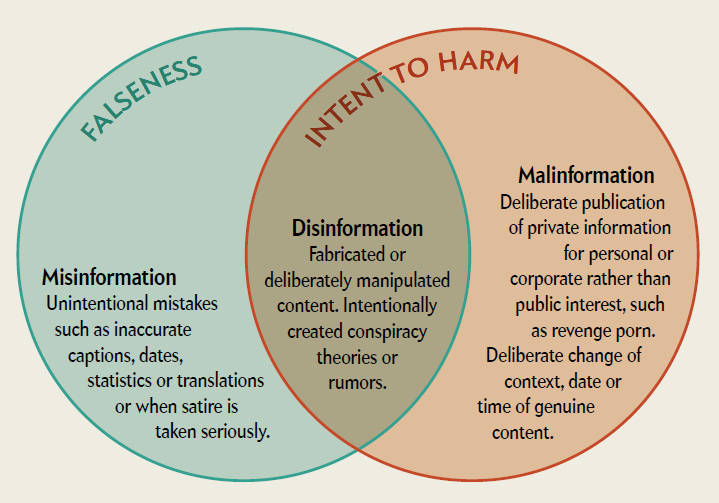
Three Categories of Information Disorder


(Claire Wardle, A New World Disorder, Scientific American, September 2019, p 90)


Edward Bernays (1891 – 1995):
The conscious and intelligent manipulation of the organized habits and opinions of the masses is an important element in democratic society.
Those who manipulate this unseen mechanism of society constitute an invisible government that is the true ruling power of this country.
We are governed, our minds molded, our tastes formed, our ideas suggested, largely by men we have never heard of. …
In almost every act of our daily lives, whether
  • in the sphere of politics or business, [or]
  • in our social conduct or our ethical thinking,
we are dominated by the relatively small number of persons … who understand the mental processes and social patterns of the masses.
It is they who:
  • pull the wires [that] control the public mind,
  • harness old social forces, and
  • contrive new ways to bind and guide the world.
(Organizing Chaos, Propaganda, Chapter 1, 1928, emphasis added.


Stuart Ewen (1945) [Historian of Public Relations]:
[In a consumer society, it's] not that the people are in charge, but that the people's desires are in charge.


Paul Mazur [Lehman Brothers]:
We must shift … from a needs to a desires culture.
People must be trained to desire — to want new things even before the old have been entirely consumed.
We must shape a new mentality …
Man's desires must overshadow his needs.
(Adam Curtis, Happiness Machines, The Century of the Self, Episode 1, 2002)


Propaganda:
A concerted set of messages aimed at influencing the opinions or behavior of large numbers of people.
(Wiktionary, 16 February 2013)


Danny Glover:
Every aspect of our lives — from what we buy, what is sold to us, who produces it — all those things are connected.
It's not only a monopoly of wealth, it's a monopoly of information …


Noam Chompsky (1928):
The United States is unusual among the industrial democracies in the rigidity of the system of ideological control … exercised through the mass media.
(Jean-Philippe Tremblay, Shadows of Liberty, 2012)


Thomas Paine (1737 – 1809):
When men yield up the exclusive privilege of thinking, the last shadow of liberty quits the horizon.
(1776)


Edward Murrow (1908 – 1965):
We must remember always, that accusation is not proof, and that conviction depends upon evidence and due process of law.
We will not walk in fear, one of another.
We will not be driven by fear into an age of unreason if we dig deep into our history and our doctrine, and remember that we are not descended from fearful men.
Not from men who feared to write, to associate, to speak, and to defend the causes that were for the moment unpopular.
This is no time for men who oppose Senator McCarthy's methods to keep silent …
We can deny our heritage and our history but we cannot escape responsibility for the result.
We proclaim ourselves as indeed we are, the defenders of freedom wherever it continues to exist in the world.
But we cannot defend freedom abroad by deserting it at home. …

[Our] history will be what we make it.
If we go on as we are, then history will take its revenge, and retribution will not limp in catching up with us.
Just once in a while let us exalt the importance of ideas and information. …
Good night, and good luck.
(George Clooney, Good Night, and Good Luck, 2005)


Ours For The Taking

We have fought [and won] without a single bullet being fired.

— Nigel Farage (1964), 24 June 2016.


There's a systems failure in this country and across the West.
We're languishing.
We're drifting without a vision or a purpose.
What do you do … when there's a systems failure?
You reset.


— Dominic Cummings (1971)


Craig Oliver (1969) [Director of Communications for David Cameron, 2011–16]:
There's the danger [with the Brexit referendum] of having unleashed something which we can't then control.

Michael Gove (1967) [Conservative Cabinet Minister]:
[David Cameron] said, if I get what I want, and we win this, it will destroy him.

Dominic Cummings (1971) [Political Strategist]:
[The social network data miners at AggregateIQ have found] 3 million potential voters not on any voter database …
Remain have no idea they exist.
If we can reach 'em, they're ours for the taking.


(Toby Haynes, Brexit: The Uncivil War, Channel 4 Television, 2019)


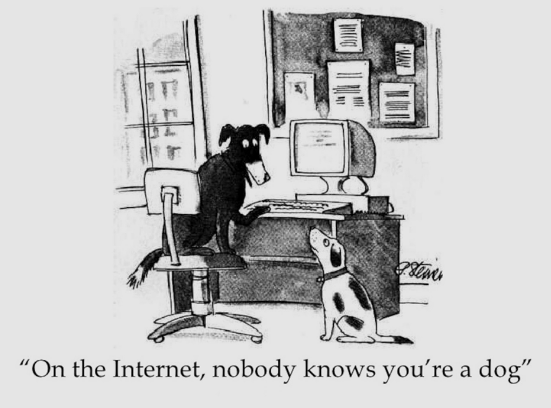
Are You A Dog?


Big Ideas 2013

ABC Radio National: Big Ideas


The Last Tree


Arlo Guthrie (1947)

I remember bein' a little kid one day, you know, and the teacher said:
When you see the white blast out of the school room window and the mushroom cloud, be sure and get under the desk right away. …
And that's fine, when you're five years old, or six years old.
You have to do what they say.

But when you're 12 or 13 and you start realizing it doesn't matter which way you fry.
That these people are actually insane, or they're just stupid.
And, either way, you're not expected to listen to them any more.
And so there was a time in the 60s, when it seemed like the whole world had a bunch of young people who said:
What else are these people tellin us, that is as ridiculous as that?
And so, we had, what we would call these days … a cultural revolution. …
It didn't change everything.
But it changed enough stuff.

Now we're talking about the environment.
We're arguing about it. …
We weren't doin that 50 years ago.
There was only one way to think about it, and that was:
Pollute to make money is the best way to do everything!
And that's changed.
It's changed because people started askin questions.

It doesn't matter whether they're on the Right, the Left, the this or that …
There needs to be people in every group who ask that group questions that an outsider could never ask.
So it's important to make friends in all the different groups, in all the different cultures, in all the different places …
And so that you support each other by having at least that attitude. …

I hate idea that, if you have enough money, and you have enough wealth, and you have enough influence — that you can influence entire nations, and groups of people, and take advantage of their, either, poverty or their fears, or their whatever … so that you profit by it.
Only for a short run.
You can destroy the whole world, for what?
Money.

You know, there's an old Cree Indian saying …
After you've poisoned the last lake,
And you've cut the last tree,
And you've killed the last river,
Only then will people realize that you can't eat money. …
I don't want to wait for that.
It's important to get out and talk about that.
You don't have to be right.
It's not a matter of bein right.
It's a matter of not being … herded, like some mindless cattle herd just goin down the road, goin along with the program, without at least askin.
And that's when things change.
When people are at least not afraid to ask.

(15 August 2013)